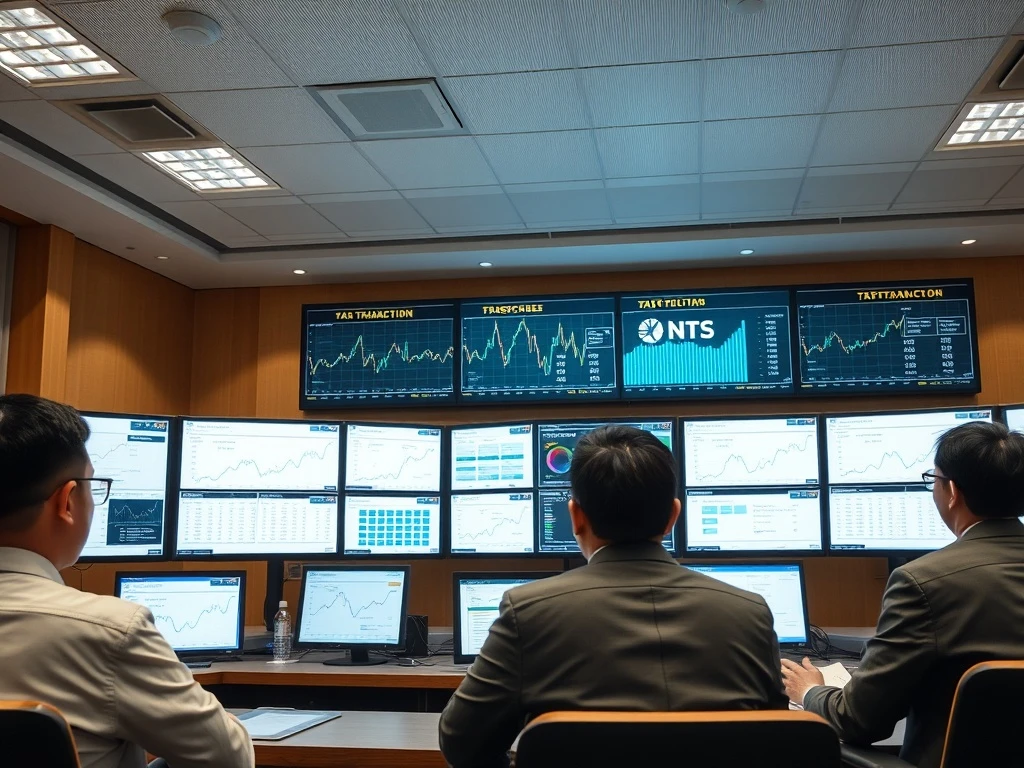
SEOUL, South Korea – January 26, 2025 – The National Tax Service (NTS) of South Korea announced today a groundbreaking initiative to establish a specialized control tower dedicated to combating tax evasion involving virtual assets. This strategic move represents the government’s most comprehensive effort yet to regulate cryptocurrency taxation as digital assets continue transforming global finance. The announcement came during the presentation of the agency’s 2026 National Tax Administration Operation Plan at the Government Complex Sejong, signaling a new era of regulatory oversight for South Korea’s substantial crypto market.
South Korea’s NTS Control Tower: A New Era of Crypto Taxation
The newly announced control tower will function as a centralized authority overseeing all tasks related to virtual asset tax evasion. According to official statements, this specialized unit will develop and implement sophisticated systems to track and analyze cryptocurrency transaction information across multiple platforms. The NTS plans to integrate advanced data analytics with existing financial surveillance infrastructure, creating what tax experts describe as “the most comprehensive crypto tax monitoring system in Asia.” This initiative follows years of growing concern about tax revenue losses from unreported cryptocurrency gains, particularly as South Korea’s crypto trading volume consistently ranks among the world’s highest per capita.
South Korea’s approach to cryptocurrency regulation has evolved significantly since the initial boom of 2017-2018. The government previously implemented real-name trading systems and strengthened anti-money laundering protocols. However, the tax collection mechanisms remained fragmented across different agencies. The new control tower represents a consolidation of these efforts under the NTS’s direct authority. This centralized approach mirrors similar developments in other technologically advanced nations but with distinct Korean characteristics, including integration with the country’s sophisticated digital identification systems and financial technology infrastructure.
Technical Infrastructure and Implementation Timeline
The control tower will leverage multiple technological approaches to achieve its objectives. First, the NTS will establish direct data-sharing agreements with domestic cryptocurrency exchanges, building upon existing reporting requirements implemented in 2023. Second, the agency will develop proprietary blockchain analysis tools capable of tracking transactions across multiple chains and wallets. Third, the system will integrate with traditional financial surveillance systems to identify fiat conversion points and cross-reference transaction data with bank records.
- Phase 1 (2025): System design and exchange integration protocols
- Phase 2 (2026): Pilot implementation with major exchanges
- Phase 3 (2027): Full-scale deployment and international cooperation
The implementation follows a carefully structured timeline aligned with broader tax administration reforms. The 2026 National Tax Administration Operation Plan provides both the mandate and budgetary allocation for this initiative. Technical teams will begin system design immediately, with pilot testing scheduled for late 2026. The NTS has allocated substantial resources to this project, recognizing that effective cryptocurrency taxation requires specialized expertise in blockchain technology, data science, and international finance regulations.
Expert Analysis: Implications for South Korea’s Crypto Ecosystem
Financial regulation experts note several significant implications of this development. Professor Kim Jae-won of Seoul National University’s Graduate School of Taxation explains, “This represents a maturation of South Korea’s approach to cryptocurrency regulation. The government is moving beyond basic compliance requirements toward sophisticated, data-driven enforcement. The control tower model allows for specialized expertise development within the NTS, which is crucial given the technical complexity of blockchain transaction analysis.”
Industry analysts predict the control tower will initially focus on high-value transactions and patterns suggesting systematic tax avoidance. The system will likely employ risk-based algorithms to prioritize cases for investigation, similar to approaches used in traditional financial surveillance. This targeted methodology aims to maximize enforcement efficiency while minimizing unnecessary burdens on compliant taxpayers. The NTS has emphasized that legitimate cryptocurrency investors following existing reporting requirements have nothing to fear from the new system.
Global Context and Comparative Approaches
South Korea’s initiative places it among global leaders in cryptocurrency tax enforcement. The United States Internal Revenue Service (IRS) has similarly expanded its crypto enforcement capabilities through partnerships with blockchain analytics firms. The European Union’s forthcoming Markets in Crypto-Assets (MiCA) regulation includes comprehensive reporting requirements. However, South Korea’s centralized control tower approach differs from the more decentralized enforcement models seen in some other jurisdictions.
| Country/Region | Primary Approach | Key Features |
|---|---|---|
| South Korea | Centralized Control Tower | NTS-led, integrated system, real-time monitoring |
| United States | Multi-Agency Coordination | IRS-FinCEN collaboration, third-party analytics |
| European Union | Regulatory Framework | MiCA compliance, exchange reporting mandates |
| Japan | Exchange Licensing System | FSA oversight, licensed exchange reporting |
This comparative analysis reveals South Korea’s distinctive position. The control tower model offers potential advantages in coordination and data integration but requires substantial institutional capacity. International observers will closely monitor the implementation as a potential model for other nations grappling with similar challenges. The success or failure of this approach could influence global standards for cryptocurrency tax enforcement in coming years.
Market Reactions and Compliance Expectations
Initial market reactions have been measured but attentive. Major South Korean cryptocurrency exchanges have issued statements welcoming clearer regulatory guidelines. However, some smaller platforms expressed concerns about compliance costs. The NTS has indicated it will provide technical support and phased implementation timelines to ease the transition for regulated entities. Market analysts note that enhanced tax compliance could actually benefit legitimate exchanges by reducing competition from unregulated platforms and improving overall market credibility.
Individual investors should prepare for more rigorous reporting requirements. The NTS plans to launch public education campaigns about cryptocurrency tax obligations concurrent with the control tower’s implementation. These efforts will clarify existing rules regarding capital gains taxation on virtual assets, which currently treat cryptocurrency similarly to other financial investments for tax purposes. The control tower’s tracking capabilities will make underreporting increasingly difficult, though the NTS emphasizes its primary goal is voluntary compliance rather than punitive enforcement.
Historical Context: South Korea’s Evolving Crypto Regulation
Today’s announcement represents the latest development in South Korea’s multi-year journey toward comprehensive cryptocurrency regulation. The government initially responded to the 2017 crypto boom with cautious skepticism, implementing trading restrictions and investor protections. Subsequent years saw gradual liberalization coupled with strengthened anti-money laundering frameworks. The current phase focuses specifically on taxation, reflecting both technological maturation and fiscal priorities. This evolutionary approach has allowed South Korea to develop regulatory frameworks while maintaining its position as a global cryptocurrency innovation hub.
The 2026 timeline aligns with broader economic planning. South Korea’s government has identified digital asset taxation as crucial for maintaining tax base integrity amid financial digitalization. The control tower initiative also supports international commitments to tax transparency and information exchange. As cryptocurrency becomes increasingly mainstream, effective tax administration represents both a domestic necessity and an international obligation for major economies like South Korea.
Conclusion
South Korea’s National Tax Service has taken a decisive step toward comprehensive cryptocurrency tax enforcement with its new control tower initiative. This specialized unit will oversee virtual asset tax evasion prevention through advanced tracking and analysis systems. The 2026 implementation timeline allows for careful system development and stakeholder consultation. While challenges remain in technical implementation and international coordination, this initiative positions South Korea as a global leader in cryptocurrency tax administration. The success of this ambitious project will depend on balanced implementation that ensures tax compliance while supporting legitimate innovation in South Korea’s dynamic cryptocurrency ecosystem.
FAQs
Q1: What exactly is the NTS control tower for crypto tax evasion?
The National Tax Service control tower is a specialized unit that will centralize all virtual asset tax enforcement activities. It will develop systems to track and analyze cryptocurrency transactions across exchanges and blockchains to identify potential tax evasion.
Q2: When will the new system become operational?
The control tower follows a phased implementation timeline with system design in 2025, pilot testing in 2026, and full deployment expected by 2027 as part of the 2026 National Tax Administration Operation Plan.
Q3: How will this affect ordinary cryptocurrency investors in South Korea?
Legitimate investors reporting their gains properly should experience minimal disruption. The system aims to catch deliberate tax evaders rather than burden compliant taxpayers. However, all investors should ensure they understand and follow existing reporting requirements.
Q4: What technology will the control tower use to track transactions?
The system will combine data-sharing agreements with domestic exchanges, proprietary blockchain analysis tools, and integration with traditional financial surveillance systems to create comprehensive transaction monitoring capabilities.
Q5: How does South Korea’s approach compare to other countries?
South Korea’s centralized control tower model differs from the multi-agency approach in the United States or the regulatory framework approach in the European Union. It represents a distinctive attempt to create integrated, specialized enforcement capacity within the tax authority itself.
Related News
- Bitget TradFi’s Stunning $4B Daily Volume Surge Reveals Crypto Traders’ Massive Global Market Migration
- Ripple’s Strategic XRP Sales: How $109 Billion in Token Distribution Fueled 31,000% Growth
- Cryptocurrency Bull Market Demands Ruthless Elimination of Junk Coins, Analyst Benjamin Cowen Warns