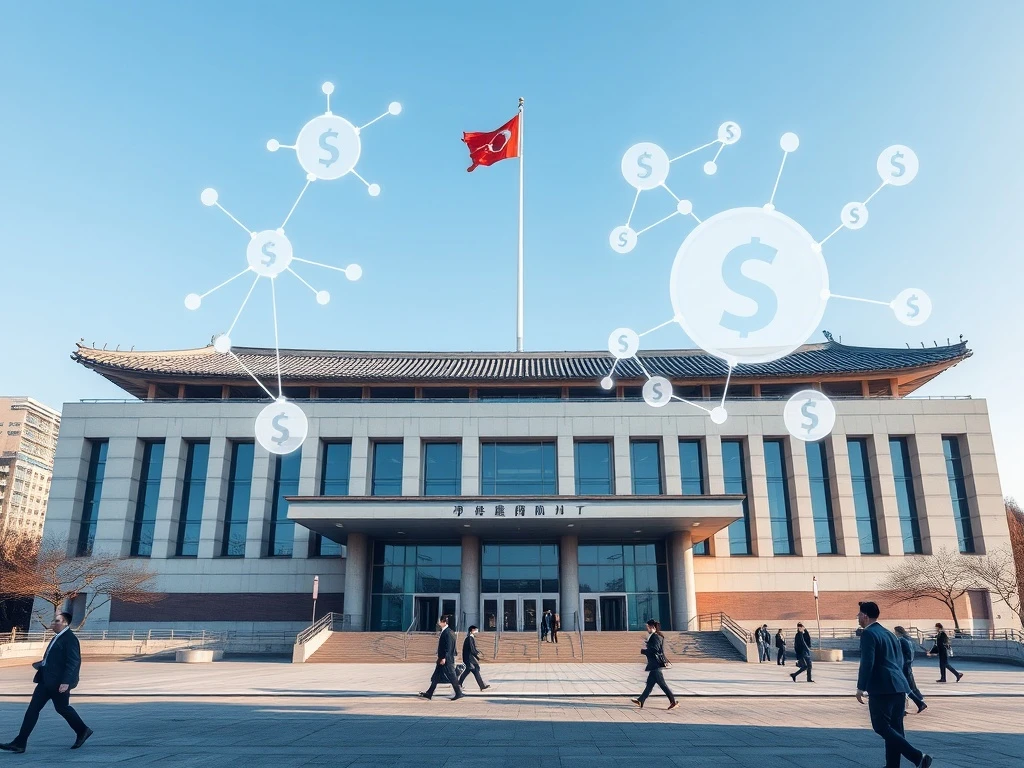
SEOUL, South Korea – December 2024 – In a landmark decision that positions South Korea at the forefront of digital finance innovation, the National Assembly has passed comprehensive amendments to the Capital Markets Act and Electronic Securities Act, establishing the nation’s first legal framework for token securities. This historic legislation, which passed during a plenary session this week, represents the culmination of approximately three years of regulatory development and positions South Korea as a global leader in security token offering (STO) regulation. The bill now proceeds to Cabinet approval and presidential promulgation before becoming enforceable law.
South Korean Token Securities Framework: Legislative Breakthrough
The newly passed legislation fundamentally transforms how securities can be issued, recorded, and managed within South Korea’s financial ecosystem. According to official documentation reviewed by financial analysts, the amendments provide explicit legal recognition for digitizing securities using distributed ledger technology (DLT) under the Capital Markets Act. Furthermore, the legislation integrates token securities into the existing electronic registration system while establishing a new category of issuer account management institutions. This regulatory clarity enables qualified issuers to directly issue, record, and manage their token securities on distributed ledgers, potentially revolutionizing capital formation processes.
Financial technology experts note that this development follows South Korean financial authorities’ initial guidelines released approximately three years ago. During this period, regulatory bodies conducted extensive consultations with industry stakeholders, international regulators, and technology providers. Consequently, the legislation reflects both domestic market needs and global regulatory trends. The framework specifically addresses several critical aspects of tokenized securities:
- Legal Definition: Officially defines digitized securities under existing capital markets legislation
- Technology Integration: Recognizes distributed ledger technology as valid infrastructure for securities issuance and management
- Institutional Framework: Creates new categories of regulated entities to oversee token securities
- Investor Protection: Maintains existing securities regulations while adapting them to digital formats
Regulatory Evolution and Global Context
South Korea’s approach to token securities regulation demonstrates a deliberate, phased methodology that contrasts with more abrupt regulatory changes in other jurisdictions. Financial authorities initially released preliminary guidelines in 2021, followed by pilot programs and industry consultations. This measured progression allowed market participants to adapt gradually while providing regulators with valuable implementation insights. Comparatively, other Asian financial centers like Singapore and Hong Kong have pursued similar regulatory frameworks, though with varying timelines and structural approaches.
The global regulatory landscape for security tokens has evolved significantly since initial concepts emerged around 2017. Switzerland’s Financial Market Supervisory Authority (FINMA) established early guidelines in 2019, while the United States Securities and Exchange Commission (SEC) has addressed token securities through enforcement actions and interpretive guidance. South Korea’s legislation appears to incorporate elements from multiple international approaches while maintaining distinct characteristics suited to its domestic market structure.
| Jurisdiction | Regulatory Status | Key Features |
|---|---|---|
| South Korea | Legislation Passed | Integrated into Capital Markets Act, new institutional categories |
| Singapore | Guidelines Issued | MAS-regulated, securities laws apply to digital tokens |
| Switzerland | Framework Established | FINMA guidance, banking license requirements for some activities |
| United States | Enforcement-Based | SEC jurisdiction, Howey Test application, no specific legislation |
Market Implications and Industry Response
Financial industry analysts project significant market impacts from South Korea’s token securities legislation. Traditional securities firms, technology companies, and financial institutions have reportedly prepared for this regulatory development through pilot programs and infrastructure investments. The legislation’s passage potentially unlocks new capital formation channels for small and medium enterprises while providing institutional investors with additional digital asset exposure opportunities. Market observers anticipate increased activity in several specific areas:
- Real Estate Tokenization: Fractional ownership of commercial and residential properties
- Corporate Debt Instruments: Digitized bonds and other fixed-income securities
- Venture Capital: Tokenized venture funds and startup equity
- Infrastructure Projects: Digitized investment in public-private partnerships
Industry associations have generally welcomed the legislative clarity while emphasizing the importance of balanced implementation. The Korea Financial Investment Association previously noted that appropriate investor protection measures must accompany technological innovation. Similarly, blockchain industry groups have highlighted the need for proportionate regulatory requirements that don’t stifle legitimate innovation. Financial regulators have indicated they will develop detailed implementation rules following the legislation’s promulgation.
Technical Infrastructure and Implementation Timeline
The legislation’s technical provisions establish distributed ledger technology as valid infrastructure for securities issuance and management. This recognition represents a significant departure from traditional centralized securities registries. Qualified issuers will gain authorization to directly issue, record, and manage token securities on distributed ledgers, potentially reducing intermediaries and increasing operational efficiency. The framework also integrates token securities into South Korea’s existing electronic registration system, ensuring compatibility with established market infrastructure.
Implementation will proceed through several distinct phases following Cabinet approval and presidential promulgation. Financial authorities typically require six to twelve months to develop detailed implementation rules after legislation enactment. Market participants generally anticipate a phased implementation approach, beginning with pilot programs and limited-scale offerings before expanding to broader market access. This gradual implementation aligns with South Korea’s historical approach to financial innovation, balancing market development with systemic stability considerations.
Investor Protection and Market Integrity Considerations
Despite embracing technological innovation, the legislation maintains South Korea’s robust investor protection framework. Token securities remain subject to existing securities regulations regarding disclosure, suitability, and market conduct. The legislation specifically addresses several investor protection aspects unique to digital securities, including custody arrangements, technological risk disclosures, and cybersecurity requirements. Regulatory authorities have emphasized that technological innovation shouldn’t compromise fundamental investor protections or market integrity standards.
Market surveillance capabilities will reportedly extend to token securities trading, with authorities developing appropriate monitoring tools for distributed ledger transactions. Anti-money laundering and counter-terrorism financing requirements will apply equally to token securities as traditional financial instruments. These comprehensive safeguards aim to prevent regulatory arbitrage while ensuring market participants adhere to consistent standards regardless of technological implementation.
Conclusion
South Korea’s passage of comprehensive token securities legislation represents a watershed moment for digital asset regulation and capital markets innovation. The National Assembly’s approval of amendments to the Capital Markets Act and Electronic Securities Act establishes clear legal foundations for security token offerings while maintaining robust investor protections. This balanced approach positions South Korea as a global leader in digital finance regulation, potentially influencing other jurisdictions developing similar frameworks. As the legislation proceeds through final approval processes, market participants anticipate transformative impacts on capital formation, investment accessibility, and financial infrastructure development. The South Korean token securities framework demonstrates how technological innovation and regulatory clarity can converge to create more efficient, accessible, and transparent capital markets.
FAQs
Q1: What exactly are token securities under South Korea’s new legislation?
Token securities are digitized versions of traditional securities like stocks or bonds that use distributed ledger technology for issuance, recording, and management. The legislation officially recognizes these digital instruments under the Capital Markets Act.
Q2: When will the token securities legislation become effective?
The legislation must still receive Cabinet approval and presidential promulgation before becoming law. Following enactment, financial authorities typically require six to twelve months to develop detailed implementation rules, with market implementation likely occurring in phases.
Q3: How does South Korea’s approach compare to other countries’ STO regulations?
South Korea has created specific legislation integrating token securities into existing capital markets law, unlike some jurisdictions that rely on guidelines or enforcement actions. This provides clearer legal certainty while maintaining investor protections.
Q4: What types of assets might be tokenized under this framework?
The legislation enables tokenization of various securities, potentially including real estate investment instruments, corporate bonds, venture capital funds, and traditional equity securities, subject to regulatory approval.
Q5: How will investor protections work with token securities?
Token securities remain subject to existing securities regulations regarding disclosure, suitability, and market conduct. The legislation adds specific requirements for technological risk disclosures, custody arrangements, and cybersecurity relevant to digital assets.
Related News
- M-Pesa Blockchain Partnership: Revolutionary Alliance with ADI Foundation to Transform Finance for 60 Million African Users
- Binance FRAX Perpetual Futures: Strategic Expansion into Algorithmic Stablecoin Derivatives
- Saudi Arabia Gold Discovery: Monumental 7-Million-Ounce Vein Accelerates Historic Shift From Oil