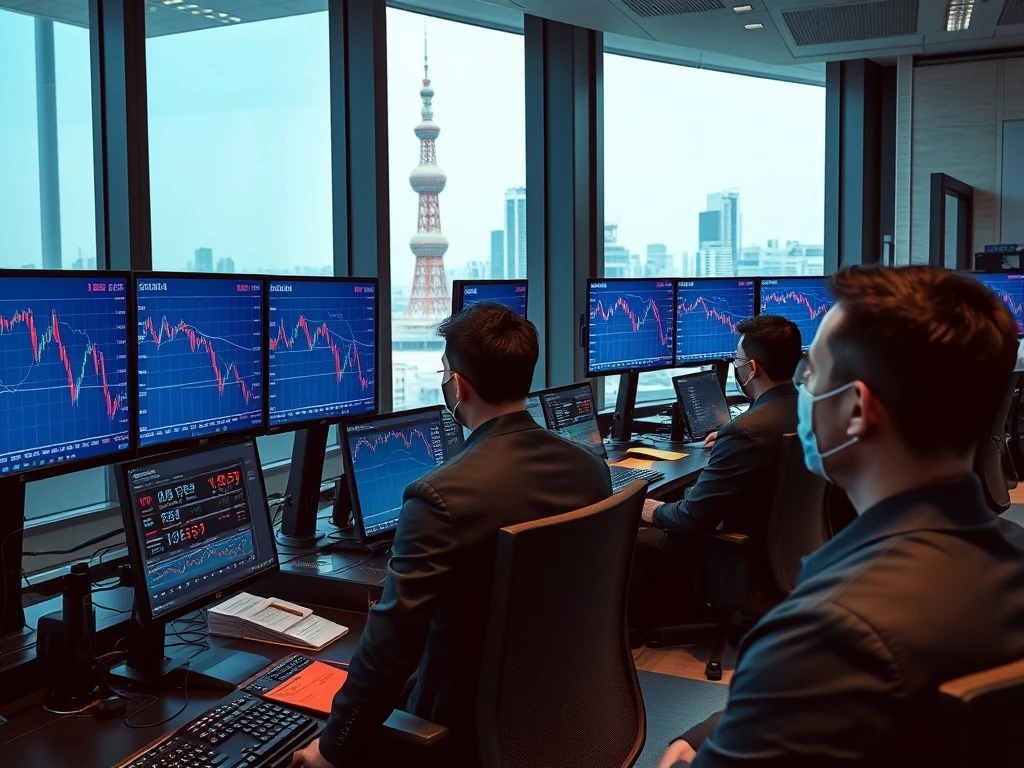
SEOUL, South Korea – January 2025: The once-booming cryptocurrency trading landscape in South Korea has entered a period of dramatic contraction. Recent data reveals a staggering 82.5% year-over-year collapse in daily trading volume across the nation’s five largest exchanges, marking a pivotal shift for one of the world’s most active digital asset markets. This precipitous drop from 17.4 trillion won to just 3.05 trillion won signals a profound cooling of retail and institutional sentiment, directly impacting platforms like Upbit and Bithumb.
Analyzing the South Korean Crypto Exchange Volume Collapse
CoinGecko data, cited by Maeil Business Newspaper, provides a stark numerical snapshot of the decline. On January 19 of the previous year, combined daily volume for Upbit, Bithumb, Coinone, Korbit, and Gopax hit 17.4 trillion won. Conversely, the volume recorded on January 18 of this year stood at a mere 3.05 trillion won. This represents one of the most severe contractions observed in a major crypto economy globally. Furthermore, trading activity this month has consistently remained below the 5 trillion won threshold, with only two minor exceptions. This pattern contrasts sharply with the sustained high-volume environment of early the previous year.
The decline is not merely a statistical anomaly but a reflection of broader market dynamics. Several interconnected factors typically drive such a significant reduction in trading activity. Firstly, global macroeconomic conditions, including interest rate policies and inflation, directly influence risk asset appetite. Secondly, the maturation of regulatory frameworks within South Korea has introduced stricter compliance requirements. These regulations, while fostering long-term stability, often temper speculative trading in the short term. Finally, the natural market cycle following a period of heightened activity frequently leads to consolidation and reduced volatility, which inherently lowers trading volume.
The Regulatory Landscape and Market Maturation
South Korea’s financial authorities have progressively implemented a more rigorous regulatory regime for digital assets. The enforcement of the Travel Rule, enhanced know-your-customer (KYC) protocols, and stricter guidelines for exchange operations have fundamentally altered the trading environment. Consequently, these measures have weeded out speculative and non-compliant activity, contributing to the volume metrics we observe today. Market analysts often interpret this not as a failure but as a sign of the sector’s integration into the formal financial system. The reduced volume, therefore, may indicate a transition from a speculative frenzy to a more measured, investment-oriented phase.
Comparative Impact on Major Korean Exchanges
The volume downturn affects all major players, but its impact varies based on their market positioning and user base. Upbit, as the dominant exchange, likely experiences the largest absolute drop in won terms. Bithumb and Coinone, as significant competitors, face similar proportional declines. This environment pressures exchanges to diversify revenue streams beyond simple spot trading fees. Many are now emphasizing staking services, custody solutions, and educational content to engage users during quieter market periods. The following table illustrates the stark year-over-year contrast in trading activity levels.
| Metric | January (Previous Year) | January (Current Year) | Change |
|---|---|---|---|
| Average Daily Volume | Consistently near 10 trillion won | Consistently below 5 trillion won | > 50% decrease |
| Peak Daily Volume | 17.4 trillion won | 5.27 trillion won | 69.7% decrease |
| Market Character | High expectations, speculative | Consolidation, regulatory focus | Fundamental shift |
This data underscores a fundamental shift in market behavior. The era of consistent double-digit trillion-won daily volumes appears to have paused. Instead, the market has entered a phase defined by:
- Lower Leverage: Tighter regulations have curbed margin and derivative trading.
- Institutional Caution: Larger players are adopting a wait-and-see approach.
- Retail Apathy: The typical retail investor shows less frequent trading activity.
Global Context and Future Trajectory
The South Korean situation mirrors trends in other developed crypto markets, though the magnitude of the decline is particularly pronounced. Globally, trading volume has receded from historic highs as the market digests previous cycles and anticipates new catalysts. For South Korea, the future trajectory hinges on several key developments. The potential approval of spot Bitcoin exchange-traded funds (ETFs) in the local market could reignite institutional interest. Additionally, clearer legislation from the National Assembly regarding digital asset classification and investor protection could reduce uncertainty and attract capital.
Technological innovation within the blockchain space also plays a critical role. The growth of decentralized finance (DeFi) and real-world asset (RWA) tokenization presents new avenues for value creation. South Korean exchanges and projects that successfully integrate these innovations may capture the next wave of growth. However, this requires navigating a complex regulatory landscape that prioritizes consumer safety. The current low-volume period, therefore, may serve as a necessary foundation for more sustainable and sophisticated market growth in the coming years.
Expert Perspective on Market Health
Financial analysts caution against interpreting low volume solely as a negative indicator. While it reflects reduced speculative trading and lower liquidity, it can also signify a market bottom or a period of accumulation. Historically, periods of low retail interest often precede major market movements as informed investors build positions. The critical factor is whether the underlying technology and adoption metrics continue to grow. On-chain data for major cryptocurrencies often provides a more nuanced picture than exchange volume alone, showing holder behavior and network strength.
Conclusion
The 82.5% year-over-year plunge in South Korean crypto exchange volume marks a definitive end to a period of hyper-growth and speculation. This dramatic shift, evidenced by the fall from 17.4 trillion to 3.05 trillion won, stems from a confluence of stringent regulation, global economic pressures, and natural market cycle progression. While presenting challenges for local exchanges, this consolidation phase may ultimately foster a more mature, stable, and institutionally-friendly digital asset ecosystem in South Korea. The market’s health will now be measured not by volatile trading spikes, but by the depth of its infrastructure, regulatory clarity, and long-term technological adoption.
FAQs
Q1: What caused the 82.5% drop in South Korean crypto trading volume?
The decline is attributed to multiple factors: stricter financial regulations (like the Travel Rule), a global downturn in risk asset appetite, the conclusion of a previous bullish market cycle, and reduced retail speculation compared to the previous year’s frenzy.
Q2: Which South Korean exchanges were included in this data?
The data from CoinGecko covered the combined daily volume of the country’s five largest platforms: Upbit, Bithumb, Coinone, Korbit, and Gopax.
Q3: Is low trading volume always bad for a cryptocurrency market?
Not necessarily. While low volume can indicate low liquidity and interest, it can also signal a period of market consolidation or accumulation. It often reduces volatility and can precede a new cycle, depending on broader adoption and regulatory developments.
Q4: How does South Korea’s crypto volume decline compare to other countries?
The magnitude (82.5% YoY) is particularly sharp, reflecting South Korea’s previously hyper-active retail market. Other major markets have also seen declines, but South Korea’s drop is more pronounced due to its specific regulatory tightening and previous high baseline.
Q5: What could reverse the trend of declining crypto volume in South Korea?
A reversal could be triggered by several events: the local approval of spot crypto ETFs, positive global regulatory clarity, a major new technological adoption cycle (like DeFi 2.0 or RWAs), or a significant bullish turn in the broader macroeconomic environment.
Related News
- Bitcoin Plummets Below $92K: Sunday’s Brutal Selloff Unleashes $450M in Liquidations
- Bitcoin Soars: BTC Price Surges Past $93,000 Milestone in Major Market Rally
- Bitcoin Price Plummets Below $92,000: Analyzing the Sudden Market Shift