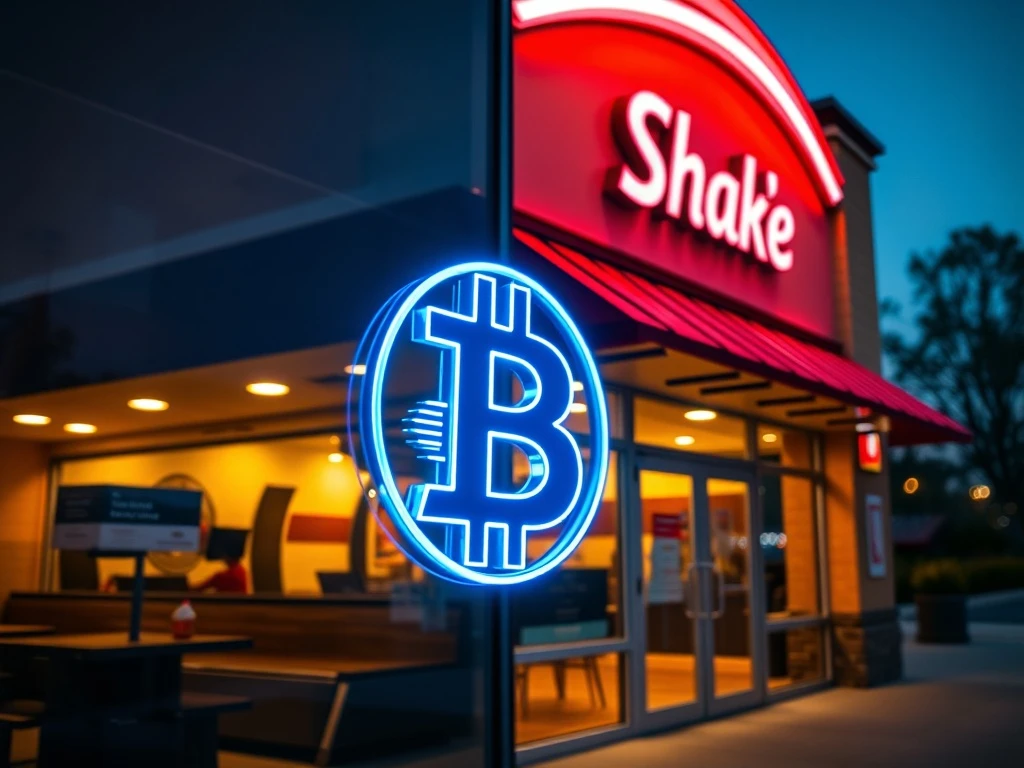
In a decisive move highlighting corporate cryptocurrency adoption, the iconic U.S. fast-food chain Steak ‘n Shake announced a significant $5 million Bitcoin purchase on February 21, 2025. This strategic acquisition substantially expands the company’s digital asset holdings. Furthermore, it reinforces its operational integration of Bitcoin for customer payments. The announcement, made via the company’s official X account, provides a compelling case study in modern corporate treasury management. Consequently, it offers insights into the evolving intersection of traditional retail and digital finance.
Steak ‘n Shake’s Bitcoin Treasury Strategy
Steak ‘n Shake’s latest $5 million Bitcoin acquisition represents a calculated treasury diversification. The company previously established a protocol to accept Bitcoin for payments. Moreover, it committed to holding all cryptocurrency received from customers. This new purchase, however, involves a direct allocation of corporate capital. It signals a deeper conviction in Bitcoin’s long-term value proposition. The strategy mirrors approaches by other public companies. For instance, MicroStrategy and Tesla have famously allocated portions of their treasuries to Bitcoin. Steak ‘n Shake’s move is notable because it originates from the restaurant sector. This industry typically maintains highly liquid assets for operational flexibility.
The company’s approach combines transactional utility with investment. Customers can use Bitcoin directly at participating locations. Then, the company retains the BTC rather than converting it to fiat currency immediately. This method creates a natural, recurring accumulation of the digital asset. The recent $5 million purchase accelerates this accumulation. It demonstrates a proactive stance beyond mere payment acceptance. Financial analysts view this as a hedge against currency inflation. It also serves as a potential store of value on the corporate balance sheet.
Context and Timeline of Corporate Crypto Adoption
Steak ‘n Shake’s journey into Bitcoin provides critical context. The company first announced its Bitcoin payment option in late 2023. This initiative positioned it among early retail adopters. The policy to hold customer-paid BTC differentiated it from payment processors that instantly convert crypto. The February 2025 treasury purchase marks a clear second phase. It transitions from passive accumulation to active investment. This timeline reflects growing institutional comfort with digital assets. It also coincides with clearer regulatory frameworks for corporate holdings.
Impact on the Fast-Food and Retail Industry
This corporate Bitcoin purchase may influence broader industry trends. Steak ‘n Shake operates over 500 locations across the United States. Its public embrace of Bitcoin lends legitimacy to cryptocurrency in mainstream commerce. Other chains may now evaluate similar treasury strategies. The move affects several key areas:
- Customer Engagement: Attracts crypto-native demographics and enhances brand modernity.
- Financial Strategy: Introduces a volatile but high-potential asset class to conservative sectors.
- Operational Innovation: Encourages investment in blockchain payment infrastructure.
Industry observers note the symbolic importance. Fast food represents high-volume, low-margin transactions. Integrating Bitcoin here tests its practicality for everyday commerce. Success could prompt wider adoption across retail. Conversely, challenges would provide valuable data on crypto’s scalability for small-ticket items.
Expert Analysis on Treasury Diversification
Financial experts cite several rationales for such a corporate purchase. Bitcoin offers non-correlation with traditional equities and bonds. This can potentially reduce overall portfolio risk. Its fixed supply contrasts with expansive monetary policy. Therefore, it acts as an inflation hedge. However, experts also emphasize the volatility. Corporate treasuries typically prioritize capital preservation. Bitcoin’s price swings require strong risk management. Steak ‘n Shake likely employs a long-term horizon for this allocation. The strategy assumes gradual adoption will increase Bitcoin’s value over time.
Bitcoin as a Payment Method: Practical Integration
Accepting Bitcoin for milkshakes and burgers involves technical and accounting steps. Steak ‘n Shake likely uses a third-party payment processor. This system instantly converts the BTC price to dollar value at sale. The company then receives the Bitcoin equivalent into a secured wallet. By holding it, the company assumes the currency risk and potential appreciation. This model differs from simply offering crypto payments for convenience. It represents a direct bet on the asset’s future.
The practical benefits for customers are significant. It enables spending of Bitcoin without tax-triggering conversions to fiat first. It also provides privacy and reduced transaction fees compared to credit cards. For the company, it potentially lowers payment processing costs. It also minimizes chargeback fraud. The table below outlines the key differences between traditional and Bitcoin payment models at the point of sale.
| Aspect | Credit/Debit Card | Bitcoin (Held by Merchant) |
|---|---|---|
| Transaction Fee | 2-3% (Interchange) | ~1% or less (Network) |
| Settlement Time | 1-3 business days | Minutes (on-chain) |
| Chargeback Risk | High | Effectively Zero |
| Merchant’s Currency Exposure | USD (Stable) | BTC (Volatile) |
| Customer Data Collected | Extensive (PII) | Minimal (Wallet Address) |
Regulatory and Accounting Considerations
Holding Bitcoin on a corporate balance sheet introduces complexity. In the United States, cryptocurrencies are treated as property for tax purposes. This means Steak ‘n Shake must track the cost basis of every Bitcoin received. Furthermore, it must report capital gains or losses upon selling or using the asset. The Financial Accounting Standards Board (FASB) now requires fair value accounting for crypto holdings. This means quarterly mark-to-market adjustments impacting earnings. The company’s auditors must verify secure custody of the private keys. This often involves specialized digital asset custodians or multi-signature wallet solutions.
The regulatory environment continues to evolve. The SEC has clarified that Bitcoin is not a security. However, corporate disclosures must be precise. Steak ‘n Shake’s public announcement aids transparency. It informs shareholders and regulators of its asset allocation. This proactive communication is a best practice in corporate crypto adoption.
Conclusion
Steak ‘n Shake’s $5 million Bitcoin purchase marks a significant milestone. It demonstrates how traditional businesses can integrate digital assets. The strategy combines customer payment utility with corporate treasury innovation. This move provides a real-world test for Bitcoin’s dual role as a medium of exchange and a store of value. It will be closely watched by investors, competitors, and policymakers. The success of this corporate Bitcoin strategy could influence treasury management across the retail sector. Ultimately, it highlights the ongoing convergence of cryptocurrency and mainstream corporate finance.
FAQs
Q1: How does Steak ‘n Shake accept Bitcoin payments?
Steak ‘n Shake uses a payment processor at point-of-sale systems. This tool converts the purchase total into a Bitcoin equivalent. Customers then scan a QR code to pay from their crypto wallet. The company receives and holds the Bitcoin.
Q2: Why would a fast-food chain buy Bitcoin for its treasury?
Companies buy Bitcoin to diversify assets, hedge against inflation, and gain exposure to a non-correlated asset. For Steak ‘n Shake, it also aligns with its operational model of accepting and holding customer BTC payments.
Q3: What are the risks of a corporation holding Bitcoin?
The primary risks are extreme price volatility, regulatory uncertainty, cybersecurity threats (hacking), and accounting complexity. The asset’s value can fluctuate significantly within short periods.
Q4: Does this mean I can only pay with Bitcoin at Steak ‘n Shake?
No. Bitcoin is an additional payment option. Traditional methods like cash, credit, and debit cards remain fully available at all locations.
Q5: How is this $5M purchase different from the Bitcoin they get from customers?
Customer payments are operational inflows. The $5 million purchase is a deliberate investment of corporate cash reserves. It is a separate, strategic allocation to the balance sheet, similar to buying a stock or bond.
Related News
- Citrea Mainnet Unleashes Bitcoin’s DeFi Potential with Live Lending and Trading
- Ethereum On-Chain Metrics Reveal Compelling Rebound Signal to $3,300 Target
- Bitcoin Price Prediction: Cathie Wood Reveals Why the Rally Will Resume After Selling Pressure Dissipates