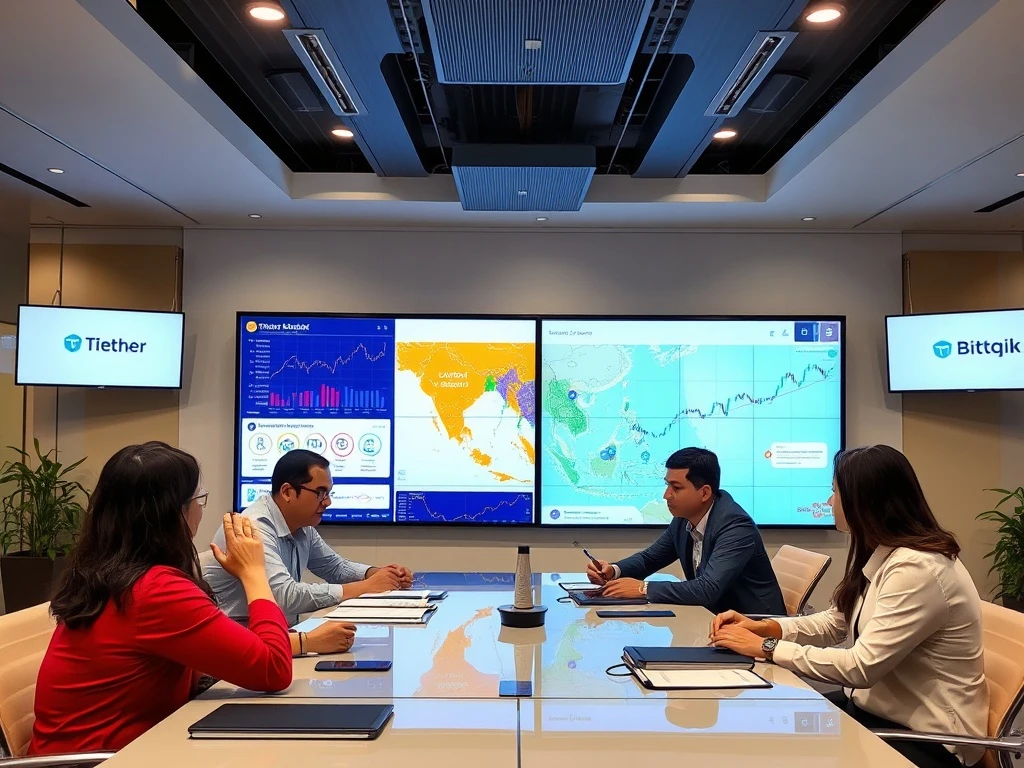
VIENTIANE, Laos – December 2024 – Tether, the world’s largest stablecoin issuer, has announced a groundbreaking partnership with Laotian cryptocurrency exchange Bitqik, marking a significant step toward enhancing financial literacy and cryptocurrency adoption across Southeast Asia. This collaboration represents Tether’s first major educational initiative in Laos, focusing specifically on Bitcoin and stablecoin awareness through localized content and real-world demonstrations in major urban centers.
Tether and Bitqik Partnership Details
Tether’s partnership with Bitqik establishes a comprehensive framework for cryptocurrency education throughout Laos. The initiative will deploy educational resources across multiple platforms, including online content in local languages and in-person workshops in Vientiane, Luang Prabang, and Pakse. Consequently, this program aims to address specific financial literacy gaps identified in recent regional studies. The collaboration follows Laos’ gradual regulatory evolution toward digital assets, which began with pilot cryptocurrency mining programs in 2021.
Bitqik, founded in 2019, has emerged as Laos’ leading licensed digital asset exchange under the country’s evolving regulatory framework. The exchange currently serves approximately 50,000 registered users with trading pairs including Bitcoin, Ethereum, and now USDT. Meanwhile, Tether brings its extensive experience from similar educational initiatives in developing economies, having previously launched programs in Georgia, Uruguay, and Argentina. This partnership specifically targets three key areas:
- Localized Educational Content: Development of materials explaining blockchain fundamentals in Lao language
- Real-World Use Cases: Demonstrations of cryptocurrency for remittances, savings, and small business transactions
- Technical Infrastructure: Enhanced liquidity and trading pairs featuring USDT on Bitqik’s platform
Laos’ Cryptocurrency Regulatory Landscape
Laos has pursued a cautious yet progressive approach to cryptocurrency regulation since 2021. The Bank of the Lao PDR initially authorized six companies to pilot cryptocurrency mining and trading operations. Subsequently, the government established clearer guidelines for digital asset exchanges in 2023. This regulatory framework requires exchanges like Bitqik to maintain strict compliance with anti-money laundering (AML) and know-your-customer (KYC) protocols. Furthermore, the partnership aligns with Laos’ broader digital transformation strategy outlined in the 2021-2025 National Socio-Economic Development Plan.
Financial Literacy Challenges in Southeast Asia
Southeast Asia presents unique financial inclusion challenges that cryptocurrency initiatives aim to address. According to World Bank data from 2023, approximately 30% of Laos’ adult population remains unbanked. Additionally, remittance costs in the region average 6.5%, significantly higher than the United Nations’ Sustainable Development Goal target of 3%. Stablecoins like USDT offer potential solutions through faster, cheaper cross-border transactions. However, educational barriers persist, particularly regarding digital security and blockchain fundamentals.
The Tether-Bitqik initiative directly responds to these challenges through structured educational programs. For instance, the partnership will develop modules covering:
| Educational Module | Target Audience | Delivery Method |
|---|---|---|
| Cryptocurrency Basics | General Public | Online Videos & Infographics |
| Stablecoin Applications | Small Business Owners | Workshops & Case Studies |
| Digital Wallet Security | New Crypto Users | Interactive Tutorials |
| Remittance Solutions | Migrant Workers & Families | Demonstrations & Guides |
Expert Perspectives on Regional Adoption
Financial technology analysts observe that Southeast Asia represents one of cryptocurrency’s fastest-growing adoption regions. A 2024 Chainalysis report ranked Vietnam, the Philippines, and Thailand among the top ten countries for cryptocurrency adoption globally. Meanwhile, Laos has demonstrated steady growth despite its smaller market size. Industry experts note that educational partnerships like Tether’s initiative with Bitqik typically precede accelerated adoption curves. For example, similar programs in Argentina correlated with a 40% increase in stablecoin usage among small businesses within twelve months.
Comparative Analysis of Stablecoin Educational Initiatives
Tether’s Laos initiative follows a pattern established through previous global educational campaigns. The company’s “Digital Literacy Initiative” launched in Georgia in 2022 reached over 10,000 participants through university partnerships. Similarly, their Uruguay program focused specifically on remittance education for migrant communities. Comparatively, the Laos partnership with Bitqik emphasizes urban centers while maintaining accessibility for rural populations through digital content. This approach recognizes Laos’ particular demographic distribution, where approximately 35% of the population lives in urban areas according to 2023 United Nations data.
Other stablecoin issuers have pursued different educational strategies in emerging markets. Circle’s USDC educational programs have primarily focused on developer communities and institutional partners. Meanwhile, Binance’s BUSD initiatives emphasized exchange integration and trading education. Tether’s approach with Bitqik uniquely combines localized content creation with direct community engagement through Bitqik’s established user base. This dual strategy addresses both awareness and practical application simultaneously.
Technological Infrastructure Requirements
Successful cryptocurrency education in developing markets depends on supporting technological infrastructure. Laos has made significant progress in internet penetration, reaching 53% of the population according to 2024 DataReportal statistics. Mobile connectivity continues to expand through 4G networks covering major population centers. The Tether-Bitqik partnership accounts for these infrastructure realities by offering both online and offline educational materials. Additionally, the program includes basic digital literacy components for populations with limited prior technology exposure.
Potential Economic Impacts and Future Developments
The partnership between Tether and Bitqik could generate multiple economic benefits for Laos. Increased cryptocurrency literacy may enhance financial inclusion, particularly for populations underserved by traditional banking. Small and medium enterprises could access new payment options and capital sources through decentralized finance applications. Furthermore, reduced remittance costs would directly increase disposable income for families receiving international transfers. These potential benefits align with Laos’ broader economic development objectives.
Future developments may include expanded educational programs to additional Laotian cities beyond the initial three locations. The partnership could also evolve to include technical training for local developers interested in blockchain applications. Additionally, successful implementation might inspire similar initiatives in neighboring Cambodia and Myanmar, where cryptocurrency adoption faces comparable educational barriers. Monitoring organizations will track key metrics including USDT adoption rates, trading volumes on Bitqik, and participant feedback from educational sessions.
Security Considerations and Risk Mitigation
Cryptocurrency education must address security concerns alongside adoption benefits. The Tether-Bitqik program includes specific modules on wallet security, phishing prevention, and regulatory compliance. These components reflect lessons learned from previous educational initiatives where security oversights occasionally undermined adoption efforts. The partnership emphasizes verifiable information sources and warns against common cryptocurrency scams prevalent in Southeast Asia. This balanced approach acknowledges both opportunities and risks associated with digital asset adoption.
Conclusion
Tether’s partnership with Laotian cryptocurrency exchange Bitqik represents a strategic investment in Southeast Asia’s financial future. This initiative combines Tether’s global experience with Bitqik’s local expertise to address specific educational needs in Laos. The program’s focus on Bitcoin and stablecoin literacy through localized content and real-world demonstrations provides a model for similar developing markets. Consequently, this collaboration may accelerate cryptocurrency adoption while promoting safer, more informed participation in digital economies. As Laos continues its digital transformation, such educational partnerships will likely play increasingly important roles in shaping inclusive financial systems.
FAQs
Q1: What specific educational content will Tether and Bitqik provide?
Tether and Bitqik will develop localized materials explaining blockchain technology, cryptocurrency fundamentals, stablecoin applications, and digital security practices. The content will include online resources in Lao language and in-person workshops in major cities.
Q2: How does this partnership benefit ordinary Laotian citizens?
The initiative aims to increase financial literacy, provide alternative remittance options with lower fees, and offer new savings instruments through stablecoins. Small businesses may access additional payment methods and capital sources.
Q3: Is cryptocurrency legal in Laos?
Laos has established a regulated framework for cryptocurrency activities since 2021. The government authorized pilot programs for mining and trading, with licensed exchanges like Bitqik operating under specific guidelines from the Bank of the Lao PDR.
Q4: What makes this partnership different from other cryptocurrency education programs?
This collaboration uniquely combines Tether’s global resources with Bitqik’s local market understanding. The program addresses both urban and rural populations through multiple delivery methods while focusing specifically on practical applications for Laotian users.
Q5: How will the partnership measure its success?
Success metrics will include participation rates in educational programs, increases in cryptocurrency literacy surveys, growth in USDT adoption on Bitqik’s platform, and feedback from workshop participants regarding practical applications.
Related News
- Trump’s Shocking Military Option for Greenland: Geopolitical Analysis of Arctic Strategy in 2025
- Coinbase Launches Revolutionary Custom Stablecoin Service for Corporate Financial Innovation
- Ember Protocol and Bluefin Launch Revolutionary Vault Using Polymarket’s Real-Time Data