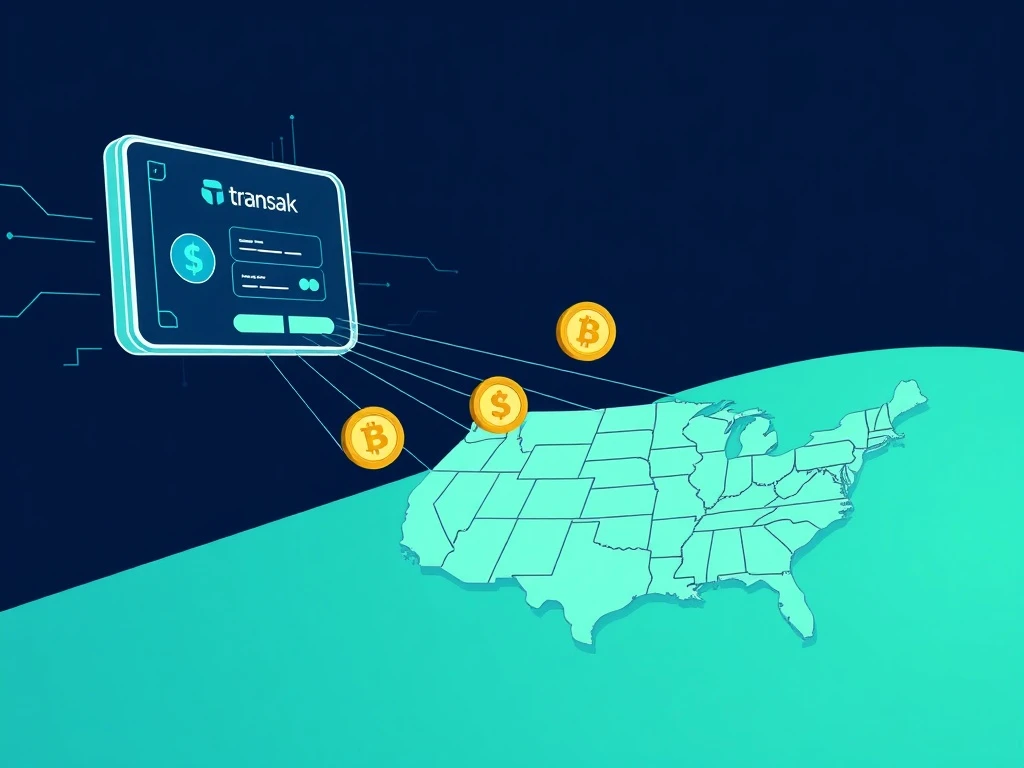
The landscape of digital finance is rapidly evolving. Crucially, Transak, a leading Web3 payment infrastructure provider, has achieved a significant regulatory milestone. This development promises to greatly impact the accessibility of digital assets. The company recently secured new money transmitter licenses in six additional U.S. states. This expansion marks a pivotal moment for US crypto expansion, particularly in the realm of stablecoin transactions.
Transak Secures Key Money Transmitter Licenses
Transak has successfully acquired new money transmitter licenses. These approvals cover Iowa, Kansas, Michigan, South Carolina, Vermont, and Pennsylvania. Consequently, the total number of states where Transak can now legally operate directly rises to 11. Previously, Transak held licenses in other key jurisdictions. This regulatory compliance allows Transak to directly offer essential services. These services include stablecoin payments and fiat-to-crypto conversion. Cointelegraph initially reported this important news. The licenses are fundamental for any entity handling financial transactions. They ensure consumer protection and prevent illicit activities. Ultimately, this move strengthens Transak’s position in the highly regulated U.S. market.
Understanding Money Transmitter Licenses
A money transmitter license is a crucial regulatory requirement. State financial authorities issue these licenses. They permit companies to transfer funds on behalf of consumers. This includes both fiat currency and virtual assets. Obtaining such licenses involves a rigorous application process. Applicants must demonstrate financial stability. They also need robust compliance programs. These programs combat money laundering (AML) and terrorist financing (CTF). Moreover, the process often requires significant capital reserves. It also demands comprehensive security measures. Each state has its own specific requirements. Therefore, securing licenses across multiple states is a complex undertaking. Transak’s achievement highlights its commitment to regulatory adherence. This commitment builds trust among users and partners alike.
Driving US Crypto Expansion Through Regulatory Compliance
The U.S. regulatory environment for cryptocurrencies remains complex. However, companies like Transak are navigating it successfully. Their approach focuses on compliance and direct licensing. This strategy is vital for legitimate operations. It fosters greater confidence in the digital asset space. Transak’s expanded licensing directly contributes to US crypto expansion. It broadens access to digital assets for more Americans. This accessibility supports wider adoption of cryptocurrencies. Furthermore, it integrates crypto services into mainstream finance. Such integration is essential for long-term growth. The move demonstrates a maturing crypto industry. This industry actively seeks regulatory clarity and legitimacy.
The company’s expansion simplifies user onboarding. It also reduces friction for developers. Web3 applications can now reach a larger audience. This growth is particularly impactful in the newly licensed states. Users in these regions gain direct access to Transak’s services. Previously, they might have faced limitations. This regulatory progress sets a positive precedent. It shows that innovation and compliance can coexist. This balance is key for the future of digital finance.
The Significance of Stablecoin Payments
Stablecoin payments represent a cornerstone of the crypto economy. These digital assets are pegged to stable reserves. Often, they are linked to fiat currencies like the U.S. dollar. This pegging minimizes price volatility. Consequently, stablecoins become ideal for daily transactions. They also suit cross-border remittances. Transak’s expanded reach for stablecoin services is therefore highly impactful. It enables smoother, faster, and more cost-effective payments. Businesses can leverage stablecoins for operational efficiency. Individuals benefit from enhanced financial freedom. This capability supports a more interconnected global financial system. It further bridges traditional banking with decentralized finance.
Furthermore, stablecoins offer a gateway to the broader crypto ecosystem. Users can easily convert fiat to stablecoins. They can then use these for various Web3 activities. These include DeFi protocols, NFTs, and metaverse applications. Transak’s role is to make this conversion seamless. Their new licenses remove significant barriers. Thus, more people can participate in the digital economy. This fosters innovation and economic opportunity. The growth of stablecoin usage is a clear indicator. It shows increasing real-world utility for digital assets.
The Role of Web3 Payment Infrastructure
Web3 payment infrastructure forms the backbone of the decentralized internet. It connects traditional financial systems with blockchain networks. Providers like Transak offer essential on-ramp and off-ramp solutions. These solutions allow users to convert fiat currency to crypto. They also facilitate converting crypto back to fiat. This seamless integration is crucial for user adoption. Without robust infrastructure, Web3 remains inaccessible. Transak’s platform supports a wide array of cryptocurrencies. It integrates with numerous blockchain protocols. This broad support makes it a versatile tool. It serves developers building decentralized applications (dApps). It also serves individual users entering the crypto space.
The demand for reliable Web3 payment solutions is growing. More businesses are exploring blockchain technology. They need easy ways to accept crypto payments. They also need to manage their digital assets. Transak provides these critical tools. Its expanded licensing enhances its service reliability. It also boosts its trustworthiness. This strengthens the entire Web3 ecosystem. Ultimately, it paves the way for wider blockchain adoption. This infrastructure is not just about payments. It’s about enabling a new internet economy. This economy is built on decentralization and user ownership.
The Strategic Impact of Transak Licenses
The acquisition of these new Transak licenses carries significant strategic weight. Firstly, it grants Transak direct operational control. This eliminates the need for third-party partners in those states. Direct operations often lead to better service quality. They also allow for more competitive pricing. Secondly, it deepens Transak’s market penetration. The company can now actively target users in 11 states. This expands its customer base considerably. Thirdly, it enhances Transak’s reputation. Operating under direct licenses signals legitimacy. It demonstrates a strong commitment to regulatory best practices. This fosters greater trust among enterprise clients. It also attracts more individual users.
This strategic move also positions Transak for future growth. The company can leverage its expanded footprint. It can introduce new products and services. These offerings will comply with local regulations. Furthermore, this compliance provides a strong foundation. It supports further expansion into other U.S. states. The crypto industry is constantly evolving. Regulatory clarity is a competitive advantage. Transak is clearly prioritizing this advantage. Their proactive approach sets them apart. It solidifies their role as a leader. This leadership extends across the Web3 payment sector.
Looking Ahead: A Future of Seamless Digital Transactions
Transak’s recent licensing success marks a pivotal moment. It signifies a broader trend towards regulatory maturity in crypto. As more states grant such approvals, the digital asset landscape will become more accessible. Users can expect greater ease in managing their crypto holdings. Businesses will find it simpler to integrate blockchain-based payments. This widespread acceptance is essential for Web3’s mainstream adoption. The commitment to compliance ensures a secure and trusted environment. Transak’s journey exemplifies this dedication. Their efforts help build a robust financial future. This future seamlessly blends traditional and decentralized systems.
The expansion is not merely about increasing numbers. It represents a deeper integration of crypto into daily financial lives. It promises a future where stablecoin payments are as common as traditional bank transfers. This vision drives innovation across the Web3 space. Transak, with its growing network of licenses, is at the forefront. They are actively shaping how we interact with digital money. This ongoing evolution benefits everyone. It empowers individuals and businesses alike.
Frequently Asked Questions (FAQs)
1. What are Transak’s new money transmitter licenses?
Transak recently secured new money transmitter licenses in six additional U.S. states. These states include Iowa, Kansas, Michigan, South Carolina, Vermont, and Pennsylvania. This brings their total operational states to 11.
2. How do these new licenses benefit users?
These licenses allow Transak to directly offer stablecoin payments and fiat-to-crypto conversion services in the new states. Users gain direct, legal, and secure access to these essential Web3 services, simplifying their crypto transactions.
3. Why are money transmitter licenses important for crypto companies?
Money transmitter licenses are vital for regulatory compliance. They ensure companies adhere to anti-money laundering (AML) and consumer protection laws. This legal framework builds trust and legitimacy for crypto operations.
4. What role does Transak play in US crypto expansion?
Transak plays a key role in US crypto expansion by expanding access to compliant fiat-to-crypto and crypto-to-fiat services. Their efforts help integrate digital assets into the mainstream financial system across more states.
5. What is Web3 payment infrastructure?
Web3 payment infrastructure refers to the systems and services that bridge traditional finance with blockchain networks. Companies like Transak provide on-ramps and off-ramps, enabling seamless conversion between fiat and cryptocurrencies for the decentralized web.
6. What is the overall impact of Transak’s expanded licensing?
The expanded Transak licenses strengthen the company’s market position, enhance its credibility, and simplify access to digital assets for a broader U.S. audience. This fosters greater adoption of stablecoins and the wider Web3 ecosystem.
Related News
- Steak ‘n Shake Boldly Expands Bitcoin Treasury to $10M, Doubling Down on Digital Reserve Strategy
- Trump’s Shocking Tariff Threat Over Greenland Annexation Opposition Sends Global Shockwaves
- Privacy Coins Revolution: The Critical Shift from Anonymity to Selective Disclosure