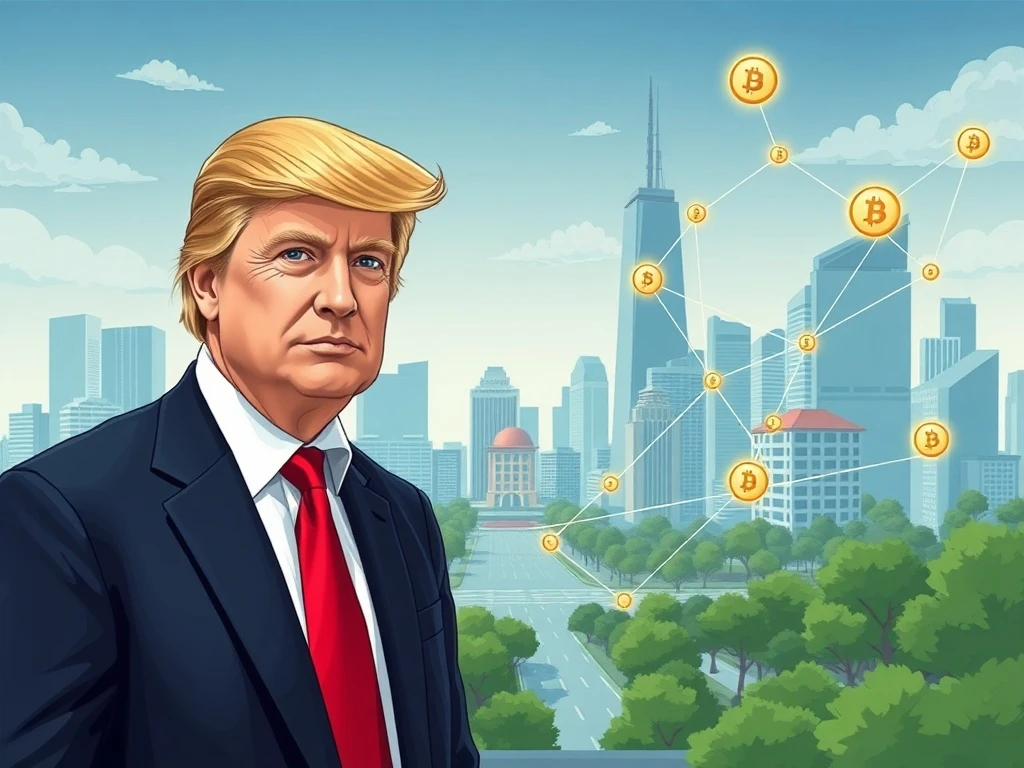
A significant shift is underway in the investment landscape. Eric Trump, co-founder of World Liberty Financial (WLFI), recently unveiled ambitious plans. He aims to tokenize a new real estate project from the Trump Organization. This initiative promises to democratize access to valuable assets. Ultimately, it leverages the power of Real Estate Tokenization for broader participation.
Understanding Real Estate Tokenization and Its Promise
What exactly is Real Estate Tokenization? Essentially, it involves converting rights to a real estate asset into digital tokens on a blockchain. Each token represents a fractional ownership stake. Therefore, investors can buy a small piece of a property, rather than needing capital for the entire asset. This process fundamentally changes how properties are bought and sold. It also introduces unprecedented liquidity to an often illiquid market. Historically, real estate investment demanded substantial capital. Furthermore, it involved complex legal procedures. Tokenization, however, simplifies these barriers. It opens doors for a wider range of participants, including ordinary Retail Investors.
Consider the core benefits:
- Fractional Ownership: Investors can purchase small, affordable units of a property.
- Increased Liquidity: Tokens can be traded more easily than physical property.
- Transparency: Blockchain records provide clear, immutable ownership trails.
- Global Access: International investors can participate without complex cross-border transfers.
Eric Trump’s Vision: Empowering Retail Investors with WLFI
Eric Trump clearly articulates a vision for financial inclusion. In an interview with CoinDesk, he detailed his plans. He stated that the initiative would involve WLFI and its proprietary stablecoin, USD1. Trump explained that they are exploring tokenization as a way to raise funds without relying on traditional banks. More importantly, it seeks to allow participation from ordinary Retail Investors. This approach challenges established financial norms. It offers a direct pathway for individuals to invest in high-value assets. Traditionally, these assets were exclusive to institutional investors or the ultra-wealthy.
This bold move follows earlier announcements. WLFI CEO Jack Witkoff previously spoke at the TOKEN2049 conference. He revealed plans to tokenize real estate owned by the family of U.S. President Donald Trump. Consequently, the current announcement solidifies those intentions. It signals a concrete step towards implementation. WLFI, therefore, positions itself at the forefront of this digital transformation.
WLFI and USD1: Facilitating Blockchain Real Estate Transactions
The role of WLFI and its stablecoin, USD1, is central to this endeavor. USD1 is designed to maintain a stable value, typically pegged to the U.S. dollar. This stability is crucial for real estate transactions. It mitigates the volatility often associated with other cryptocurrencies. Furthermore, using a stablecoin like USD1 streamlines the investment process. It provides a reliable medium of exchange for buying and selling tokenized property. This eliminates the need for converting volatile digital assets into fiat currency for each transaction. Consequently, the entire process becomes more efficient and predictable.
WLFI aims to build a robust ecosystem. This ecosystem will support the tokenization and trading of real estate assets. Their platform will likely handle the technical complexities. Thus, it makes the process accessible even for those new to blockchain. Ultimately, WLFI seeks to bridge the gap between traditional finance and the emerging digital asset economy. Their strategy involves leveraging blockchain technology to create a more equitable investment environment. This innovative approach promises to redefine property ownership.
The Impact on Traditional Real Estate and Banking
This initiative represents a significant disruption. It challenges the long-standing dominance of banks in real estate financing. Eric Trump emphasized raising funds “without banks.” This statement highlights a desire for greater autonomy and efficiency. Traditional banking systems often involve lengthy processes and high fees. Tokenization, conversely, offers a more direct and cost-effective alternative. It facilitates peer-to-peer transactions. Moreover, it reduces intermediaries, which can lower overall costs for investors and developers alike. Therefore, this model could significantly impact how large-scale projects secure funding in the future.
The implications extend beyond financing. Blockchain Real Estate could also transform property management and transfer. Smart contracts, for instance, can automate rent collection or dividend distribution. They can also ensure compliance with legal agreements. This automation enhances efficiency. It also reduces administrative burdens. Ultimately, this integration of blockchain technology promises a more streamlined and transparent real estate market for all stakeholders.
Empowering Retail Investors: A New Era of Access
The focus on Retail Investors is a key differentiator. Historically, participation in high-value real estate projects was limited. Only accredited investors or large institutions could typically access such opportunities. Real Estate Tokenization, however, lowers the entry barrier dramatically. It allows individuals to invest with smaller amounts. This makes diversified portfolios more attainable. For example, an investor could own a fraction of multiple properties. This strategy helps spread risk. It also increases potential returns. Consequently, this democratization of investment opens up a vast new market segment. It provides ordinary people with tools previously reserved for the elite.
This access is particularly impactful in a global context. Investors from different countries can participate easily. They face fewer geographical restrictions. Furthermore, the transparency of blockchain transactions builds trust. It provides clear proof of ownership. This fosters a more secure and inclusive investment environment. Ultimately, the goal is to create a more level playing field. It empowers individuals to grow their wealth through direct property ownership.
The Future Landscape of Blockchain Real Estate
The vision presented by Eric Trump and WLFI points to a transformative future. Blockchain Real Estate is still an evolving field. However, its potential to revolutionize the industry is immense. We can anticipate more developers exploring tokenization. They will seek to tap into new funding sources. Furthermore, we might see the emergence of specialized platforms. These platforms will facilitate the buying and selling of tokenized assets. Regulatory frameworks will also continue to adapt. They will need to accommodate these innovative financial instruments. Ultimately, the integration of blockchain technology into real estate is not just a trend. It represents a fundamental shift in how we perceive and interact with property as an asset class.
In conclusion, Eric Trump’s plans to tokenize real estate mark a significant milestone. They signal a growing acceptance of digital assets in mainstream finance. By focusing on Retail Investors and leveraging WLFI’s stablecoin, USD1, this initiative aims to create a more accessible, transparent, and efficient real estate investment market. This bold step could truly redefine the future of property ownership and wealth creation for millions.
Frequently Asked Questions (FAQs)
1. What is Real Estate Tokenization?
Real Estate Tokenization involves converting ownership rights of a physical property into digital tokens on a blockchain. Each token represents a fractional share of the property, making it possible to buy and sell small portions of real estate more easily and efficiently.
2. Who is Eric Trump and what is WLFI?
Eric Trump is a co-founder of World Liberty Financial (WLFI) and son of former U.S. President Donald Trump. WLFI is a financial technology company that aims to leverage blockchain technology, including its proprietary stablecoin USD1, to offer new investment opportunities, particularly in tokenized assets.
3. How can Retail Investors participate in this initiative?
The plan specifically aims to allow ordinary Retail Investors to participate by lowering investment barriers. Through tokenization, individuals can invest smaller amounts to acquire fractional ownership in real estate projects, which was traditionally reserved for large institutions or wealthy individuals.
4. What role does USD1 stablecoin play?
USD1 is WLFI’s proprietary stablecoin, likely pegged to the U.S. dollar. It serves as the primary medium of exchange for transactions within the tokenized real estate ecosystem. Its stability helps mitigate the price volatility often seen with other cryptocurrencies, providing a more reliable and predictable investment environment.
5. What are the main benefits of tokenizing real estate?
The primary benefits include increased liquidity for traditionally illiquid assets, fractional ownership allowing smaller investments, enhanced transparency and security through blockchain records, and broader global access for investors. It also potentially reduces reliance on traditional banking intermediaries.
6. What are the potential challenges for Blockchain Real Estate?
Blockchain Real Estate faces challenges such as evolving regulatory landscapes, the need for widespread adoption and understanding among investors, and ensuring the robust security and legal enforceability of smart contracts. However, these challenges are being actively addressed as the technology matures.
Related News
- Japanese Bonds Crashing: Bitwise Reveals the US Fiscal Path Is No Safer
- Tether USDT Mint: Stunning 1,000 Million Stablecoin Injection Signals Major Market Liquidity Move
- Greenland Sovereignty: Danish PM Delivers Defiant Rejection Amid Geopolitical Pressure