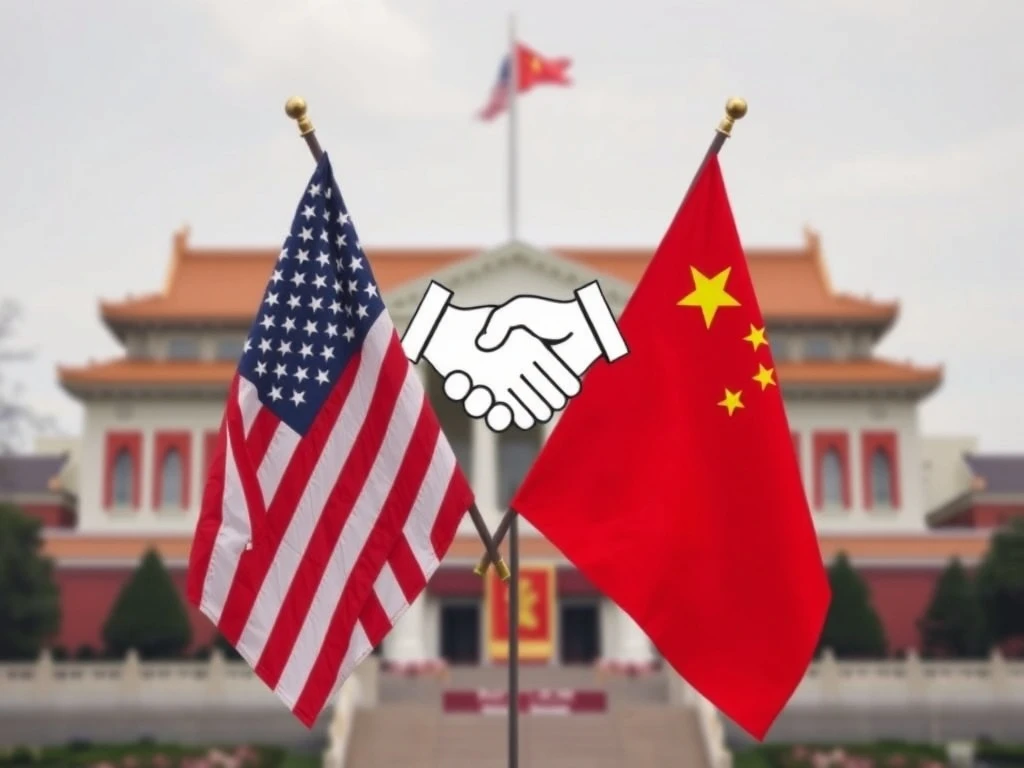
WASHINGTON, D.C. – March 15, 2025 – In a development with profound implications for global stability, U.S. Treasury Secretary Scott Bessent has revealed that President Donald Trump and Chinese President Xi Jinping could potentially meet four times throughout this year. This stunning disclosure, first reported by the political media outlet Politico, immediately sent ripples through diplomatic and financial circles worldwide. The prospect of such frequent high-level engagement between the world’s two largest economies suggests a potential recalibration of a relationship marked by both intense competition and deep interdependence. Consequently, analysts are now scrambling to assess the possible agendas, from trade and tariffs to Taiwan and technology.
Trump Xi Meetings 2025: Analyzing the Treasury Secretary’s Statement
Secretary Scott Bessent’s comments provide a rare glimpse into the administration’s diplomatic planning. As Treasury Secretary, Bessent’s purview includes international economic relations, making his insight particularly credible regarding trade and financial discussions. Historically, U.S.-China summits require months of meticulous preparation by working-level officials. The suggestion of four meetings, therefore, indicates a significant commitment of political capital and administrative resources from both capitals. Furthermore, this frequency far exceeds the pace set during Trump’s first term or the Biden-Xi engagements, pointing to either an urgent need for crisis management or a strategic attempt to forge a new framework for relations.
For context, the last major in-person meeting between the two leaders occurred in late 2023. Since then, tensions have persisted across multiple fronts. The announcement of potential quarterly summits could serve as a stabilizing mechanism. It aims to prevent misunderstandings from escalating into conflict. Each meeting would logically focus on a specific cluster of issues. For instance, one summit might address trade imbalances and tariffs. Another could concentrate on geopolitical flashpoints like the South China Sea. This structured approach would allow for incremental progress, rather than overloading a single negotiation.
The Geopolitical and Economic Context of US-China Relations
The relationship between the United States and China remains the most consequential bilateral dynamic in the 21st century. Over the past decade, it has evolved from cautious engagement to what many term ‘strategic competition.’ Key friction points are well-documented and deeply entrenched. The U.S. has implemented stringent controls on advanced technology exports to China, citing national security. Conversely, China continues its military activities near Taiwan, which it views as a renegade province. Global supply chains, still recovering from prior disruptions, remain vulnerable to political decisions made in Washington and Beijing.
Against this complex backdrop, the schedule of potential Trump Xi meetings takes on added significance. Regular leader-to-leader dialogue can act as a circuit breaker for bureaucratic inertia or hawkish posturing. It creates deadlines for subordinates to prepare deliverables. Moreover, it establishes direct personal rapport, which has historically been crucial in moments of crisis. The mere anticipation of these summits could moderate behavior in both nations, as neither side would want to jeopardize the talks with provocative actions. Financial markets, sensitive to geopolitical risk, often react positively to news of diplomatic engagement, seeing it as a reduction in the probability of worst-case scenarios.
Expert Analysis on the Potential Summit Agenda
Leading geopolitical analysts and former diplomats have begun speculating on the probable agenda for these high-stakes meetings. Dr. Linda Jacobson, a Senior Fellow at the Center for Strategic and International Studies, notes, ‘The number four is not arbitrary. It suggests a desire to compartmentalize the sprawling US-China agenda into manageable chunks. We might see a sequence focusing on Trade, Technology, Security, and Global Governance.’ This structured approach would allow for focused working groups to make progress between summits, turning leader-level agreements into concrete policy.
A potential timeline and focus for the 2025 meetings could be hypothesized as follows:
| Potential Quarter | Likely Primary Focus | Key Stakeholders |
|---|---|---|
| Q2 2025 | Trade & Tariffs | USTR, Chinese Ministry of Commerce |
| Q3 2025 | Technology & Supply Chains | Commerce Dept., MIIT |
| Q4 2025 | Regional Security (Taiwan, S. China Sea) | Defense Dept., PLA |
| Q1 2026 (if extending) | Climate & Global Governance | State Dept., Chinese Foreign Ministry |
Such a roadmap, while speculative, aligns with the known pressure points in the relationship. The trade and tariffs discussion would be paramount, given the economic impact of sustained duties. The technology dialogue would grapple with semiconductors, AI governance, and TikTok. Finally, the regional security talks would be the most delicate, requiring careful navigation of core interests and sensitivities.
Implications for Global Markets and Cryptocurrency
The news of potential frequent Trump Xi meetings carries immediate and long-term implications for global financial markets, including the cryptocurrency sector. Traditionally, equities and currencies exhibit volatility around major geopolitical events. However, the prospect of sustained dialogue is generally viewed as a market-positive development. It reduces the ‘geopolitical risk premium’ priced into assets. For cryptocurrencies, which often behave as a risk-on asset class or a hedge against traditional market instability, the impact is multifaceted.
Firstly, reduced US-China tensions could strengthen traditional markets, potentially drawing capital away from crypto in the short term. Conversely, a stable macro environment fosters investment in growth-oriented tech, which includes blockchain innovation. Secondly, specific outcomes from the summits could directly affect crypto. Potential areas of impact include:
- Cross-Border Payments: Agreements on financial infrastructure could influence CBDC development and crypto regulation.
- Technology Export Controls: Rules on advanced computing could affect mining hardware supply chains and AI-driven crypto projects.
- Investment Flows: Thawing relations might ease capital controls, affecting liquidity flows between regions.
Market participants will monitor the tone and substance of each meeting closely. Any sign of agreement on digital asset frameworks or a reduction in broad-based economic confrontation would be seen as a positive signal for the global adoption of cryptocurrency technologies.
Conclusion
The revelation by Treasury Secretary Scott Bessent regarding four potential Trump Xi meetings in 2025 marks a significant moment in international diplomacy. It underscores a deliberate, high-frequency approach to managing the complex US-China relationship. While the actual occurrence and outcomes of these summits remain to be seen, the intent itself signals a priority on direct communication and crisis prevention. For global observers, investors, and policymakers, this schedule presents a framework for understanding the evolving geopolitical landscape. The world will be watching closely, as the results of these dialogues will undoubtedly shape economic, technological, and security paradigms for years to come. The path forward is challenging, but structured engagement offers a more predictable and potentially productive alternative to unmanaged confrontation.
FAQs
Q1: Who reported the news about the four potential Trump-Xi meetings?
The information was initially reported by the U.S. political media outlet Politico, based on statements from U.S. Treasury Secretary Scott Bessent.
Q2: Why would the Treasury Secretary be commenting on diplomatic meetings?
The U.S. Treasury Department plays a central role in international economic policy, including negotiations on trade, currency, and sanctions—all key issues in US-China relations. The Secretary’s comments likely relate to the economic agenda of such summits.
Q3: How does this frequency compare to past US-China leader meetings?
Four meetings in a single year would be unusually high. During Trump’s first term and President Biden’s tenure, leader meetings typically occurred once annually, if at all, often on the sidelines of larger international forums like the G20.
Q4: What are the main topics likely discussed at these Trump Xi meetings?
Core agenda items would almost certainly include bilateral trade and tariffs, technology competition and export controls, regional security issues like Taiwan, and potentially global challenges such as climate finance and debt relief.
Q5: How could these summits affect cryptocurrency markets?
Reduced geopolitical tension generally supports risk assets, but the specific impact on crypto would depend on summit outcomes. Agreements on digital currency regulation, technology transfers, or financial market access could have direct implications for blockchain innovation and capital flows.
Related News
- Bitcoin Reserve Bill: Kansas Senator Proposes Revolutionary State Cryptocurrency Strategy
- PGA Tour Rise: Revolutionary Blockchain Golf Game Set for Mobile Launch This Year
- Ethereum Scams Exposed: Citibank’s Alarming Analysis Links Network Surge to Address Poisoning Fraud