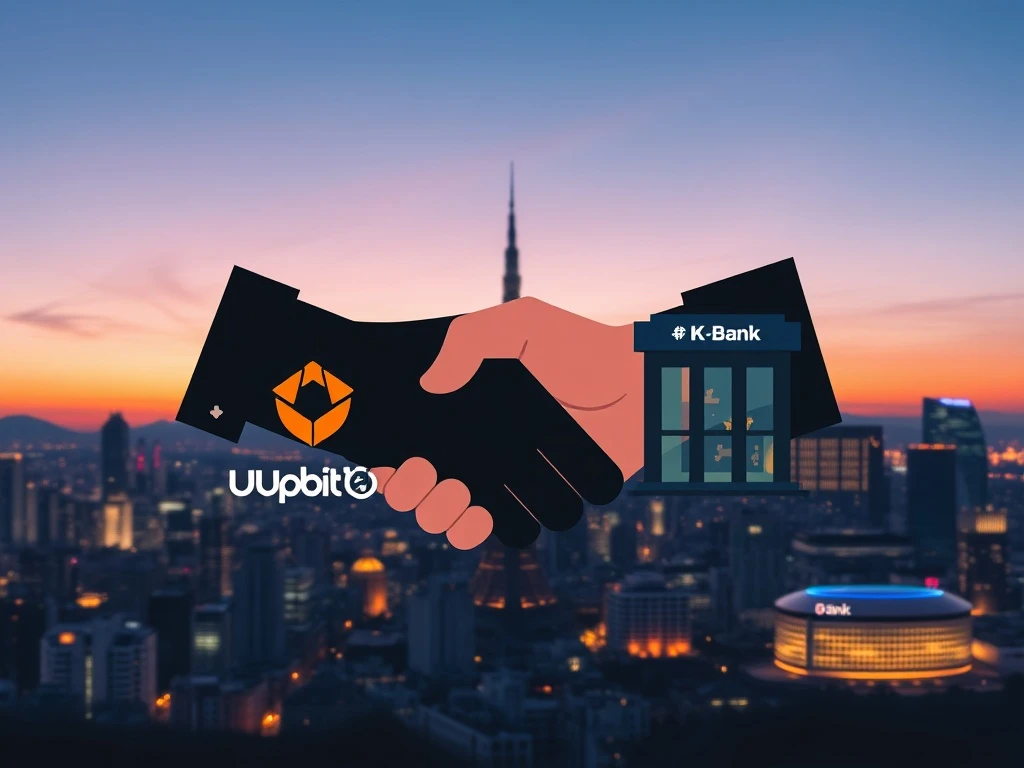
The South Korean cryptocurrency market observes a significant development. **Upbit**, a leading digital asset exchange, has secured a crucial extension. Its real-name account partnership with K-Bank will continue. This partnership is vital for regulatory compliance and operational stability. The agreement extends beyond October, preventing any disruption to services.
Upbit and K-Bank Partnership Solidifies Market Position
K-Bank, a prominent internet-only bank, will maintain its real-name account services for **Upbit**. This decision follows an application submitted by Dunamu, Upbit’s operator. The application went to South Korea’s Financial Intelligence Unit (FIU). The FIU is the primary regulatory body overseeing financial transactions. Their review process is thorough. It ensures all financial institutions comply with strict anti-money laundering (AML) protocols. Furthermore, this extension confirms K-Bank’s commitment. It supports the digital asset sector in South Korea. The current contract was set to expire soon. However, this renewal offers stability to millions of users. It also reinforces Upbit’s standing in the highly competitive market.
Industry experts closely watched the renewal process. A failure to extend could have caused significant market instability. This is because real-name accounts are mandatory for crypto trading in South Korea. They link a user’s bank account directly to their crypto exchange account. This system prevents anonymous transactions. It also deters illicit financial activities. Consequently, the extension is a positive signal. It indicates a maturing regulatory environment. It also shows a continued collaboration between traditional finance and the crypto sector. The FIU’s review is expected to conclude swiftly. This suggests a smooth transition for the renewed agreement.
The Importance of Real-Name Accounts in South Korea Crypto
Real-name accounts are fundamental to the **South Korea crypto** regulatory framework. They were introduced to enhance transparency. They also aim to combat money laundering and other financial crimes. Every user on a regulated exchange must link a verified bank account. This account must be under their real name. This system ensures accountability. It provides a clear audit trail for all transactions. Without these accounts, exchanges cannot legally operate in South Korea. This strict requirement differentiates South Korea from many other crypto markets. Therefore, the continuation of this facility is not merely operational. It is absolutely essential for Upbit’s legal existence.
The system works by verifying user identity through their bank. This adds an extra layer of security. It builds trust among investors. Moreover, it allows regulators to monitor transactions effectively. This robust framework helps to protect consumers. It also maintains market integrity. The **real-name accounts** requirement is a cornerstone of South Korea’s approach. It aims to integrate cryptocurrencies into the mainstream financial system responsibly. Therefore, K-Bank’s continued support is invaluable. It underpins the entire operational model for Upbit.
Regulatory Landscape for Crypto Exchange Operations
South Korea possesses one of the most developed regulatory frameworks globally for digital assets. The Financial Intelligence Unit (FIU) plays a central role. It supervises virtual asset service providers (VASPs). These regulations mandate strict AML and Know Your Customer (KYC) procedures. Each **crypto exchange** must register with the FIU. They also need to partner with a bank for real-name accounts. This ensures robust oversight. It also protects investors from fraudulent schemes. The government’s stance is clear. It aims to foster innovation while mitigating risks. This dual approach has shaped the market significantly.
The FIU’s review process is comprehensive. It evaluates several factors. These include:
- The exchange’s financial stability.
- Its internal control systems.
- Compliance with AML/KYC obligations.
- The security measures in place to protect user assets.
This stringent assessment ensures only compliant and secure platforms operate. The extension of the Upbit-K-Bank partnership signals confidence. It shows confidence in Upbit’s adherence to these high standards. Consequently, this strengthens the overall regulatory environment. It sets a precedent for other exchanges seeking similar renewals.
Impact on Upbit’s Market Position and Growth
This partnership extension significantly bolsters **Upbit**’s market leadership. As one of South Korea’s largest crypto exchanges, its continued operation is crucial. The extension ensures uninterrupted service. It prevents any potential loss of market share to competitors. Furthermore, it reinforces investor confidence. Users can trust that their funds are held on a fully compliant platform. This compliance is a major competitive advantage. It distinguishes Upbit from less regulated or smaller exchanges. The stable regulatory environment allows Upbit to focus on innovation. It can enhance user experience and expand its offerings.
Upbit’s strong position is also due to its trading volume. It often leads the market. This robust activity attracts more liquidity. It also offers better price discovery for traders. The continued K-Bank partnership solidifies this advantage. It ensures that Upbit remains a preferred choice. Both institutional and retail investors favor it. Moreover, this stability might encourage further institutional adoption. It could attract more capital into the **South Korea crypto** ecosystem. The partnership provides a secure gateway for participants.
K-Bank’s Strategic Role in Digital Finance
K-Bank’s decision to extend its **K-Bank partnership** with Upbit is strategic. It positions the bank at the forefront of digital finance. By collaborating with a leading crypto exchange, K-Bank taps into a rapidly growing sector. This allows it to diversify its service offerings. It also attracts a younger, tech-savvy customer base. Providing real-name accounts generates significant transaction fees. It also increases the bank’s overall deposit base. This mutually beneficial relationship highlights a broader trend. Traditional financial institutions are increasingly engaging with the crypto industry. They recognize its potential for growth and innovation.
The partnership also enhances K-Bank’s brand image. It portrays the bank as forward-thinking. It shows it embraces new financial technologies. This can give it an edge over competitors. Other traditional banks might be hesitant to enter the crypto space. K-Bank’s proactive approach demonstrates leadership. It shows an understanding of evolving customer needs. Furthermore, by working closely with Upbit, K-Bank gains valuable insights. It learns about blockchain technology and digital asset management. This knowledge can inform future product development. It can also help shape its digital banking strategy. This makes the partnership a win-win for both entities.
Future Outlook for South Korea Crypto Market
The extension of the Upbit-K-Bank agreement sets a positive tone. It suggests continued growth for the **South Korea crypto** market. This regulatory clarity fosters innovation. It encourages investment in the sector. We can expect to see more sophisticated products and services emerge. These might include decentralized finance (DeFi) applications. They could also involve non-fungible tokens (NFTs). The stable regulatory environment provides a solid foundation. It supports these advancements. Moreover, South Korea’s proactive stance could influence global regulatory discussions. Its model of integrating crypto with traditional finance offers valuable lessons.
However, challenges remain. Regulators continuously monitor market developments. They adjust policies as needed. This ensures consumer protection and financial stability. The ongoing evolution of global crypto regulations will also impact South Korea. The market will likely continue to mature. It will attract more diverse participants. This includes institutional investors. The emphasis on **real-name accounts** and strict AML will persist. This ensures a responsible and secure trading environment. The future of South Korea’s crypto market appears bright. It is built on a foundation of robust regulation and strategic partnerships.
Ensuring Trust and Security with Real-Name Accounts
The requirement for **real-name accounts** is more than a regulatory hurdle. It is a critical component for building trust. It ensures security within the crypto ecosystem. For users, it means their funds are less susceptible to fraud. It also means they are less vulnerable to hacking incidents. This is because the identity verification process is rigorous. For exchanges, it enhances their reputation. It demonstrates their commitment to compliance and user safety. This transparency helps to legitimize the crypto industry. It moves it away from its early, often unregulated, perception.
The system also benefits the broader financial system. It helps prevent cryptocurrencies from being used for illicit activities. This includes money laundering and terrorist financing. By linking transactions to verified identities, authorities can trace suspicious flows. This collaboration between banks and crypto exchanges is essential. It creates a robust defense against financial crime. Therefore, the continued partnership between Upbit and K-Bank is not just about business. It is about upholding the integrity of the financial system. It ensures a secure and trustworthy environment for all participants. This commitment to security underpins the growth of the entire **crypto exchange** sector in South Korea.
In conclusion, the extended partnership between Upbit and K-Bank marks a significant milestone. It reinforces the stability and regulatory compliance of South Korea’s crypto market. This development ensures continued trust and security for investors. It also paves the way for future growth and innovation in the digital asset space.
Frequently Asked Questions (FAQs)
Q1: What is a real-name account partnership in the context of crypto exchanges?
A real-name account partnership requires cryptocurrency exchanges to link users’ trading accounts to their verified bank accounts under their legal name. This system ensures identity verification and transparency for all transactions, complying with anti-money laundering (AML) regulations.
Q2: Why is the Upbit and K-Bank partnership extension crucial for the South Korea crypto market?
This extension is vital because real-name accounts are mandatory for legal crypto trading in South Korea. The continuation of this partnership ensures Upbit, a major crypto exchange, can operate without disruption, maintaining market stability and investor confidence in the South Korea crypto sector.
Q3: What role does South Korea’s Financial Intelligence Unit (FIU) play in this agreement?
The FIU is South Korea’s primary financial regulator. It reviews applications for such partnerships to ensure compliance with strict AML and Know Your Customer (KYC) regulations. Its approval is essential for the legal operation of crypto exchanges and their banking partners.
Q4: How does this partnership benefit K-Bank?
For K-Bank, this partnership provides access to the rapidly growing digital asset market, attracts a new customer base, and generates transaction fees. It also enhances K-Bank’s image as a forward-thinking institution embracing financial technology.
Q5: What are the implications for Upbit users?
Upbit users benefit from continued, uninterrupted access to trading services. The partnership ensures their funds are held on a compliant and secure platform, reinforcing trust and providing a stable trading environment.
Q6: Does this extension impact the future of other crypto exchanges in South Korea?
Yes, this successful renewal sets a positive precedent. It demonstrates that stable, compliant partnerships between banks and crypto exchanges are achievable. This could encourage similar collaborations and regulatory clarity for other crypto exchange platforms in South Korea.
Related News
- Binance Delisting Shakes Markets: Strategic Removal of 15 Margin Trading Pairs Including YGG/BTC
- Sky Protocol’s Strategic Surge: Major 31.57M SKY Buyback Fuels Confidence Post-MakerDAO Rebrand
- Trove Token Faces Furious Backlash After Abrupt Pivot From Hyperliquid to Solana Ecosystem