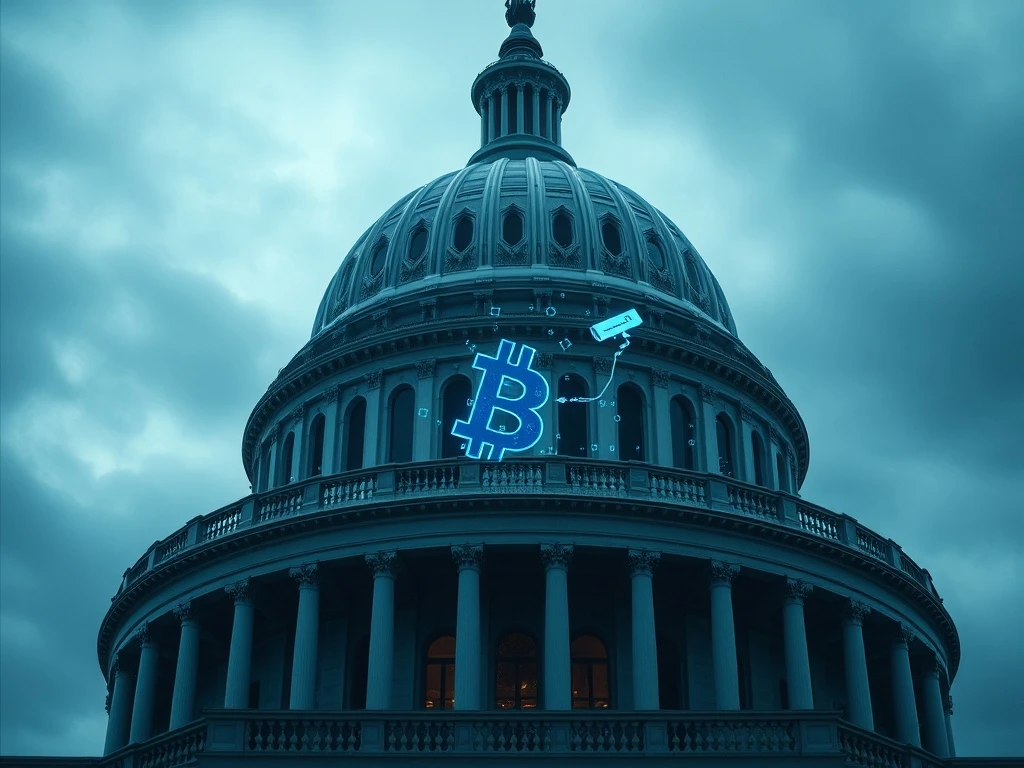
WASHINGTON, D.C. — March 2025 — A proposed cryptocurrency market structure bill currently circulating in the U.S. Senate Banking Committee could fundamentally reshape the relationship between government authorities and digital asset markets. According to a detailed analysis by Galaxy Research, the legislation might grant unprecedented surveillance powers to federal agencies. This development raises significant questions about financial privacy and regulatory overreach in the rapidly evolving cryptocurrency sector.
US Crypto Bill Contains Controversial Surveillance Provisions
The draft legislation, which remains under discussion, contains several provisions that concern privacy advocates and industry analysts. Galaxy Research’s report specifically highlights three key areas of potential expansion. First, the bill could authorize the U.S. Treasury Department to suspend digital asset transactions without obtaining a court order. Second, it would expand the Treasury’s special measure powers specifically over cryptocurrency transactions. Third, the legislation provides a new regulatory framework for decentralized finance (DeFi) protocols.
These provisions represent a significant departure from traditional financial oversight mechanisms. Historically, government agencies required judicial approval for similar actions in traditional finance. The proposed changes reflect growing regulatory anxiety about the speed and anonymity features of blockchain transactions. However, critics argue these measures could establish dangerous precedents for financial surveillance.
Potential Impacts on Digital Asset Privacy and Industry Growth
Industry experts express deep concern about the bill’s potential consequences. The analysis suggests these expanded powers could lead to several negative outcomes. Privacy violations represent a primary concern, as increased surveillance might compromise user anonymity. Additionally, regulatory uncertainty could stifle innovation within the cryptocurrency industry. Many startups might hesitate to develop new technologies under such expansive oversight.
The legislation also raises constitutional questions about financial privacy rights. Legal scholars note the Fourth Amendment protects against unreasonable searches and seizures. However, digital asset regulation occupies a complex legal gray area. The bill’s proponents argue enhanced oversight is necessary to prevent illicit activities. They cite concerns about money laundering, terrorist financing, and tax evasion using cryptocurrency networks.
Historical Context and Regulatory Evolution
This legislative effort follows years of regulatory debate about cryptocurrency oversight. The Bank Secrecy Act of 1970 established the foundation for modern financial surveillance. Subsequent legislation expanded these powers following the September 11 attacks. However, blockchain technology presents unique challenges for traditional regulatory frameworks. Decentralized networks operate without central intermediaries, complicating enforcement actions.
Several countries have already implemented strict cryptocurrency regulations. The European Union’s Markets in Crypto-Assets (MiCA) framework establishes comprehensive rules. However, MiCA does not grant executive agencies the same unilateral authority proposed in the U.S. bill. This distinction highlights the uniquely expansive nature of the American legislative approach.
Comparative Analysis of Government Powers
The following table illustrates key differences between existing and proposed regulatory powers:
| Regulatory Power | Current Framework | Proposed Expansion |
|---|---|---|
| Transaction Suspension | Requires court order or emergency declaration | Treasury Department discretion without judicial review |
| Special Measures | Primarily applies to traditional financial institutions | Explicitly extends to digital asset transactions and protocols |
| DeFi Regulation | Limited guidance and enforcement actions | Comprehensive regulatory framework with reporting requirements |
| Privacy Protections | Constitutional safeguards and statutory limitations | Potential erosion through administrative exceptions |
This comparison demonstrates the substantial expansion contemplated by the legislation. The changes particularly affect transaction monitoring and protocol governance. Furthermore, they establish new compliance burdens for cryptocurrency businesses.
Expert Perspectives on Surveillance Expansion
Financial regulation specialists offer mixed assessments of the proposed legislation. Some experts emphasize the legitimate need for updated regulatory tools. They argue that cryptocurrency’s rapid growth necessitates corresponding oversight enhancements. However, other analysts warn against excessive government intrusion. They suggest alternative approaches that balance security concerns with innovation protection.
Galaxy Research’s report specifically highlights several potential consequences:
- Reduced innovation: Startups may avoid the U.S. market due to regulatory complexity
- Privacy erosion: Expanded surveillance could compromise legitimate financial privacy
- Market fragmentation: Differing international standards might create compliance conflicts
- Constitutional challenges: Legal disputes could delay implementation for years
These concerns reflect broader debates about technology governance. Similar discussions occur regarding artificial intelligence, biotechnology, and other emerging fields. The cryptocurrency legislation represents a specific instance of this ongoing regulatory challenge.
Legislative Process and Timeline Considerations
The bill must navigate a complex legislative pathway before becoming law. First, the Senate Banking Committee must approve the legislation. Then, the full Senate would need to pass the bill. Subsequently, the House of Representatives would consider companion legislation. Finally, both chambers would reconcile any differences before sending the bill to the President.
This process typically takes months or even years. However, national security concerns might accelerate consideration. Previous financial regulation legislation, such as the Patriot Act, moved quickly through Congress. The current political environment suggests possible expedited treatment for cryptocurrency regulation.
Conclusion
The proposed US crypto bill represents a pivotal moment for digital asset regulation. Its surveillance expansion provisions could dramatically reshape government oversight of cryptocurrency markets. While addressing legitimate concerns about illicit finance, the legislation raises important questions about privacy and innovation. The ongoing legislative debate will determine whether America embraces expansive surveillance or seeks balanced regulatory approaches. This development warrants careful monitoring by investors, developers, and privacy advocates alike.
FAQs
Q1: What specific powers would the Treasury Department gain under this bill?
The legislation would grant three key authorities: power to suspend digital asset transactions without court orders, expanded special measure authority over cryptocurrency, and regulatory jurisdiction over DeFi protocols.
Q2: How does this bill compare to cryptocurrency regulations in other countries?
The proposed U.S. legislation appears more expansive than the European Union’s MiCA framework, particularly regarding executive agency powers without judicial oversight.
Q3: What are the main concerns about this legislative approach?
Primary concerns include potential privacy violations, stifled industry innovation, constitutional challenges, and market fragmentation due to international regulatory differences.
Q4: What stage is this legislation currently at in the lawmaking process?
The bill remains in draft form within the Senate Banking Committee, requiring committee approval before advancing to the full Senate for consideration.
Q5: How might this legislation affect ordinary cryptocurrency users?
Users could experience increased transaction monitoring, potential delays or suspensions of transfers, and reduced privacy protections for their digital asset activities.
Related News
- Bitcoin Demand Reveals Troubling Divergence: US Institutional Interest Remains Weak Despite Price Rebound
- Corporate Bitcoin Accumulation Skyrockets, Dwarfing New Supply by 3x in Stunning Six-Month Trend
- Bitcoin Surge: Aggressive Binance Buying Signals Potential Rally Toward $100,000