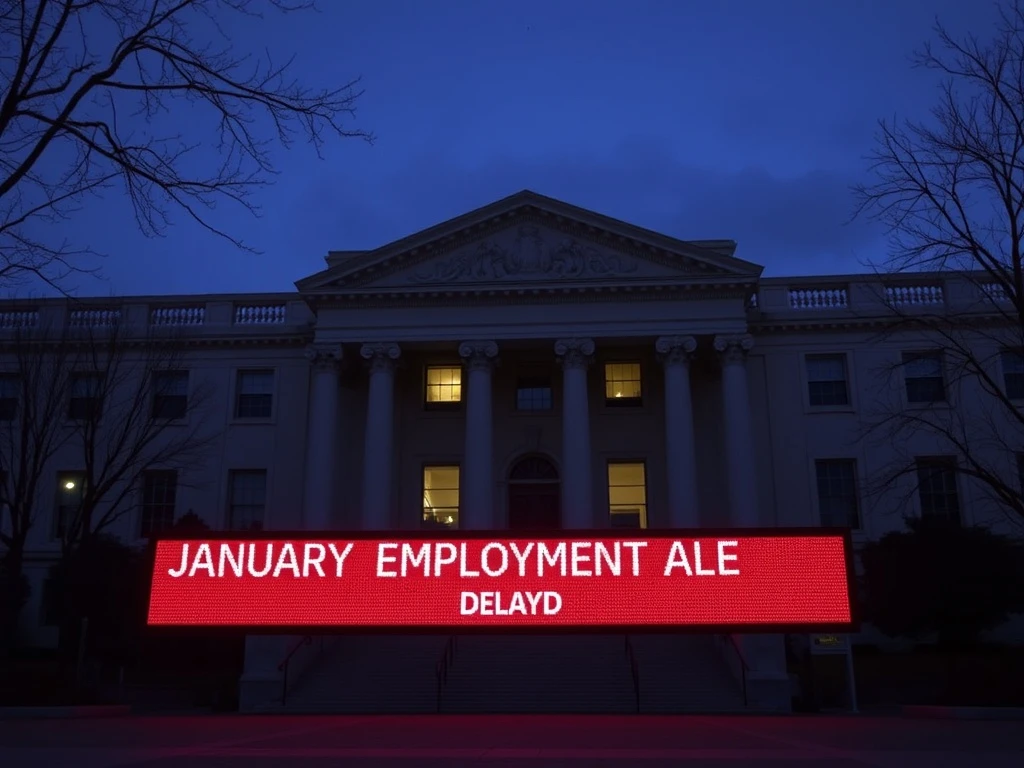
WASHINGTON, D.C. — February 3, 2025: The U.S. Department of Labor announced today it is delaying the release of its crucial January employment data, marking a significant disruption to economic analysis and financial markets. This postponement directly results from the ongoing partial federal government shutdown, which has now entered its third week. Consequently, policymakers, investors, and economists face unprecedented uncertainty regarding the health of the American labor market at the start of the new year.
US Employment Data Delay: Immediate Causes and Operational Impact
The Bureau of Labor Statistics (BLS), the agency within the Labor Department responsible for compiling employment statistics, operates with a skeleton crew during the shutdown. Normally, hundreds of economists and statisticians work to process survey data from businesses and households. However, the current situation has halted these complex operations. The monthly Employment Situation report requires extensive data collection, verification, and analysis—processes that cannot proceed without full staffing.
Historically, government shutdowns have disrupted economic data releases. For instance, the 2013 shutdown delayed the September employment report by 18 days. Similarly, the 2018-2019 shutdown affected multiple economic indicators. Nevertheless, the delay of January’s data carries particular weight as it represents the first comprehensive snapshot of the 2025 economy. Markets closely watch this report for signals about hiring trends, wage growth, and potential Federal Reserve policy shifts.
Understanding the Jobs Report Compilation Process
The monthly jobs report represents one of the most complex statistical exercises in government. The BLS conducts two separate surveys to generate the data. First, the Current Employment Statistics survey gathers information from approximately 145,000 businesses and government agencies. Second, the Current Population Survey contacts about 60,000 households. These surveys measure employment, unemployment, and wage figures across different sectors.
Expert Analysis: What the Delay Means for Economic Visibility
“The delay creates a significant information gap,” explains Dr. Anya Sharma, former BLS senior economist now with the Brookings Institution. “Financial markets, the Federal Reserve, and business leaders rely on this data for decision-making. Without it, we’re essentially flying blind on the most fundamental aspect of the economy—whether Americans are working and earning.” Dr. Sharma emphasizes that alternative data sources, like private payroll processors or weekly unemployment claims, provide only partial pictures. These sources lack the comprehensive, verified methodology of the government report.
The timing exacerbates the situation. January data typically reveals post-holiday employment adjustments and sets the tone for first-quarter economic performance. Key indicators now in question include:
- Nonfarm payrolls: The net number of jobs added or lost
- Unemployment rate: Percentage of labor force actively seeking work
- Average hourly earnings: Wage growth and inflation pressures
- Labor force participation: Working-age population engagement
Government Shutdown Impact on Economic Measurement
The partial shutdown affects multiple agencies beyond the Labor Department. The Commerce Department’s Bureau of Economic Analysis cannot release GDP figures. The Census Bureau pauses economic surveys. This creates a compounding data blackout. Financial analysts must therefore rely on less comprehensive private data, increasing market volatility and uncertainty.
Past shutdowns provide context for potential resolution timelines. The table below shows recent significant shutdowns and their data impact:
| Year | Duration (Days) | Key Data Delayed | Eventual Release Delay |
|---|---|---|---|
| 2013 | 16 | September Employment Report | 18 days |
| 2018-2019 | 35 | Retail Sales, Housing Starts | Multiple weeks |
| 2025 | 21+ | January Employment Report | Pending |
Once funding resumes, the BLS will need time to recall staff, process backlogged data, and maintain statistical integrity. The agency typically announces a new release date shortly after operations restart. However, the quality of data collected during survey periods affected by the shutdown may require additional methodological notes.
Market Reactions and Alternative Data Sources
Financial markets immediately reacted to the announcement. Stock futures showed increased volatility as traders lost a key economic anchor. Bond yields fluctuated on uncertainty about Federal Reserve policy. “The jobs report serves as a cornerstone for asset pricing,” notes Michael Chen, chief strategist at Global Markets Advisory. “Its absence forces investors to overweight other indicators that might present conflicting signals.”
Market participants now turn to alternative data, though each has limitations:
- ADP National Employment Report: Covers private payrolls only
- Initial unemployment claims: Weekly but volatile
- Conference Board surveys: Forward-looking but subjective
- Real-time private sector data: Incomplete coverage
The Federal Reserve’s Challenging Position
The data delay complicates monetary policy. The Federal Reserve’s dual mandate focuses on maximum employment and price stability. Without current employment data, policymakers lack crucial information for interest rate decisions. “This introduces unnecessary uncertainty into an already complex economic environment,” states former Fed Governor Sarah Johnson. “The Fed may become more cautious in its communications until data clarity returns.”
Historical Context and Precedent
Data delays during shutdowns are not unprecedented but remain disruptive. The 2013 shutdown created an 18-day delay for the September employment report. During the 2018-2019 shutdown, multiple economic releases were postponed or canceled. Statistical agencies face the challenge of maintaining data integrity while catching up on backlogs. They must also assess whether survey response rates during shutdown periods introduce bias into the data.
The current situation differs in its economic context. The economy shows mixed signals entering 2025, making timely data particularly valuable. Inflation concerns persist while certain sectors show softening. The missing January report leaves analysts debating whether the labor market continues its resilience or begins to reflect broader economic pressures.
Conclusion
The US employment data delay creates significant challenges for economic analysis and decision-making. The postponement of the January jobs report removes a crucial benchmark for assessing labor market health. Consequently, policymakers, businesses, and investors must navigate increased uncertainty until government operations resume and statistical agencies can release verified data. This situation underscores the essential role that timely, accurate government statistics play in a functioning modern economy. The eventual release will provide important insights, but the interim period highlights vulnerabilities in economic visibility during political impasses.
FAQs
Q1: Which specific report did the Labor Department delay?
The Department delayed the Employment Situation report for January 2025, commonly called the “jobs report” or “nonfarm payrolls report.” This comprehensive monthly release includes unemployment rates, job creation numbers, wage data, and labor force participation statistics.
Q2: When will the delayed January employment data be released?
The Bureau of Labor Statistics has not announced a new release date. Typically, the agency sets a new schedule once government funding resumes and staff return to work. Historical precedent suggests a delay of two to three weeks after shutdown resolution.
Q3: How does this delay affect Federal Reserve decisions on interest rates?
The delay complicates the Fed’s assessment of employment conditions, a key factor in monetary policy. Without current data, policymakers may rely more heavily on alternative indicators, potentially increasing caution in their decisions and communications about future rate changes.
Q4: Can private data sources replace the government jobs report during the delay?
Private sources provide partial information but lack the comprehensive methodology, sample size, and verification processes of the government report. Analysts use them as supplements but recognize their limitations for complete labor market analysis.
Q5: Has this happened before with other government shutdowns?
Yes, previous shutdowns have delayed economic data releases. The 2013 shutdown postponed the September employment report by 18 days, while the 2018-2019 shutdown affected multiple economic indicators from different agencies throughout its 35-day duration.
Related News
- Crypto Market Structure Bill Faces Critical Hurdle: Trump’s Direct Intervention Required for Passage, Warns TD Cowen
- Bitcoin Recovery Soars to $79K as Analysts Sound Alarm on Potential $50K Correction
- Bitcoin Whale Transfer: Stunning $274 Million Move from Coinbase Institutional to Mystery Wallet