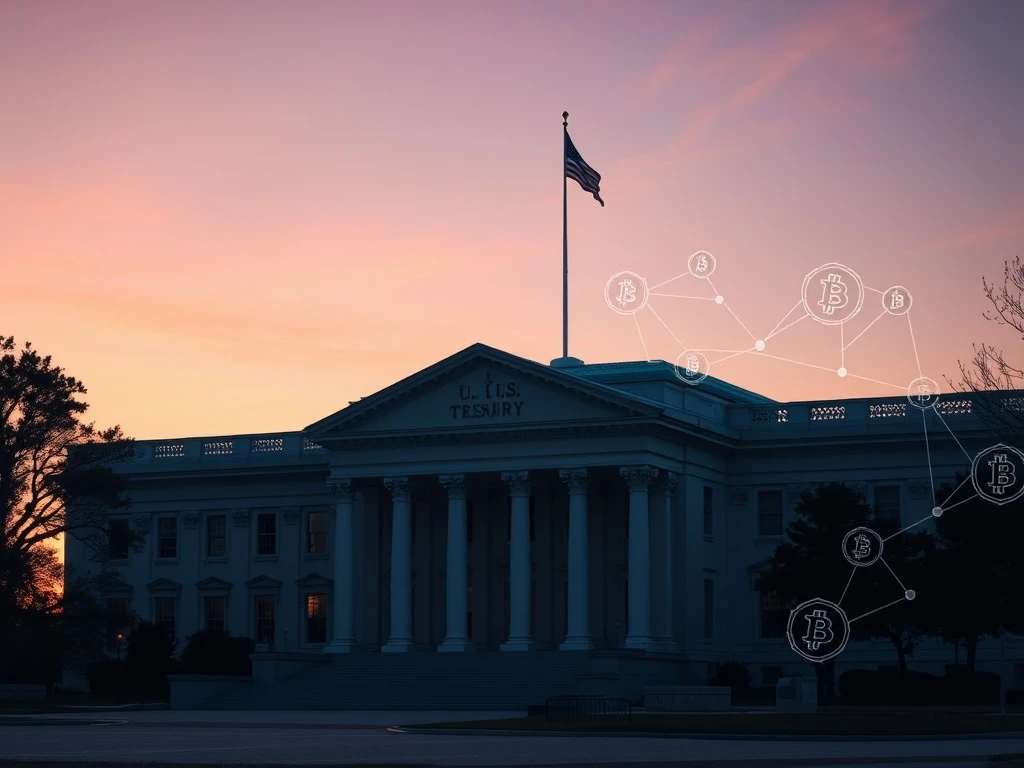
In a landmark announcement from Washington D.C. on March 15, 2025, U.S. Treasury Secretary Scott Bessent revealed a transformative federal strategy to incorporate seized Bitcoin into a formal digital asset reserve, fundamentally altering the government’s approach to cryptocurrency holdings and signaling a new era of institutional adoption.
Seized Bitcoin Enters a New Era of Federal Stewardship
Secretary Bessent’s declaration, first reported by financial news outlet Watcher.Guru, represents a significant policy evolution. Historically, the U.S. government has auctioned seized cryptocurrencies through agencies like the U.S. Marshals Service. Consequently, this new plan to retain and manage Bitcoin marks a strategic pivot. The government routinely seizes digital assets from criminal investigations, including darknet market operations and fraud cases. Therefore, this accumulated Bitcoin will now feed a dedicated reserve instead of returning to the open market.
This decision follows a period of extensive internal review. For instance, a 2024 Treasury Department report highlighted the growing value and complexity of seized digital assets. The report noted that traditional auction methods sometimes failed to capture maximum value for taxpayers. As a result, the new reserve framework aims to provide more controlled and strategic management of these assets.
Anatomy of the Proposed Digital Asset Reserve
The proposed digital asset reserve functions as a sovereign holding fund. Its primary purpose is to securely custody and strategically account for state-held cryptocurrencies. Key operational features will likely include:
- Secure Custody: Assets will be held in certified, air-gapped cold storage solutions, potentially managed by a combination of federal agencies and vetted private-sector custodians under strict oversight.
- Transparent Accounting: The reserve will implement blockchain analytics for real-time audit trails, ensuring every satoshi is accounted for on a public ledger.
- Strategic Disposition Framework: The Treasury may establish clear protocols for eventual use, such as funding specific initiatives, stabilizing markets, or serving as collateral.
This structure directly addresses longstanding criticisms about the opacity of government crypto sales. Moreover, it provides a model for other nations grappling with similar asset forfeiture challenges.
Expert Analysis on Market and Policy Impact
Financial policy analysts immediately recognized the announcement’s gravity. Dr. Anya Petrova, a senior fellow at the Georgetown Center for Financial Technology, stated, “This move institutionalizes Bitcoin at the highest level of government finance. It transitions crypto from a seized commodity to a strategic reserve asset, which could influence global central bank policies.”
The potential market impact is multifaceted. Initially, removing large blocks of seized Bitcoin from public auction could reduce sell-side pressure. Subsequently, long-term holding by a sovereign entity may be perceived as a vote of confidence in the asset’s durability. However, experts caution that the reserve’s size and management rules will be critical. A 2023 study by the Brookings Institution estimated the U.S. held over 200,000 BTC from various seizures. Managing such a sum requires unprecedented technical and financial governance.
Legal and Operational Precedents for Government-Held Crypto
The U.S. government is not new to cryptocurrency possession. Notably, it has been one of the world’s largest Bitcoin holders through seizures since the Silk Road case in 2013. Past sales have been episodic and often criticized for poor timing. For example, the government sold 30,000 BTC in 2014 for $19 million, assets worth over $1.8 billion at 2025 prices.
The new reserve plan suggests learning from this history. By holding assets strategically, the Treasury can avoid flooding the market and potentially realize greater value over time. This approach mirrors strategies used for other seized assets, like real estate or art, which are sometimes retained for public use. Legally, the plan operates under existing asset forfeiture laws but applies them to a novel asset class. Congressional oversight committees will likely scrutinize the custody and valuation procedures to ensure compliance and transparency.
Global Context and Sovereign Digital Asset Trends
The U.S. decision occurs within a broader global shift. Several nations are exploring or have launched sovereign digital asset initiatives. For instance:
| Country | Initiative | Status (2025) |
|---|---|---|
| El Salvador | Bitcoin as legal tender; national Bitcoin reserve | Active |
| China | Digital Yuan (e-CNY) pilot | Nationwide rollout |
| European Union | Digital Euro exploration | Investigation Phase |
However, the U.S. plan is distinct. It focuses on repurposing seized assets rather than issuing a central bank digital currency (CBDC) or making a legal tender declaration. This creates a unique hybrid model between passive holding and active fiscal tool. Consequently, it may offer a less controversial path for other Western governments to engage with cryptocurrency reserves without full monetary policy integration.
Technical and Security Imperatives for the Treasury
Implementing this reserve presents formidable technical challenges. The Treasury must establish military-grade security protocols to protect against cyber threats. Furthermore, it needs to develop internal expertise for key management and transaction signing. Industry experts suggest a multi-signature (multisig) wallet structure with keys held by different authorized officials or agencies. This setup would prevent any single point of failure.
Regular third-party security audits will be essential. Additionally, the Treasury must decide on blockchain participation. Will it run its own nodes for verification? These operational details will determine the reserve’s security and credibility. Past hacks of exchange and private wallets underscore the high stakes of safeguarding such a high-value target.
Conclusion
The plan to add seized Bitcoin to a U.S. digital asset reserve represents a watershed moment for cryptocurrency legitimacy and federal asset management. Secretary Bessent’s announcement moves Bitcoin from the periphery of government operations to a potential tool of state financial strategy. This policy shift acknowledges the enduring value of seized digital assets and seeks to manage them with long-term foresight. While operational hurdles remain, the establishment of a formal reserve could provide stability, transparency, and a new benchmark for how sovereign nations interact with the blockchain economy. The world will now watch closely as the U.S. Treasury builds the framework for one of the most significant government-held cryptocurrency reserves in history.
FAQs
Q1: What is a digital asset reserve?
A digital asset reserve is a formally managed treasury or holding fund for cryptocurrencies and other digital tokens. In this context, it refers to a U.S. government-controlled fund specifically for storing and managing seized Bitcoin.
Q2: Why is the U.S. government changing its policy on seized Bitcoin?
The government is shifting from auctions to a reserve model to gain more strategic control over the assets, potentially capture greater long-term value for taxpayers, and establish a formal framework for managing the growing volume of seized cryptocurrencies.
Q3: How much seized Bitcoin does the U.S. government currently hold?
While exact figures are not always public, estimates from blockchain analysts and past reports suggest the U.S. holds over 200,000 Bitcoin from various law enforcement seizures, worth tens of billions of dollars.
Q4: Will this move make Bitcoin more legitimate as an asset class?
Many analysts believe formal recognition and holding by a major sovereign treasury like the U.S. contributes to the institutional legitimacy and perceived stability of Bitcoin as a store of value, though it does not change its legal status as a commodity.
Q5: What are the biggest risks for the U.S. Treasury in holding this Bitcoin?
The primary risks include cybersecurity threats, the volatility of Bitcoin’s market price, the complexity of secure technical custody, and potential political or regulatory scrutiny regarding the management and use of the assets.
Related News
- Decentralized Validator Technology: Vitalik Buterin’s Critical Push for Native Ethereum Integration
- Sui Launches Transformative LAUNCH Career Internship Program to Cultivate Next-Generation Blockchain Talent
- RedStone Acquisition of Security Token Market Signals Strategic Shift in RWA Tokenization Landscape