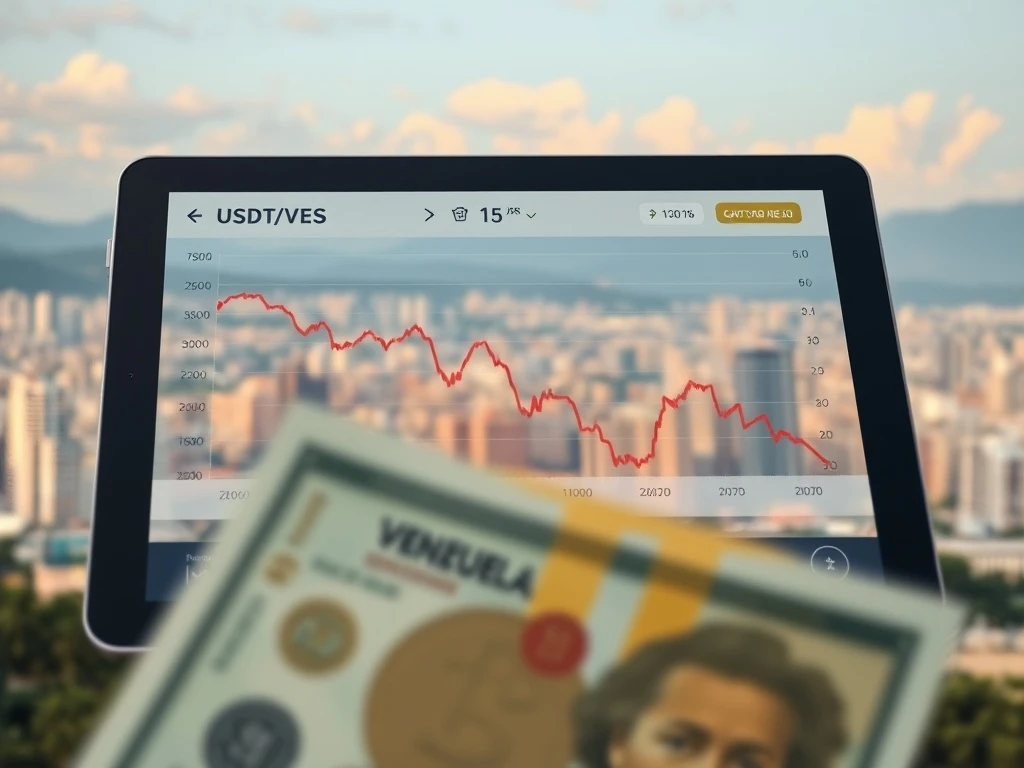
In Venezuela, the dramatic premium for the dollar-pegged stablecoin Tether (USDT) is now cooling significantly. According to recent market analysis, the speculative surge that followed major political events has begun to subside. This development offers crucial insights into the intersection of cryptocurrency, geopolitics, and fragile economies. The USDT premium in Venezuela serves as a real-time barometer for both financial anxiety and market correction.
USDT Premium in Venezuela: From Peak to Correction
The premium for USDT in Venezuela recently reached extraordinary heights. Following the U.S. arrest of President Nicolás Maduro, the stablecoin briefly traded at a staggering 140% premium against the official bolivar-to-dollar exchange rate. This event triggered immediate and volatile market reactions. However, the premium has since fallen by approximately 40%, according to data from DL News. Consequently, the market has returned to price levels last observed in December of the previous year. This rapid correction highlights the temporary nature of the initial shock.
Market analysts now attribute the initial spike to speculative trading rather than sustained panic. The trading environment in Venezuela often suffers from low liquidity, which can exaggerate price movements. Therefore, a relatively small volume of speculative buys can create disproportionate premiums. Economist Asdrúbal Oliveros noted the exchange rate’s significant overreaction. He stated that the economic outlook is becoming clearer over time, allowing for a market recalibration. While USDT continues to trade above the official dollar rate, the intense market overheating has demonstrably eased.
Analyzing the Drivers Behind Stablecoin Demand
Stablecoins like USDT fulfill a critical role in economies experiencing hyperinflation. In Venezuela, the bolivar has lost immense value over the past decade. Citizens and businesses therefore seek reliable stores of value and mediums of exchange. USDT, pegged to the U.S. dollar, provides a digital alternative to physical dollar bills, which are often scarce. This fundamental demand creates a persistent baseline premium for the stablecoin in local peer-to-peer markets.
Political instability acts as a powerful amplifier for this demand. The announcement of President Maduro’s arrest created immediate uncertainty about future U.S. sanctions, monetary policy, and access to global finance. In response, traders and individuals rushed to convert bolivars into USDT, perceiving it as a safe haven asset. This rush occurred in a market with limited sell-side liquidity, pushing the premium to unsustainable levels. The subsequent cooling indicates that the initial fear was speculative, not based on a permanent shift in the currency’s fundamental utility.
Expert Insight on Market Mechanics and Psychology
Economist Asdrúbal Oliveros provides essential context for these fluctuations. He explains that Venezuela’s cryptocurrency markets are particularly sensitive to political headlines. The low trading volume means that prices can swing wildly on news alone. Oliveros emphasizes that the recent cooling is a classic market correction. As no immediate, catastrophic economic policy changes followed the political event, traders reassessed their positions. This process allowed the premium to normalize toward its long-term trend, which still reflects the bolivar’s weakness but not acute crisis pricing.
Furthermore, the structure of Venezuela’s crypto economy plays a key role. Access to international exchanges is often restricted, forcing activity onto local peer-to-peer platforms. These platforms have their own pricing dynamics, which can diverge from global USDT rates. The recent premium spike was largely contained within these domestic channels. International arbitrage opportunities were limited by capital controls and logistical hurdles, preventing swift correction. The 40% decline thus represents a natural market equilibrium being restored as local sentiment stabilized.
The Broader Context of Cryptocurrency in Venezuela
Venezuela’s relationship with cryptocurrency extends far beyond USDT trading. The government launched the Petro (PTR) digital currency in 2018, though it has seen limited adoption. For everyday Venezuelans, global cryptocurrencies like Bitcoin and stablecoins are practical tools. They use them for remittances, savings, and purchasing essential goods online. This deep, utilitarian adoption creates a resilient crypto market structure that persists regardless of short-term political shocks.
The following table compares key aspects of Venezuela’s currency landscape:
| Asset | Primary Use Case | Volatility | Accessibility |
|---|---|---|---|
| Bolivar (VES) | Official local transactions | Extremely High | Ubiquitous but depreciating |
| U.S. Dollar (Cash) | Savings & large purchases | Low (Pegged) | Limited physical supply |
| Tether (USDT) | Digital savings & online trade | Low (Pegged) | High via P2P crypto apps |
| Bitcoin (BTC) | Long-term store of value | High | Moderate via exchanges |
This ecosystem demonstrates why demand for USDT is structural. The cooling premium does not signal reduced reliance on stablecoins. Instead, it signals a reduction in fear-based, speculative buying. The underlying need for a stable digital dollar alternative remains firmly intact. Analysts monitor this premium as a key indicator of both immediate political stress and long-term dollarization trends within the Venezuelan economy.
Implications for Global Crypto Markets and Regulation
The Venezuelan case study holds lessons for global observers. It vividly illustrates how stablecoins function in crisis economies. They are not merely speculative instruments but vital financial infrastructure. This reality pressures regulators worldwide to understand their dual nature. Policymakers must balance innovation and consumer protection with the recognition that these tools provide real economic utility where traditional finance fails.
Moreover, the event underscores the geopolitical dimension of cryptocurrency. The premium spike was a direct reaction to an action by the U.S. government. This shows how digital asset markets instantly price in geopolitical risk. For nations under sanctions or with unstable currencies, crypto markets become a forward-looking indicator of stress. As a result, financial analysts increasingly watch these premiums alongside traditional measures like bond yields or currency futures.
Conclusion
The cooling USDT premium in Venezuela provides a clear narrative of market psychology. A sharp, speculation-driven spike has given way to a significant correction. This return towards baseline levels confirms that the initial reaction was an overextension. The fundamental demand for USDT in Venezuela remains strong due to ongoing economic fragility. However, the extreme premium was unsustainable. Moving forward, the USDT premium will continue to serve as a sensitive gauge for political risk and economic sentiment within the country’s unique and pioneering cryptocurrency landscape.
FAQs
Q1: What caused the USDT premium in Venezuela to spike recently?
The premium spiked following the U.S. arrest of President Nicolás Maduro. This political shock triggered speculative buying in a low-liquidity market, driving the price of USDT far above its dollar peg.
Q2: How much has the USDT premium fallen since its peak?
According to reports, the premium has fallen by approximately 40% from its peak of around 140% over the official dollar rate. It has now returned to levels similar to those seen in December.
Q3: Is USDT still trading at a premium in Venezuela?
Yes. USDT continues to trade at a premium to the official U.S. dollar exchange rate in Venezuela. This reflects persistent demand for stable digital dollars due to the bolivar’s weakness, though the premium is now more moderate.
Q4: What does the cooling premium indicate about the Venezuelan economy?
The cooling premium suggests that immediate political fears have subsided and the market is correcting an overreaction. It indicates a stabilization of sentiment, not a resolution of the underlying economic issues that drive demand for stablecoins.
Q5: How do Venezuelans typically buy and use USDT?
Venezuelans primarily access USDT through peer-to-peer (P2P) platforms and local cryptocurrency exchanges. They use it for saving value, receiving remittances, and purchasing goods and services online, bypassing the hyperinflating bolivar.
Related News
- Iran’s Central Bank Secretly Amassed a $500M Stablecoin War Chest, Elliptic Reveals in Explosive Report
- Futures Liquidated: Staggering $144 Million Hourly Wipeout Shakes Crypto Markets
- Strategic Shift: Trump Cancels Feb. 1 Tariffs Citing Pivotal Greenland Agreement Framework