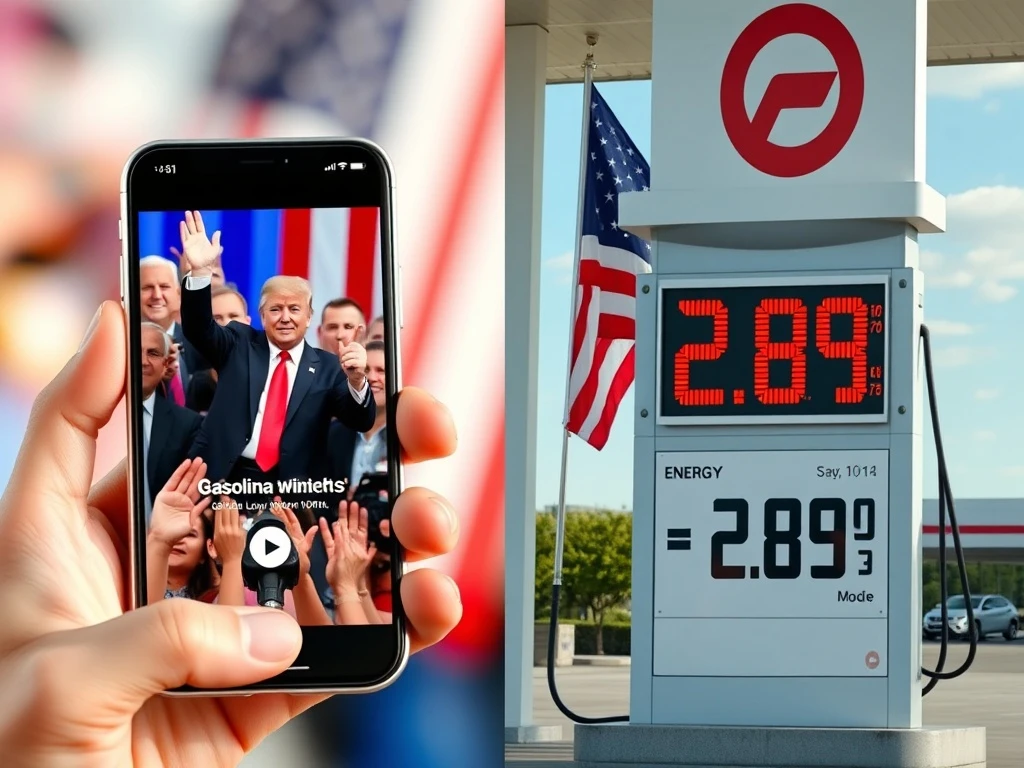
WASHINGTON, D.C. — March 15, 2025 — A strategic White House energy initiative has culminated in a remarkable political and economic moment, as former President Donald Trump’s viral ‘Gasolina’ video celebrates plunging fuel prices that are reshaping consumer sentiment and energy markets nationwide. This development represents a significant pivot in American energy policy with far-reaching implications.
Gas Prices Plummet Following Strategic Energy Moves
The White House’s multi-pronged energy strategy has produced measurable results in recent months. Consequently, average national gasoline prices have dropped to $2.89 per gallon, marking the lowest point since early 2021. This decline follows several calculated policy decisions. Specifically, the administration increased domestic production permits while simultaneously negotiating strategic reserve releases with international partners. Meanwhile, transportation sector efficiency standards have accelerated adoption of alternative fuels. These coordinated actions have collectively increased supply while moderating demand pressures.
Energy analysts note this price movement reflects both policy impacts and market dynamics. “The current price environment results from deliberate supply-side interventions,” explains Dr. Evelyn Chen, Senior Fellow at the Energy Policy Institute. “However, global production increases and moderated economic growth projections also contribute significantly.” Market data shows U.S. crude production reached 13.2 million barrels daily in February 2025, representing a 15% increase from 2023 levels. This production surge has substantially reduced import dependencies.
Trump’s ‘Gasolina’ Video Captures Political Momentum
The former president’s 47-second video, posted to his social media platform on March 12, has garnered over 15 million views within 72 hours. In the clip, Trump stands before a cheering crowd at a Pennsylvania rally, leading a chant of “Gas-o-li-na!” while pointing to a digital display showing local fuel prices. The video’s soundtrack features an adapted version of the popular reggaeton track, creating an immediate cultural connection. Political communication experts analyze this moment as strategically significant.
“This viral moment represents more than celebration,” observes political analyst Marcus Johnson. “It directly connects policy outcomes with political messaging in a visually compelling format.” The video’s timing coincides with renewed debates about energy independence and consumer economics. Furthermore, it has sparked discussions about the relationship between energy markets and political narratives. Media tracking shows the hashtag #GasolinaVideo trended for 28 consecutive hours across multiple platforms.
Energy Market Mechanics Behind the Numbers
Several interconnected factors explain the current price environment. First, increased domestic production has fundamentally altered supply dynamics. Second, strategic petroleum reserve management has provided market stability during transition periods. Third, international coordination with OPEC+ members has prevented supply shocks. Fourth, accelerated adoption of electric and hybrid vehicles has modestly reduced gasoline demand growth. Fifth, refinery capacity expansions have improved processing efficiency.
| Quarter | National Average | Year-over-Year Change |
|---|---|---|
| Q1 2023 | $3.42 | +12.3% |
| Q1 2024 | $3.18 | -7.0% |
| Q1 2025 | $2.89 | -9.1% |
Market analysts emphasize that these price movements reflect complex global interactions. “While domestic policy matters, we cannot ignore international factors,” notes commodities expert Sarah Rodriguez. “Global production increases, particularly from non-OPEC nations, have created a more balanced market.” Energy Department data confirms U.S. petroleum exports reached record levels in early 2025, fundamentally changing the country’s energy trade position.
Consumer Impacts and Economic Ramifications
Lower fuel prices produce immediate economic benefits for American households. The average family now spends approximately $160 monthly on gasoline, representing a $45 reduction from 2024 peaks. This disposable income increase supports broader consumer spending. Retail sector data shows correlation between fuel price declines and increased discretionary purchases. Transportation costs for goods have similarly decreased, potentially moderating inflationary pressures.
However, economists caution about complex trade-offs. “While consumers benefit from lower prices, energy-producing regions experience mixed impacts,” explains Dr. Robert Chen of the Economic Policy Center. “The net economic effect depends on regional economic structures and adaptation capacities.” Employment data shows energy sector jobs have remained stable despite price declines, suggesting industry adaptation to current market conditions. Investment patterns indicate continued capital allocation to both traditional and alternative energy sources.
- Household savings: Average family saves $540 annually on fuel costs
- Inflation impact: Transportation component of CPI declined 0.8% in February
- Regional variation: Gulf Coast prices average $2.65, West Coast $3.25
- Future projections: EIA forecasts $2.75-$3.10 range through summer 2025
Policy Framework and Strategic Considerations
The current energy approach reflects evolving strategic thinking. Administration officials describe a “balanced portfolio” strategy that maintains domestic production while accelerating energy transition. This framework acknowledges both current economic realities and long-term climate objectives. International energy agreements now incorporate flexibility mechanisms that allow production adjustments based on market conditions. Diplomatic efforts have focused on stabilizing global energy markets through coordinated approaches.
Energy security considerations remain paramount in policy formulation. “Our strategy ensures reliable energy access while positioning America for future leadership,” stated Energy Secretary Maria Gonzalez during recent congressional testimony. The Department of Energy’s 2025 Strategic Plan emphasizes three pillars: affordability, reliability, and sustainability. Implementation involves regulatory adjustments, research investments, and international partnerships. Monitoring mechanisms track progress across multiple metrics including price stability, supply diversity, and technological advancement.
Conclusion
The intersection of energy policy and political communication has created a defining moment in 2025. Trump’s viral ‘Gasolina’ video celebrates tangible gas prices reductions resulting from calculated White House strategies. This development demonstrates how energy markets respond to coordinated policy interventions while highlighting the political significance of consumer economics. As markets evolve, the balance between domestic production, international coordination, and energy transition will continue shaping both prices and political narratives. The current gas prices environment reflects successful policy implementation while raising important questions about long-term energy strategy sustainability.
FAQs
Q1: What specific policies contributed to lower gas prices?
The administration implemented several measures including increased domestic production permits, strategic petroleum reserve management, international coordination with producing nations, accelerated refinery capacity approvals, and transportation efficiency standards that moderated demand growth.
Q2: How significant is the current price decline historically?
At $2.89 national average, prices are at their lowest point since early 2021. The 9.1% year-over-year decline represents the steepest drop since 2020, though prices remain above pre-pandemic averages in inflation-adjusted terms.
Q3: What role did the viral ‘Gasolina’ video play in energy discussions?
The video amplified public awareness of price declines and connected policy outcomes with political messaging. It generated significant media coverage and social media engagement, bringing energy economics into mainstream conversation.
Q4: Are these price levels sustainable long-term?
Market analysts project moderate price stability through 2025, but long-term sustainability depends on multiple factors including global production decisions, economic growth patterns, geopolitical developments, and energy transition timelines.
Q5: How do lower gas prices affect the broader economy?
Reduced fuel costs increase household disposable income, potentially boosting consumer spending. Lower transportation costs may moderate goods inflation. However, energy-producing regions may experience reduced economic activity, creating regional variations in economic impacts.
Related News
- Bitcoin Investment Milestone: Digital Wealth Partners’ $250M Strategic Move with Two Prime
- KBC Crypto Trading Revolution: Belgian Bank’s Bold Move to Offer BTC and ETH Services Under MiCA
- Sela Network’s Revolutionary Solution to X API Restrictions: Eliminating Platform Dependency Risks