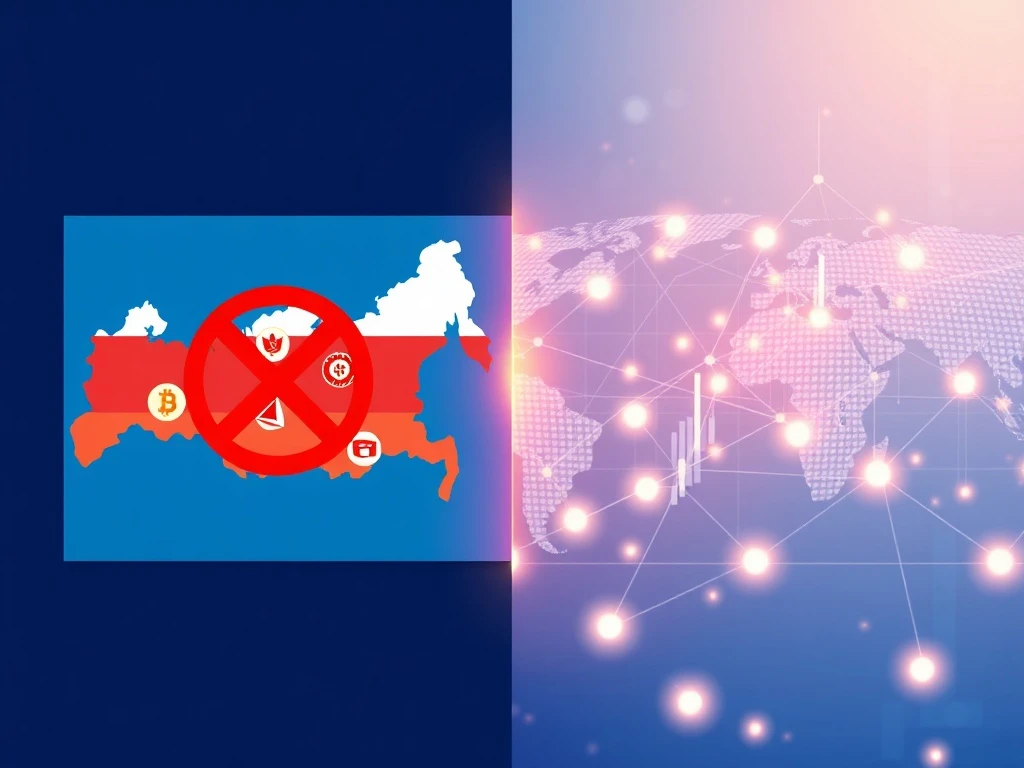
In a defiant response to recent regulatory actions, the cryptocurrency exchange WhiteBIT has publicly clarified its operational timeline, stating it ceased all services in Russia back in 2022. This announcement directly addresses a new prohibition by Russian authorities, a move linked to the platform’s documented support for Ukraine. The exchange’s revelation provides a crucial case study in how global crypto firms navigate geopolitical tensions, regulatory shifts, and strategic market repositioning. Furthermore, WhiteBIT disclosed that its decisive action, while initially costly, ultimately fueled remarkable expansion, setting a precedent for the industry.
WhiteBIT Russia Ban: A Timeline of Geopolitical Compliance
The Russian government’s recent announcement to ban transactions with WhiteBIT represents a significant escalation in its efforts to control digital asset flows. This decision, reported by financial news outlet BeInCrypto, explicitly cites the exchange’s support for Ukraine as the primary rationale. However, WhiteBIT’s immediate counter-statement reframes the narrative. The exchange asserts it proactively withdrew from the Russian market nearly three years prior, in 2022, following the full-scale invasion of Ukraine. This preemptive compliance highlights a critical trend: leading cryptocurrency platforms are increasingly prioritizing international sanctions adherence and ethical positioning over short-term market access.
Consequently, the 2022 exit was not without substantial immediate cost. WhiteBIT acknowledged a roughly 30% reduction in its user base following the suspension of Russian services. This figure underscores the significant market share Russia once represented for many global crypto exchanges. Nonetheless, the company’s subsequent trajectory is telling. According to their statement, strategic diversification and focus on other regions catalyzed a business growth of more than eightfold since the withdrawal. This growth metric suggests a successful pivot towards markets in Europe, Asia, and Latin America, aligning with broader global crypto adoption trends outside of sanctioned jurisdictions.
The Evolving Landscape of Crypto Sanctions and Compliance
WhiteBIT’s experience mirrors a wider industry reckoning. Following the onset of the Russia-Ukraine conflict, international bodies like the Financial Action Task Force (FATF) intensified pressure on Virtual Asset Service Providers (VASPs) to enforce sanctions. Major players, including Binance and Coinbase, also restricted services for Russian accounts in varying degrees. The table below contrasts the approaches of several exchanges:
| Exchange | Action Regarding Russia | Timeline | Stated Reason |
|---|---|---|---|
| WhiteBIT | Full service cessation | 2022 | Sanctions compliance & support for Ukraine |
| Binance | Restrictions on high-value accounts & sanctioned entities | 2022-Ongoing | Global sanctions compliance |
| Coinbase | Blocking targeted accounts linked to sanctioned individuals | 2022-Ongoing | OFAC and global regulatory requirements |
| Local Russian Exchanges | Continued operation under proposed new regulations | N/A | Serving the domestic market |
This regulatory environment forces exchanges to make complex strategic decisions. They must balance ethical considerations, legal obligations across multiple jurisdictions, and commercial interests. WhiteBIT’s early and complete exit, while initially painful, appears to have provided long-term strategic clarity, insulating it from the ongoing legal ambiguities of Russia’s proposed crypto legislation.
Analyzing the Impact: From User Loss to Global Expansion
The disclosed 30% user decline is a stark quantification of geopolitical risk in the cryptocurrency sector. For a period, this likely impacted key performance indicators such as trading volume and liquidity on the platform. However, the subsequent eightfold growth figure is far more significant. It indicates a successful execution of a contingency strategy, likely involving:
- Market Diversification: Aggressive pursuit of licensing and marketing in compliant regions.
- Product Innovation: Enhancing offerings for a global user base beyond spot trading.
- Reputational Capital: Leveraging its compliance stance to build trust with regulators and institutional partners in other markets.
This growth trajectory suggests that the reputational benefit of adhering to international norms may outweigh the revenue loss from a single, high-risk market. It also reflects a maturation in the crypto industry, where sustainable, regulated growth is increasingly valued over unfettered expansion.
Expert Insight on Regulatory Strategy and Market Resilience
Financial compliance analysts note that WhiteBIT’s public clarification serves multiple purposes. Primarily, it corrects the record, preventing misinformation about current operations. Additionally, it signals to other regulators worldwide that the exchange operates with a high degree of sanction sensitivity. This is crucial for obtaining or maintaining licenses in jurisdictions like the European Union, which has stringent anti-money laundering (AML) requirements for crypto firms. The move can be interpreted as a long-term investment in regulatory goodwill, a currency as valuable as any digital asset in today’s environment.
Moreover, the episode highlights the fragmented state of global crypto regulation. While Russia moves to ban certain foreign exchanges, it is simultaneously developing a legal framework for domestic crypto mining and settlement. This creates a bifurcated market: isolated national platforms versus global firms that must navigate a complex web of international laws. WhiteBIT’s story demonstrates that for exchanges with global aspirations, aligning with broader international standards, even at a cost, is a viable and potentially lucrative path.
Conclusion
The WhiteBIT Russia ban announcement and the exchange’s response illuminate the intricate dance between cryptocurrency, geopolitics, and regulation. WhiteBIT’s revelation of its 2022 exit underscores a strategic choice to prioritize compliance and ethical alignment, a decision that initially reduced its user base by 30% but ultimately fueled an eightfold expansion. This case study demonstrates that in the modern digital asset landscape, proactive regulatory navigation and strategic market diversification are not just risk management tools but powerful engines for sustainable growth. As nations continue to grapple with crypto oversight, the experiences of forward-thinking exchanges like WhiteBIT will likely chart the course for the industry’s future.
FAQs
Q1: Why did Russia ban WhiteBIT?
Russian authorities announced a ban on transactions with the WhiteBIT cryptocurrency exchange, formally citing the platform’s support for Ukraine as the primary reason for the prohibition.
Q2: When did WhiteBIT actually stop serving Russian users?
According to the exchange’s official statement, WhiteBIT ceased providing all services to clients in Russia in 2022, following the full-scale invasion of Ukraine and in compliance with international sanctions.
Q3: What was the business impact of WhiteBIT leaving Russia?
The company reported that the decision led to an immediate decrease of approximately 30% in its user base. However, it also stated that its overall business has grown more than eightfold since that strategic withdrawal.
Q4: How do other major crypto exchanges handle Russian sanctions?
Policies vary. Some global exchanges, like Binance and Coinbase, have imposed restrictions on accounts tied to sanctioned individuals or high-value transactions, while others have withdrawn more completely. Many continue to navigate evolving regulations.
Q5: What does this mean for the future of crypto regulation?
The situation highlights the increasing intersection of cryptocurrency and geopolitics. It suggests that global exchanges will face growing pressure to choose between accessing sanctioned markets or maintaining compliance with international law, impacting their long-term growth strategies.
Related News
- Cryptocurrency Scam Exposed: Chinese National Receives 46-Month Sentence for $37M Devastating Fraud Scheme
- Base Network Active Addresses Plunge to 18-Month Low Despite Alarming Token Issuance Surge
- Trump South Korea Tariffs: Critical Diplomatic Shift as President Vows Collaborative Solution