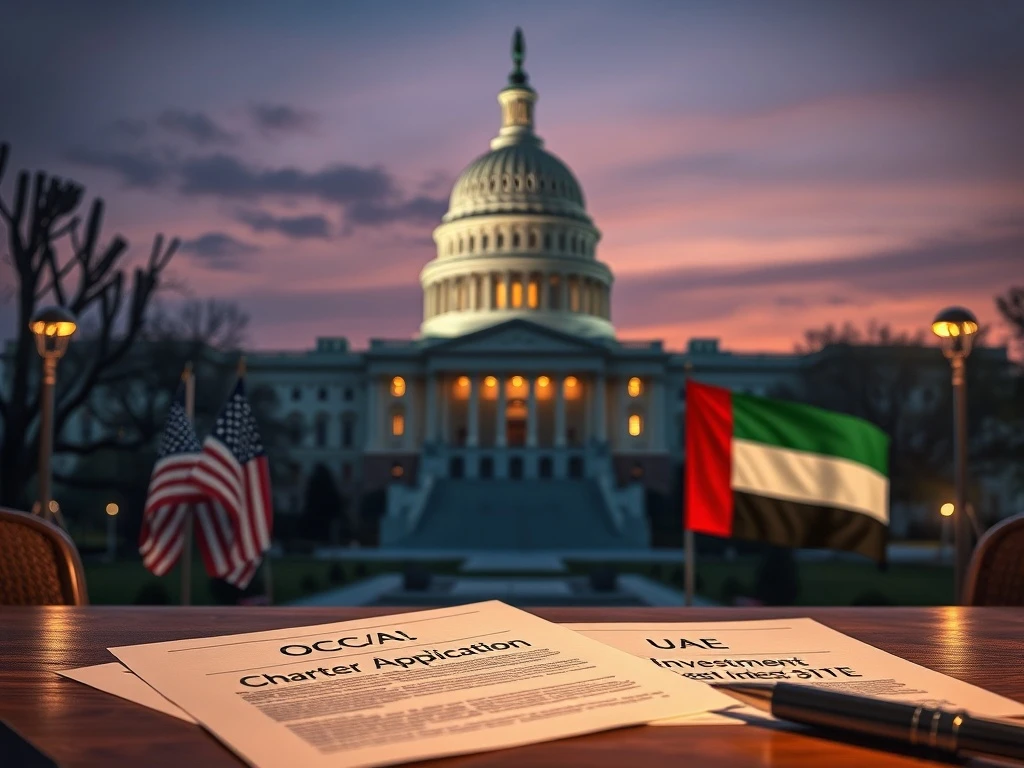
WASHINGTON, D.C. – March 15, 2025 – A prominent U.S. lawmaker has urgently called for regulators to halt the WLFI bank charter approval process, demanding immediate investigation into the financial institution’s substantial ties with the United Arab Emirates. Representative Gregory Meeks, a senior member of the House Financial Services Committee, formally requested Treasury Secretary Scott Bessent to suspend the Office of the Comptroller of the Currency’s consideration of WorldLibertyFinancial’s application. This dramatic intervention follows revelations about a $500 million investment from UAE royalty and subsequent U.S. approvals for advanced technology exports to the Middle Eastern nation.
WLFI Bank Charter Faces Congressional Scrutiny Over UAE Connections
Congressman Meeks expressed strong concerns about the relationship between WorldLibertyFinancial and the United Arab Emirates. The New York Democrat specifically cited potential national security implications and called for comprehensive review before any charter approval proceeds. Meanwhile, the OCC recently rejected a separate request from Senator Elizabeth Warren for a special investigation into the bank’s chartering process. This regulatory decision has intensified congressional oversight efforts.
The timing of these developments raises significant questions about foreign influence in U.S. financial institutions. Furthermore, the sequence of events reveals a complex interplay between international investment and technology policy. Representative Meeks emphasized the need for transparency regarding foreign investments in American banking entities. His formal request represents a substantial escalation in congressional oversight of financial regulatory decisions.
UAE Investment and Technology Export Connections
The $500 million investment from a member of the UAE royal family preceded U.S. authorization for substantial technology exports to the country. Specifically, the Commerce Department approved the sale of hundreds of thousands of Nvidia AI chips to the United Arab Emirates. This sequence of events has raised eyebrows among national security experts and financial regulators alike.
Several key developments have occurred in recent months:
- Investment Timing: UAE royal family investment in WLFI occurred in late 2024
- Technology Approval: U.S. authorized AI chip exports to UAE in early 2025
- Regulatory Review: OCC continued WLFI charter consideration throughout this period
- Congressional Response: Multiple lawmakers have now raised formal concerns
Financial regulation experts note that foreign investments in U.S. banks undergo rigorous scrutiny under existing frameworks. The Bank Holding Company Act and International Banking Act provide regulatory authorities with substantial oversight powers. However, the specific circumstances surrounding WLFI’s application have prompted calls for additional investigation.
Regulatory Framework and National Security Considerations
The Office of the Comptroller of the Currency operates under established guidelines for evaluating bank charter applications. These include assessments of financial stability, management competence, and compliance with anti-money laundering requirements. Additionally, the Committee on Foreign Investment in the United States (CFIUS) reviews certain foreign investments for national security implications.
Recent years have seen increased attention to foreign investments in critical sectors. The banking industry represents particularly sensitive infrastructure given its role in the national economy. Financial security experts emphasize the importance of robust oversight mechanisms for foreign-backed financial institutions. They point to historical precedents where inadequate scrutiny created vulnerabilities in the financial system.
Comparative Analysis of Foreign Bank Charters
The United States has approved foreign bank charters through various regulatory pathways. The OCC grants national bank charters, while state authorities approve state-chartered institutions. Foreign banks may also operate through agency offices, branches, or subsidiary structures. Each approach involves different regulatory requirements and oversight mechanisms.
The following table illustrates recent foreign bank charter approvals:
| Bank | Country of Origin | Charter Type | Approval Year |
|---|---|---|---|
| MUFG Union Bank | Japan | National Charter | 2022 |
| TD Bank | Canada | State Charter | 2023 |
| HSBC USA | United Kingdom | Federal Branch | 2021 |
| WLFI (Pending) | UAE-backed | National Charter | Under Review |
This comparative context highlights the regulatory landscape within which WLFI’s application proceeds. Each approval involves careful consideration of financial stability, regulatory compliance, and national interest factors. The current controversy surrounding WLFI reflects evolving concerns about specific foreign relationships and their implications for financial security.
Congressional Oversight and Regulatory Independence
The tension between congressional oversight and regulatory independence represents a recurring theme in financial governance. Lawmakers exercise authority through hearings, legislation, and formal requests to executive agencies. Meanwhile, regulatory bodies like the OCC maintain operational independence within statutory frameworks. This balance ensures both democratic accountability and expert decision-making.
Representative Meeks’ intervention follows established congressional practices for overseeing financial regulation. The House Financial Services Committee regularly examines banking policies and regulatory decisions. Committee members from both parties have expressed concerns about foreign influence in various sectors. These concerns have intensified amid geopolitical tensions and technological competition.
Financial policy analysts note several relevant factors:
- Historical Precedents: Congressional interventions in bank charter decisions have occurred previously
- Regulatory Response: Agencies typically consider congressional input while maintaining independent judgment
- Process Transparency: Public scrutiny often increases during controversial applications
- Timeline Implications: Additional investigations may delay final decisions substantially
The OCC’s rejection of Senator Warren’s earlier request indicates the agency’s commitment to its established review processes. However, Representative Meeks’ more recent intervention may prompt different considerations given its specific focus on UAE connections.
Expert Perspectives on Financial Security and Foreign Investment
Financial security specialists emphasize the importance of comprehensive due diligence for foreign-backed institutions. They note that modern financial systems face diverse threats including money laundering, sanctions evasion, and economic espionage. Robust vetting processes help mitigate these risks while facilitating legitimate international investment.
Banking regulation experts point to several key considerations in the WLFI case. First, the substantial UAE investment requires careful examination of资金来源 and ultimate beneficial ownership. Second, the connection between this investment and subsequent technology approvals warrants scrutiny. Third, the broader geopolitical context may influence regulatory assessments of the application.
These experts generally agree on several principles:
- Foreign investment in U.S. banks should undergo thorough national security review
- Regulatory decisions should balance economic benefits with security considerations
- Transparent processes build public confidence in financial governance
- International standards should guide cross-border banking supervision
Conclusion
The WLFI bank charter application now faces significant congressional scrutiny amid concerns about UAE connections. Representative Meeks’ call for a halt pending investigation reflects broader anxieties about foreign influence in critical financial infrastructure. The sequence of UAE investment followed by technology export approvals has raised legitimate questions requiring thorough examination. As regulatory authorities consider this application, they must balance legitimate foreign investment with essential security safeguards. The outcome will establish important precedents for how the United States evaluates foreign-backed financial institutions in an increasingly complex geopolitical landscape. Ultimately, the WLFI bank charter decision will demonstrate how American financial governance adapts to evolving international relationships and security challenges.
FAQs
Q1: What is the WLFI bank charter application?
The WLFI bank charter application refers to WorldLibertyFinancial’s request for a national bank charter from the Office of the Comptroller of the Currency, which would allow it to operate as a federally-regulated bank in the United States.
Q2: Why has Representative Meeks called for a halt to the WLFI charter?
Representative Meeks has called for a halt pending investigation into the company’s ties with the United Arab Emirates, particularly following a $500 million investment from UAE royalty and subsequent U.S. approvals for technology exports to the country.
Q3: What is the Office of the Comptroller of the Currency’s role?
The OCC is an independent bureau within the U.S. Treasury Department that charters, regulates, and supervises all national banks and federal savings associations.
Q4: How does foreign investment in U.S. banks typically get reviewed?
Foreign investments undergo review through multiple channels including the OCC’s chartering process, the Federal Reserve’s oversight for bank holding companies, and potentially the Committee on Foreign Investment in the United States for national security considerations.
Q5: What happens next in the WLFI charter process?
The OCC will consider congressional input while conducting its independent review. The agency may proceed with its evaluation, request additional information, delay the process for further investigation, or ultimately approve or deny the charter application based on its findings.
Related News
- Federal Reserve Independence Faces Crucial Test as Treasury Secretary Sidesteps Trump Authority Question
- US Stocks Trade Mixed: Nasdaq Plunges Over 2% in Stunning Tech Rout
- XRP Derivatives Reveal Cautious Market Sentiment as Price Struggles Below Critical $1.65 Resistance