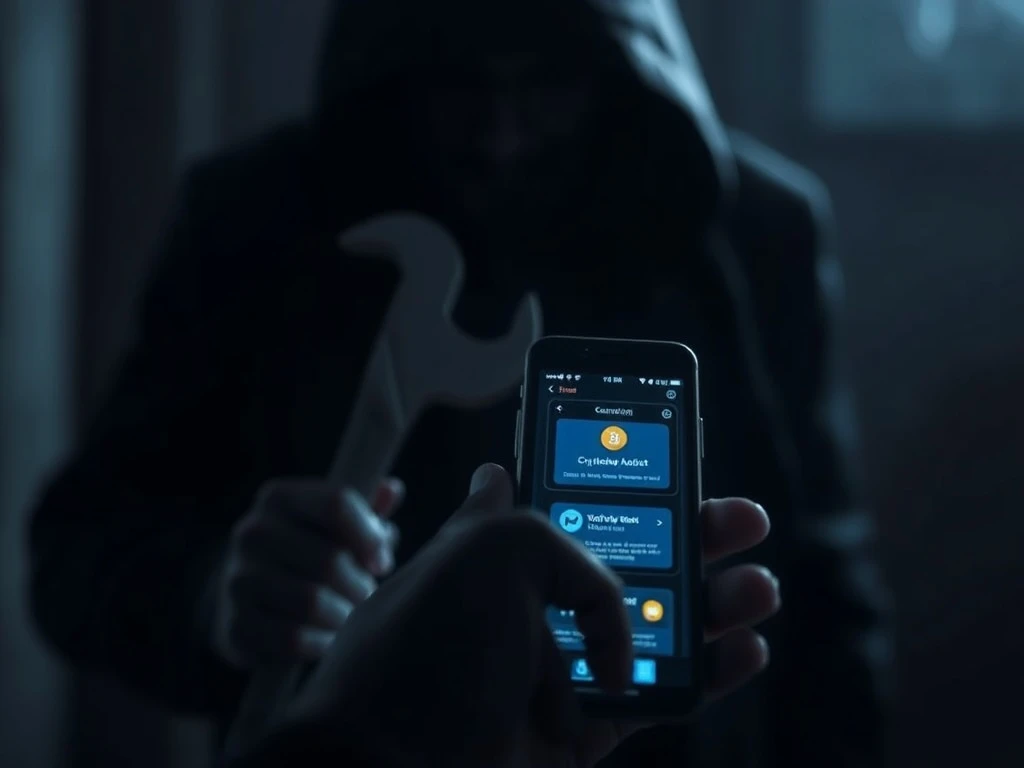
A disturbing new front has opened in the world of cryptocurrency crime, moving beyond sophisticated digital hacks into the realm of physical violence. According to a recent study by blockchain security firm CertiK, reported by CoinDesk, so-called ‘wrench attacks’ against virtual asset holders surged by a staggering 75% globally last year. This brutal trend resulted in financial losses exceeding $40 million, signaling a dangerous evolution in how criminals target digital wealth. The data reveals a particularly sharp rise in Europe, with France experiencing double the number of incidents compared to the United States.
Understanding the Mechanics of a Wrench Attack
Unlike remote cyber intrusions, a wrench attack is a shockingly low-tech form of crime. Criminals use coercion, intimidation, or outright physical violence to force a victim to surrender access to their cryptocurrency holdings. The term originates from the crude threat of using a physical tool, like a wrench, to compel compliance. The primary target in these assaults is the victim’s private key or seed phrase—the cryptographic string that grants absolute control over a digital wallet. Consequently, once stolen, these assets become nearly impossible to recover due to the irreversible nature of most blockchain transactions.
This method bypasses complex digital security measures entirely. A criminal does not need to defeat multi-factor authentication or find a software vulnerability. Instead, they apply direct physical pressure on the individual who holds the keys. The rise of such attacks underscores a critical vulnerability in the crypto ecosystem: the human element. While wallets and exchanges can be fortified with code, the person managing them remains susceptible to age-old threats of violence.
The Global Hotspots and Statistical Reality
CertiK’s report documented 72 confirmed wrench attacks worldwide in the last calendar year, a significant jump from the previous period. A geographical analysis shows a pronounced concentration in Europe. France emerged as a major hotspot with 19 recorded incidents. For context, the United States documented 9 such attacks. Other European nations, including Germany and the United Kingdom, also reported notable cases. This regional disparity may relate to several factors, including local law enforcement priorities, public awareness levels, and the density of high-net-worth crypto investors in urban centers.
The collective financial damage from these 72 attacks surpassed $40 million. However, experts caution this figure likely represents only reported cases. Many victims, fearing further retaliation or due to the traumatic nature of the crime, may choose not to involve authorities. Furthermore, the pseudo-anonymous nature of cryptocurrency can make tracing and quantifying losses exceptionally challenging for both victims and investigators.
The Catalyst: Why Physical Crypto Crime is Escalating
Several converging factors explain the sharp increase in wrench attacks. First, the growing mainstream adoption of cryptocurrency has created a larger pool of potential targets with significant, liquid digital wealth. Second, enhanced security on exchanges and decentralized finance (DeFi) protocols has made purely digital theft more difficult and resource-intensive for criminals. As digital doors lock tighter, some bad actors are resorting to the most direct path: confronting the key holder.
Third, the culture of public display, or ‘flexing,’ on social media platforms can inadvertently paint targets. Individuals sharing details of their trading successes, non-fungible token (NFT) purchases, or blockchain gaming yields can attract malicious attention. Finally, the irreversible and borderless nature of cryptocurrency transactions makes it an ideal vehicle for theft, as stolen funds can be laundered and moved across jurisdictions in minutes.
- Increased Asset Value: Higher crypto valuations mean a single seed phrase can unlock life-changing sums.
- Improved Digital Security: Stronger online defenses push criminals toward physical methods.
- Social Media Oversharing: Public boasts about crypto gains serve as a beacon for criminals.
- Perceived Anonymity of Criminals: Attackers may believe physical crimes are harder to trace back to crypto movements.
Protective Measures and Security Best Practices
In response to this trend, security experts emphasize a paradigm shift from purely digital hygiene to holistic personal security. The foundational rule is operational security: never discuss the specifics of your cryptocurrency holdings publicly. Using a hardware wallet for storing significant assets is crucial, but its physical location and the security of its recovery phrase are equally important. Experts recommend secure, offline storage for seed phrases—such as in a safety deposit box or a high-quality home safe—rather than keeping them digitally or in an easily accessible place.
For high-net-worth individuals, diversifying storage across multiple wallets and even multiple geographical locations can mitigate risk. Some advocates suggest using multi-signature wallets, which require authorization from several private keys to execute a transaction. This setup can provide a layer of protection even if one key is compromised under duress. Ultimately, the mindset must evolve to treat private keys with the same level of secrecy and security as the combination to a physical vault containing gold bullion.
The Law Enforcement and Regulatory Challenge
The cross-jurisdictional nature of these crimes presents a formidable challenge. A violent assault may be investigated by local police, while the subsequent movement of digital assets falls under the purview of financial cybercrime units, often at a national or international level. Coordination between these entities is essential but often slow. Regulatory bodies worldwide are now grappling with how to classify and combat this hybrid threat. Some jurisdictions are considering stricter know-your-customer (KYC) rules for decentralized applications, while others are focusing on improving public awareness campaigns about the physical risks associated with holding crypto.
Conclusion
The 75% surge in wrench attacks represents a sobering milestone for the cryptocurrency industry. It highlights that the greatest security vulnerability may not be in the code, but in the physical world. As digital asset adoption continues, the community must confront the reality that substantial wealth, even when stored on a blockchain, can attract primitive criminal tactics. Combating this trend requires a combined effort of personal vigilance, advanced security tools like multi-signature wallets, and improved collaboration between victims, security firms, and global law enforcement. The $40 million in losses from these violent crypto thefts is more than a statistic; it is a clear call to action for every holder to integrate physical security into their digital asset strategy.
FAQs
Q1: What exactly is a ‘wrench attack’ in cryptocurrency?
A1: A wrench attack is a physical crime where assailants use threats, coercion, or violence to steal a person’s cryptocurrency private keys or seed phrases. The name humorously references the idea of threatening someone with a wrench to force them to give up access, bypassing digital security entirely.
Q2: Why are these attacks increasing so rapidly?
A2: The increase is driven by higher crypto valuations creating bigger targets, improved digital security pushing criminals toward physical methods, and social media oversharing that inadvertently identifies potential victims. It represents a shift in criminal strategy as digital theft becomes harder.
Q3: Which countries are most affected by wrench attacks?
A3: According to the CertiK study, Europe is currently the most affected region. France recorded 19 incidents last year, the highest of any country, followed by other European nations and the United States. The concentration suggests regional factors like enforcement and investor density play a role.
Q4: How can I protect myself from a wrench attack?
A4: Key protections include never discussing crypto holdings publicly, using a hardware wallet, storing seed phrases in a secure physical location like a safety deposit box, considering multi-signature wallets for large sums, and maintaining general personal security awareness.
Q5: If I am a victim of a wrench attack, what should I do?
A5: Prioritize your immediate physical safety and contact local law enforcement immediately. Then, if possible, report the theft to relevant cybercrime units. You should also report the wallet addresses involved to major blockchain analytics and exchange companies to flag the stolen funds, though recovery is often extremely difficult.
Related News
- USDC Minted: Stunning 250 Million Stablecoin Injection Signals Major Market Preparation
- USDC Minted: Stunning 250 Million Stablecoin Injection Signals Major Market Preparation
- USDC Minted: Stunning 250 Million Stablecoin Injection Signals Major Market Movement