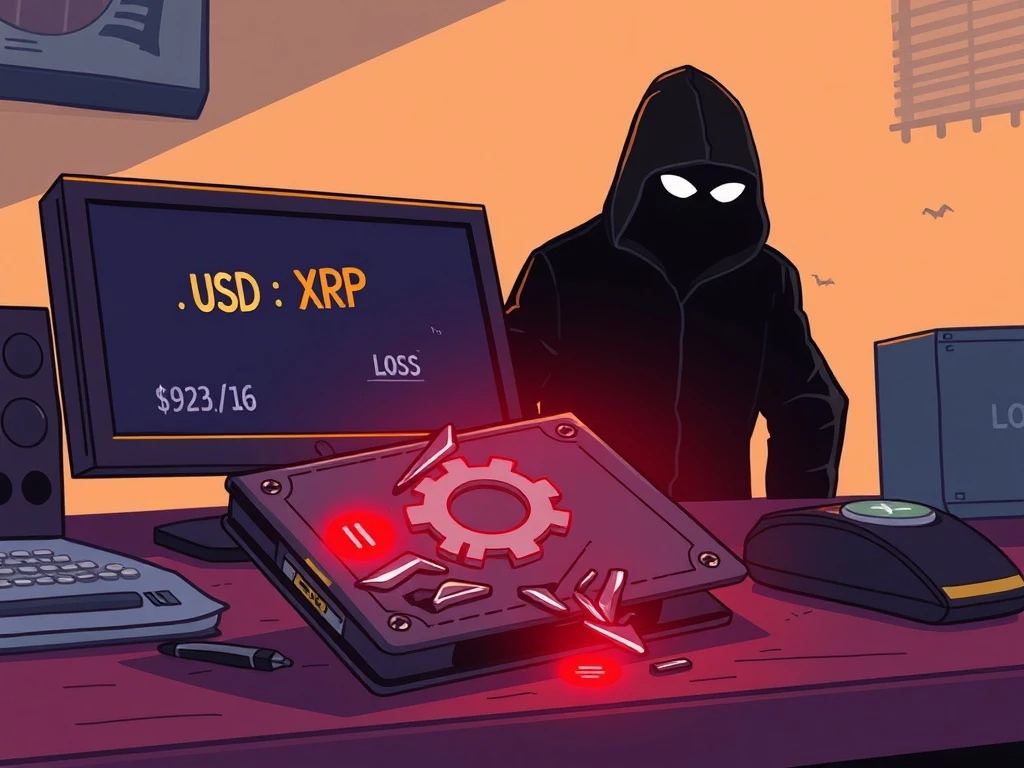
The digital asset world recently witnessed a startling incident. A US investor reportedly lost a staggering $3.05 million in XRP. This unfortunate event stemmed from an XRP hardware wallet hack, sending ripples of concern through the cryptocurrency community. It underscores the ever-present dangers in the volatile world of digital finance. This incident demands close attention from all crypto holders.
The Devastating XRP Hardware Wallet Hack Unfolds
A US-based cryptocurrency investor faced a significant financial setback. They lost $3.05 million worth of XRP, a major digital asset. This substantial loss occurred due to a compromise of their hardware wallet. The device was manufactured by Ellipal, a Hong Kong-based company. On-chain analyst ZachXBT quickly brought this incident to light. He detailed the movement of the stolen funds. The analyst’s investigation revealed a complex laundering process. It involved over-the-counter (OTC) trading channels. These channels are linked to Huione, a Southeast Asian platform. US regulators recently sanctioned Huione. This hack underscores persistent crypto security risks within the digital asset landscape. It highlights the sophisticated methods criminals now employ.
Unpacking Crypto Security Risks in Hardware Wallets
Hardware wallets are generally considered one of the most secure ways to store cryptocurrencies. They isolate private keys from internet-connected devices. This isolation typically protects funds from online threats like malware and phishing. However, this incident prompts a re-evaluation of security layers. It raises questions about potential vulnerabilities. Supply chain attacks, for instance, represent one such risk. Malicious actors might tamper with devices during manufacturing or shipping. Furthermore, user error can also compromise security. Phishing attempts or insecure seed phrase storage remain common vectors. This XRP hardware wallet hack serves as a stark reminder. No security measure is entirely foolproof. Investors must remain vigilant against evolving threats. They must also understand the limitations of their chosen security tools.
Many factors contribute to overall digital asset security. Users must exercise extreme caution. They should always verify sources. Also, they must never share sensitive information. Even with advanced security devices, human error remains a critical vulnerability. Therefore, continuous education on best practices is essential. It empowers users to better protect their investments. The landscape of cyber threats constantly changes. Consequently, security strategies must also adapt.
The Ellipal Wallet Hack: A Closer Look
The compromised device in question was an Ellipal hardware wallet. Ellipal is a known manufacturer in the crypto security space. The specific nature of the exploit remains under investigation. Was it a sophisticated supply chain attack? Did it involve a vulnerability in the device’s firmware? Or perhaps, was it a consequence of user interaction, such as falling for a social engineering scam? Without specific details, the exact vector remains unclear. This event, however, impacts the reputation of hardware wallet manufacturers. It also emphasizes the critical need for continuous security audits. Users trust these devices implicitly. Therefore, manufacturers bear a heavy responsibility. They must ensure robust protection against all known attack vectors. The incident surrounding the Ellipal wallet hack will undoubtedly lead to further scrutiny. It highlights the importance of due diligence.
Manufacturers often release firmware updates. These updates address newly discovered vulnerabilities. Users must install these promptly. They should only download updates from official channels. Unofficial sources could contain malicious software. Additionally, transparency from manufacturers following such incidents is crucial. It helps restore user confidence. This also aids the broader community in learning from security breaches. The crypto industry thrives on trust and innovation. Therefore, maintaining high security standards is paramount for all participants.
Tracing Digital Asset Theft: The On-Chain Investigation
ZachXBT, a prominent on-chain sleuth, played a crucial role. He meticulously tracked the stolen XRP funds. On-chain analysis is vital in such cases. It allows investigators to follow the flow of illicit assets across blockchain networks. The analyst identified the movement of funds through specific OTC trading channels. These channels are notoriously difficult to monitor. They often facilitate transactions outside traditional exchanges. This makes tracing more challenging. Notably, the funds passed through channels associated with Huione. Huione is a Southeast Asian platform. US regulators recently imposed sanctions on Huione. These sanctions target its alleged involvement in illicit financial activities. This connection highlights the intersection of cybercrime and regulatory enforcement. It underscores global efforts to combat digital asset theft. The ability to trace these transactions provides valuable intelligence. It helps law enforcement agencies.
Blockchain technology offers a unique advantage. Every transaction is immutable and publicly recorded. This transparency, however, does not guarantee easy identification of real-world identities. Criminals often use mixers or multiple wallets to obscure their tracks. Nevertheless, skilled on-chain investigators can often piece together these complex financial flows. Their work is indispensable. It helps in recovering stolen assets and bringing perpetrators to justice. This type of detailed on-chain investigation demonstrates the power of blockchain forensics. It also shows its limitations.
Protecting Your Investments: Mitigating Future Risks
This incident provides critical lessons for all crypto investors. Firstly, always purchase hardware wallets directly from the official manufacturer. Avoid third-party resellers if possible. This mitigates the risk of supply chain tampering. Secondly, practice robust seed phrase management. Store your recovery phrase offline in a secure, private location. Never digitize it or share it with anyone. Thirdly, enable all available security features. This includes strong PINs and multi-factor authentication. Regularly update your hardware wallet’s firmware. Always verify the authenticity of updates. Be wary of unsolicited communications. Phishing attempts are a constant threat. Understand the limitations of your security tools. Education is your first line of defense against crypto security risks.
Consider using multi-signature wallets for larger holdings. These require multiple approvals for transactions. This adds another layer of security. Diversify your storage methods. Do not put all your digital assets in one place. Furthermore, regularly audit your own security practices. Stay informed about the latest scam tactics. Participate in community discussions about security best practices. By taking these proactive steps, investors can significantly reduce their exposure to risks. They can safeguard their valuable digital assets more effectively.
The $3.05 million XRP hardware wallet hack is a sobering reminder. It shows the persistent dangers within the digital asset ecosystem. While hardware wallets offer significant protection, they are not immune. Vigilance, education, and adherence to best practices remain paramount. The ongoing efforts of on-chain analysts like ZachXBT are crucial. They help in tracking stolen funds. Furthermore, regulatory actions against platforms like Huione demonstrate a growing commitment. These actions aim to disrupt illicit financial networks. As the crypto landscape evolves, so too must our approach to security. Investors must prioritize safeguarding their digital assets against sophisticated threats.
Frequently Asked Questions (FAQs)
Q1: What exactly happened in the XRP hardware wallet hack?
A1: A US investor reportedly lost $3.05 million worth of XRP. This loss occurred due to a compromise of their hardware wallet. The wallet was manufactured by Ellipal. On-chain analysis traced the stolen funds through OTC channels linked to the sanctioned platform Huione.
Q2: How secure are hardware wallets typically, and what does this incident imply?
A2: Hardware wallets are generally considered very secure. They store private keys offline, protecting them from most online threats. This incident, however, highlights potential vulnerabilities. These could include sophisticated supply chain attacks, firmware exploits, or user-related security compromises. It emphasizes that no security solution is entirely invulnerable.
Q3: What is ZachXBT’s role in crypto investigations?
A3: ZachXBT is a prominent on-chain analyst. He specializes in tracking illicit cryptocurrency transactions. His investigations often involve following stolen funds across various blockchain networks. This work provides crucial intelligence for the crypto community and law enforcement.
Q4: How can I protect my cryptocurrency from hacks like this?
A4: To protect your crypto, purchase hardware wallets directly from manufacturers. Securely store your seed phrase offline. Enable all security features like strong PINs and multi-factor authentication. Regularly update firmware and remain vigilant against phishing and social engineering scams.
Q5: What is Ellipal, and how is it involved in this incident?
A5: Ellipal is a Hong Kong-based company. It manufactures hardware wallets for cryptocurrency storage. One of their devices was reportedly compromised in this $3.05 million XRP theft. The specific nature of the exploit affecting the Ellipal wallet remains under investigation.
Q6: What are the risks of using OTC trading channels?
A6: Over-the-counter (OTC) trading channels can pose significant risks. They often operate with less transparency and regulatory oversight compared to centralized exchanges. This makes them attractive for illicit activities like money laundering. Users engaging with such channels face increased risks of fraud and involvement in sanctioned activities.
Related News
- Bitcoin Hash Ribbons Indicator Reveals Crucial Buy Signal as Market Eyes $90,000 Threshold
- KYC is Essential: Messari Analyst Reveals Critical Barrier Against Prediction Market Insider Trading
- WalletConnect Pay Launches, Declaring Payments as Crypto’s Crucial Final Frontier