Proof of Work vs Proof of Stake: How Each Secures a Blockchain
Learn how proof of work and proof of stake secure blockchains, their trade-offs, and what they mean for beginners and intermediate crypto users.
Key points
- Proof of work uses computational power to validate transactions and secure the network, while proof of stake uses locked cryptocurrency as collateral.
- Proof of work is energy-intensive but battle-tested; proof of stake is energy-efficient but relies on economic penalties and can favor large holders.
- Both mechanisms aim to prevent attacks by making it costly to cheat, but they differ in hardware needs, decentralization, and environmental impact.
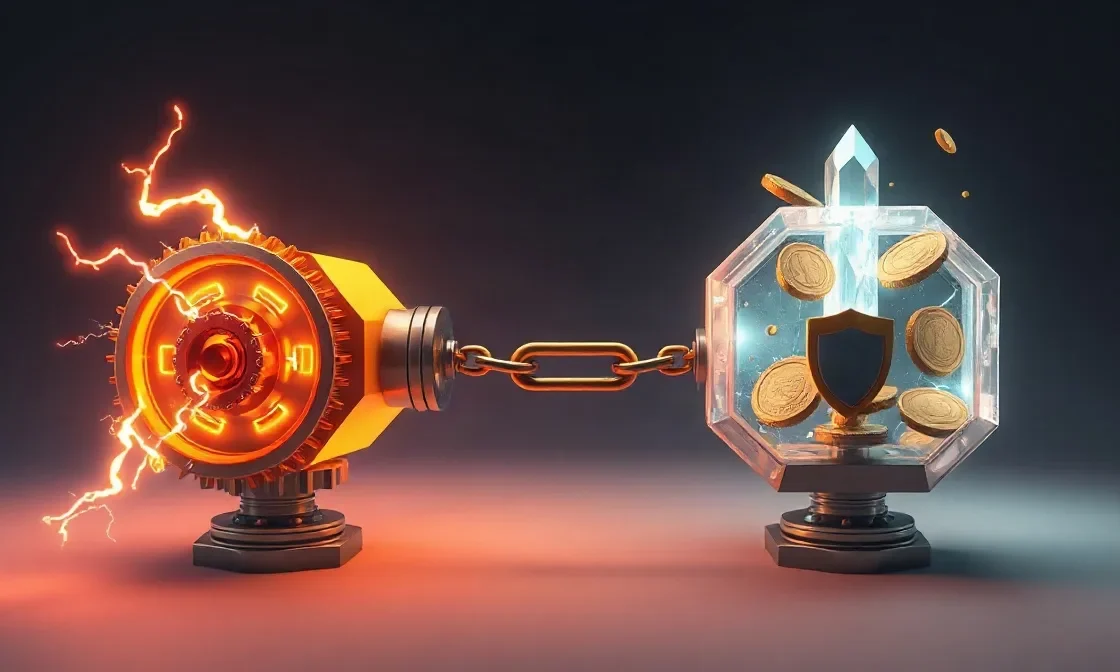
Proof of work (PoW) and proof of stake (PoS) are two ways a blockchain agrees on which transactions are valid and who gets to add the next block. In short: PoW secures the network by making participants spend real-world energy to earn the right to add blocks, while PoS secures it by requiring participants to lock up cryptocurrency as collateral. Each has trade-offs in energy use, hardware requirements, decentralization, and how they handle attacks.
What Is Proof of Work?
Proof of work was the first consensus mechanism, introduced by Bitcoin in 2009. Miners compete to solve a cryptographic puzzle. The first to find a valid solution broadcasts the new block to the network and receives a reward (newly minted coins plus transaction fees). The puzzle is hard to solve but easy to verify, so other nodes can quickly check that the work was done.
Security comes from the cost of energy and hardware. To attack the network, an attacker would need to control more than half of the total computing power (a 51% attack), which requires enormous electricity and specialized machines. That cost makes cheating economically irrational for most networks.
Key features of PoW
- Energy-intensive: Miners consume electricity to run and cool mining rigs.
- Hardware-dependent: Specialized ASICs or powerful GPUs are needed to compete.
- Battle-tested: Bitcoin has run on PoW since 2009 without a successful 51% attack on its main chain.
- Decentralization trade-off: Mining pools can concentrate hash power, but anyone with electricity and hardware can join.
What Is Proof of Stake?
Proof of stake replaces computing power with economic stake. Validators lock up (stake) a minimum amount of the network’s native cryptocurrency. The protocol then selects validators to propose and attest to new blocks, often based on the size of their stake and other randomization. If a validator tries to cheat or goes offline, they can lose part of their stake (slashing).
Security comes from the value at risk. To attack the network, an attacker would need to acquire a large share of the total staked coins, which is expensive and would likely crash the coin’s price. Honest validators earn rewards for securing the chain.
Key features of PoS
- Energy-efficient: No mining rigs; validators run lightweight software on regular servers.
- Lower barrier to entry: No specialized hardware, but a minimum stake is required (or you can join a staking pool).
- Economic penalties: Slashing and inactivity leaks punish misbehavior.
- Decentralization trade-off: Large holders can earn more rewards, potentially leading to stake concentration.
How They Secure a Blockchain: A Side-by-Side Comparison
| Aspect | Proof of Work | Proof of Stake |
|---|---|---|
| Resource used | Computing power (electricity) | Locked cryptocurrency (stake) |
| Who adds blocks | Miners who solve a puzzle first | Validators chosen by the protocol |
| Attack cost | 51% of total hash rate | 51% of total staked coins |
| Energy use | High | Low |
| Hardware | ASICs or GPUs | Standard server or cloud instance |
| Penalty for cheating | Wasted electricity and hardware costs | Slashing (loss of staked coins) |
| Examples | Bitcoin, Litecoin, Monero | Ethereum, Cardano, Solana, Polkadot |
Practical Steps: How to Participate
If you want to support a network, here is what you can do. Remember that both activities carry risks, and you should never invest more than you can afford to lose.
For proof of work
- Choose a coin. Bitcoin is the most well-known PoW network. Other examples include Litecoin and Monero.
- Get hardware. You can buy an ASIC miner for Bitcoin or use a GPU for other coins. Compare electricity costs in your area.
- Join a mining pool. Solo mining is very hard. Pools combine resources and share rewards proportionally.
- Set up a wallet. Use a wallet that supports the coin you mine. Hardware wallets are more secure for holding.
- Monitor profitability. Mining rewards vary with network difficulty, coin price, and electricity rates.
For proof of stake
- Choose a network. Ethereum is the largest PoS chain. Others include Cardano, Solana, and Polkadot.
- Acquire the minimum stake. For Ethereum, you need 32 ETH to run a solo validator. For many networks, you can join a staking pool with a smaller amount.
- Run a validator or delegate. Solo validating requires technical setup and uptime. Pools or exchanges let you delegate and earn a share of rewards.
- Understand lock-up and slashing. Your coins may be locked for a period, and misbehavior can lead to losses.
- Keep records for taxes. Staking rewards are often taxable income. Check your local rules.
Risks and Common Mistakes
- Thinking one is always better. Both have trade-offs. PoW is more energy-intensive but has a longer track record. PoS is more efficient but newer and relies on complex game theory.
- Ignoring centralization. In PoW, mining pools can concentrate hash power. In PoS, large stakers can earn more rewards, leading to stake concentration. Neither is perfectly decentralized.
- Underestimating slashing. In PoS, if your validator goes offline or acts maliciously, you can lose part of your stake. This is not a risk in PoW mining, but you can waste money on electricity.
- Falling for scams. Fake staking pools and cloud mining schemes are common. Always research the provider and never share your private keys.
- Forgetting taxes. Mining and staking rewards are usually taxable. Keep good records.
- Assuming finality is instant. PoW chains like Bitcoin typically wait for several confirmations to reduce the chance of a reorg. PoS chains often have faster finality but still have rules.
Summary
Proof of work and proof of stake are two ways to secure a blockchain. PoW uses energy and hardware to make cheating expensive; PoS uses locked cryptocurrency and penalties. PoW is battle-tested but energy-hungry. PoS is efficient but newer and can favor large holders. Neither is perfect, and the best choice depends on the network’s goals and your own risk tolerance.
Disclaimer: This article is for information only and is not investment, financial or trading advice. Cryptocurrency prices are highly volatile. Always do your own research.