What is Gram (prev. Toncoin) (GRAM)?
Gram (prev. Toncoin) is the native token of The Open Network. Learn what GRAM is used for, how it works, its history, risks, and how it compares to other blockchains.
Key points
- Gram (prev. Toncoin) is the native cryptocurrency of The Open Network (TON), a proof-of-stake blockchain originally designed for fast, low-cost transactions.
- The token is used to pay network fees, secure the chain through staking, and participate in governance.
- As of September 29, 2026, GRAM ranks 28th by market capitalization with a circulating supply of 2,815,845,037 tokens.
What is Gram (prev. Toncoin)?
Gram (prev. Toncoin) is the native cryptocurrency of The Open Network, a blockchain that was originally developed by the team behind the Telegram messaging app. The token changed its name from Toncoin to Gram, but its role on the network remains the same: it is the asset that keeps the chain running.
The Open Network, often called TON, is a proof-of-stake blockchain designed to handle many transactions quickly and cheaply. It aims to be a base layer for applications such as payments, games, and social features that can reach a large number of users. As of September 29, 2026, Gram ranks 28th by market capitalization, with a circulating supply of 2,815,845,037 tokens.
How does The Open Network work?
TON uses a proof-of-stake consensus mechanism. Instead of energy-intensive mining, validators lock up (stake) GRAM tokens to earn the right to confirm transactions and add new blocks. If they act dishonestly, they can lose some of their staked tokens. This design is meant to be faster and more energy-efficient than proof-of-work systems like Bitcoin.
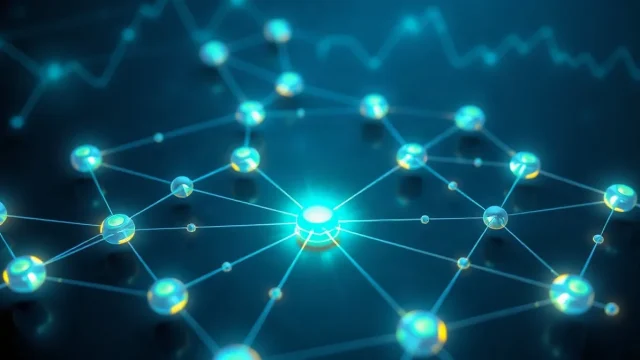
Technically, TON is built as a network of blockchains rather than a single chain. It uses a structure called a “masterchain” that coordinates many smaller “workchains.” Each workchain can be split further into “shard chains” to process transactions in parallel. In plain language, this is like having many checkout lanes in a supermarket instead of just one, so more transactions can be handled at once.
This architecture is intended to scale to millions of users. It also supports smart contracts, which are self-executing agreements that run on the blockchain. Developers can build decentralized applications (dApps) on TON, similar to how they build on Ethereum or Solana.
What is GRAM used for?
GRAM has several core uses on the network:
- Transaction fees: Users pay small amounts of GRAM to send tokens or interact with smart contracts.
- Staking and security: Validators stake GRAM to help secure the network and earn rewards.
- Governance: Token holders can participate in decisions about the network’s future, such as protocol upgrades or parameter changes.
- Applications: GRAM is used within games, marketplaces, and other services built on TON, often as a medium of exchange.
Because the token is native to the network, it is required for almost any activity on the chain. This creates steady demand from users and developers who need it to pay fees or stake.
Notable history
TON was initially conceived by Nikolai and Pavel Durov, the founders of Telegram, as a way to bring cryptocurrency to Telegram’s massive user base. The project raised money through a token sale in 2018. However, in 2019, the U.S. Securities and Exchange Commission (SEC) sued Telegram, alleging that the sale of its tokens violated securities laws. Telegram ultimately abandoned the project and paid a disgorgement and civil penalty under a court-approved settlement.
After Telegram stepped away, a group of independent developers and community members continued to maintain and develop the open-source code. The network was renamed The Open Network, and its native token, originally called Toncoin, was later rebranded as Gram. This history is well documented and explains why TON is often associated with Telegram even though the company no longer controls it.
In recent years, TON has gained attention for its integration with Telegram’s wallet features and mini-apps, which allow users to interact with blockchain services without leaving the messaging app. This has driven adoption and helped the token climb in market rankings.
Main risks and criticisms
Like any cryptocurrency, GRAM carries risks. Some are specific to TON:
- Concentration of validators: Critics have pointed out that a relatively small number of validators control a large share of staked tokens, which could pose centralization risks.
- Regulatory uncertainty: The SEC lawsuit against Telegram set a precedent that could affect how regulators view TON and similar projects. Future regulatory actions could impact the token’s usability or price.
- Competition: TON competes with established smart-contract platforms like Ethereum, Solana, and Binance Smart Chain, as well as other scalable networks. It must attract developers and users to remain relevant.
- Market volatility: The price of GRAM can be highly volatile, and its market capitalization rank can change quickly. Investors should be prepared for significant price swings.
- Complexity: TON’s multi-chain architecture is innovative but can be harder for developers to learn than simpler single-chain systems.
It is also worth noting that the rebranding from Toncoin to Gram may cause confusion, as “Gram” was previously the name of a different token planned by Telegram. Users should always verify they are dealing with the correct asset.
How does GRAM compare with alternatives?
GRAM is often compared to other layer-1 blockchains that support smart contracts. Here is a brief comparison:
| Feature | Gram (prev. Toncoin) | Ethereum | Solana |
|---|---|---|---|
| Consensus | Proof-of-stake | Proof-of-stake | Proof-of-stake |
| Architecture | Multi-chain (masterchain + workchains) | Single chain with rollups | Single chain |
| Primary focus | Scalability, Telegram integration | General-purpose smart contracts | High-speed transactions |
| Notable differentiator | Telegram wallet and mini-apps | Largest developer ecosystem | High throughput and low fees |
Ethereum is the most established smart-contract platform, with the largest number of developers and applications. Solana is known for its speed and low costs, but has experienced network outages in the past. TON’s main advantage is its potential to reach Telegram’s hundreds of millions of users through built-in wallet features. However, it is younger and less battle-tested than Ethereum.
Another point of comparison is token supply. As of September 29, 2026, GRAM has a circulating supply of 2,815,845,037 tokens. This is larger than Ethereum’s circulating supply but smaller than some other networks. The supply is not capped in the same way as Bitcoin’s; TON has an inflationary model with staking rewards, though the exact inflation rate can change based on network parameters.
Conclusion
Gram (prev. Toncoin) is the fuel for The Open Network, a blockchain that aims to bring fast, low-cost transactions to a mass audience. Its history is marked by a high-profile start with Telegram, a regulatory setback, and a community-led revival. Today, it is one of the larger cryptocurrencies by market capitalization, but it faces stiff competition and regulatory uncertainty. As with any crypto asset, understanding the technology and risks is essential before getting involved.
Disclaimer: This article is for information only and is not investment, financial or trading advice. Cryptocurrency prices are highly volatile. Always do your own research.