Star Xu: Hyperliquid Engine Favors Market Makers
In this article4 sections
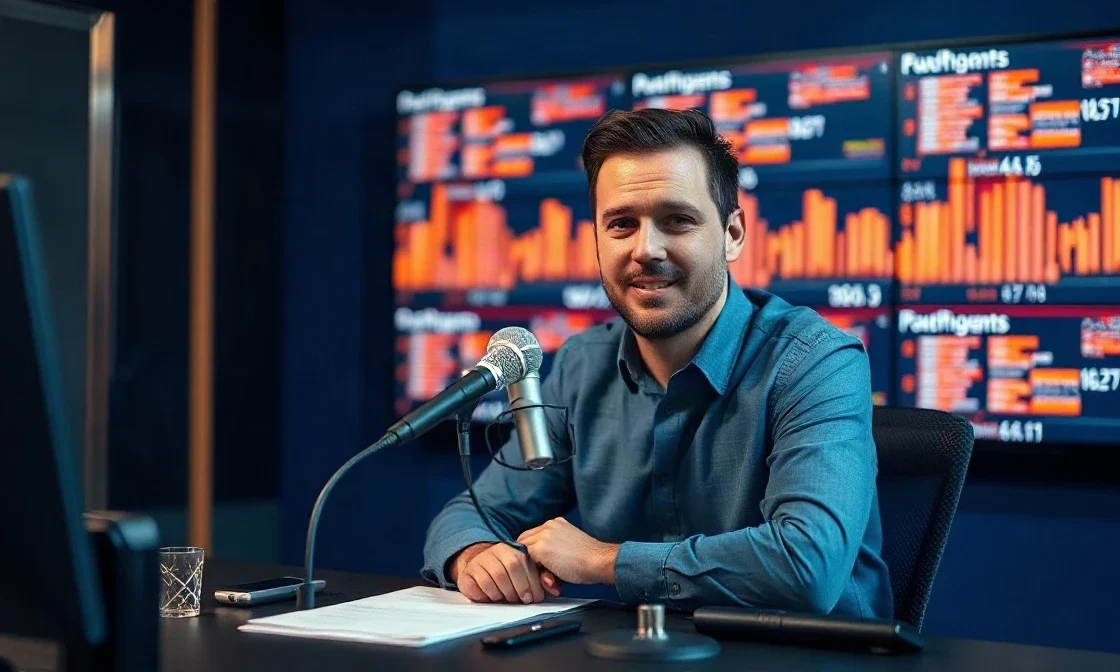
OKX founder Star Xu said Hyperliquid’s matching engine is more market maker friendly than the systems used by centralized exchanges, according to Blockonomi, which relayed his remarks on the New Era Finance Podcast with host Michael.
Xu described two distinct technical approaches. Centralized exchanges process orders individually, while Hyperliquid matches them in blocks and gives cancellations priority within each block. Because of that ordering, market makers on Hyperliquid can cancel orders ahead of takers.
Key facts
- Star Xu, founder of OKX, said Hyperliquid’s matching engine is more market maker friendly than those used by centralized exchanges.
- He said Hyperliquid matches orders block by block and prioritizes cancellations within each block, letting market makers cancel ahead of takers.
- He linked Hyperliquid’s order book depth to that design and said it offers another approach for long-tail assets with limited liquidity.
- He attributed the October 10 liquidations partly to USDe being treated like a stablecoin and accepted as derivatives collateral.
- He pointed to board oversight, compliance and risk functions, monthly proof-of-reserves reports, and external auditing as OKX’s trust measures, adding that OKX plans to pursue a public listing.
Depth, risk and the October 10 episode
The OKX founder argued that the block-cancellation design helps explain why Hyperliquid’s order book depth looks better than that of many centralized venues. In his view, the same structure gives long-tail assets with thin liquidity another route to trade.
Xu also discussed the October 10 market turmoil. He attributed the cascading liquidations partly to USDe being treated like a stablecoin and accepted as derivatives collateral, describing it as a higher-risk, hedge-fund-like product. In his account, leveraged borrowing against it can magnify returns but also amplify losses when prices moved. He argued that tighter risk controls and regulated derivatives venues could help prevent similar episodes.
On regulation, Xu called MiCA an important step toward consistent crypto rules across Europe. He noted the compliance challenges OKX faced while entering the market, and said international growth depends on earning customer and regulator trust through transparent operations and stronger governance. Safeguarding customer funds, he added, matters more than aggressive growth, and exchanges should follow financial rules and earn money from technology and services.
Why it matters
Matching-engine design is usually invisible to traders, but it shapes who gets to pull quotes first during fast markets. If cancellations are processed ahead of takers within a block, market makers hold an advantage that centralized exchanges do not offer in the same form, which may draw more professional liquidity to Hyperliquid and shift where long-tail assets list. Xu’s framing also puts the October 10 liquidations into a collateral-quality debate rather than a pure market-structure one, since his argument centers on how a yield-bearing asset was accepted as margin. For users, his practical advice was to prefer self-custody where they can manage keys securely, to be wary of unusually high yields, and to question calls to simply trust an exchange.
What to watch
Watch whether regulated derivatives venues tighten collateral rules for assets like USDe, and whether OKX moves forward on the public listing Xu said it plans to pursue.
This article is not financial advice, and crypto and derivatives markets are volatile and uncertain.
Disclaimer: This article is for information only and is not investment, financial or trading advice. Cryptocurrency prices are highly volatile. Always do your own research.
Source: Blockonomi