What is Dogecoin (DOGE)? A Plain-English Explainer
Dogecoin is a cryptocurrency created as a joke in 2013. Learn how its network works, what DOGE is used for, its history, risks, and how it compares.
Key points
- Dogecoin is a cryptocurrency that started in 2013 as a lighthearted joke but grew into a widely used digital money.
- It runs on its own blockchain with fast, low-cost transactions and uses a mining process called proof-of-work.
- DOGE is mainly used for tips, small payments, and online communities, but it faces risks like high supply and price volatility.
What is Dogecoin?
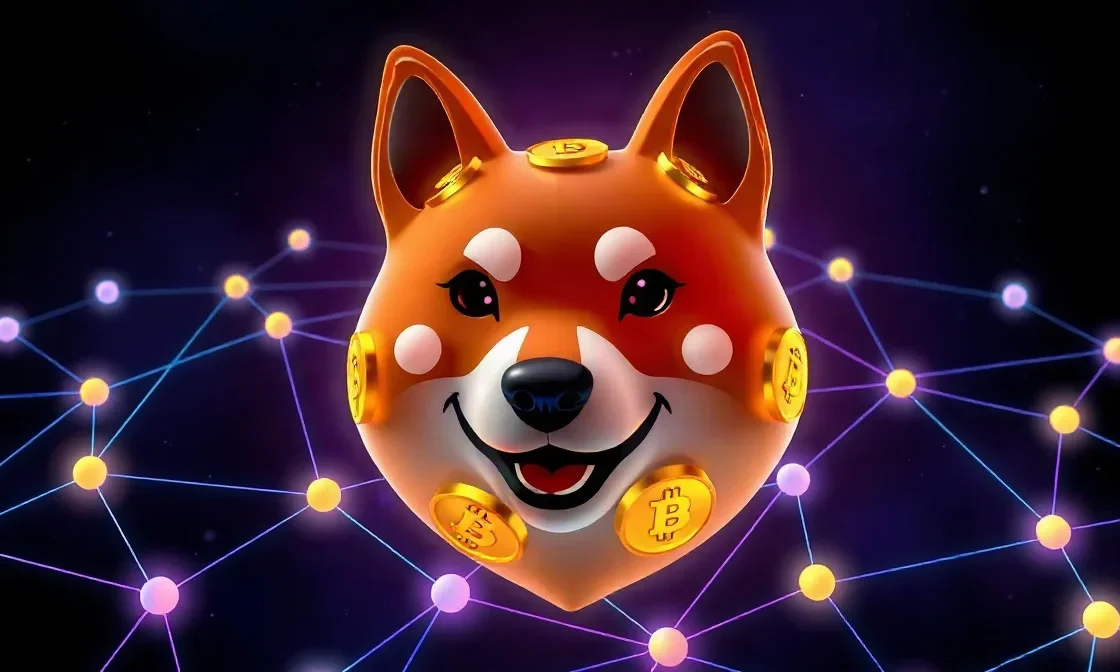
Dogecoin is a cryptocurrency — a digital form of money that exists only on the internet. It was created in 2013 by Billy Markus and Jackson Palmer as a joke, poking fun at the wild speculation in early cryptocurrencies. The name and logo come from the “Doge” internet meme, which featured a Shiba Inu dog. Despite its humorous origins, Dogecoin developed a real network, a large community, and a native token called DOGE.
As of September 29, 2026, Dogecoin had a market capitalization rank of 11 and a circulating supply of 171,832,103,127 DOGE. That supply number is important: unlike Bitcoin, which has a fixed maximum of 21 million coins, Dogecoin has no maximum supply. New DOGE are created continuously, though the rate is fixed at 5 billion per year, which becomes a smaller percentage of the total over time.
How does Dogecoin work technically?
Dogecoin operates on its own blockchain, a public ledger that records every transaction. The network uses a consensus mechanism called proof-of-work, the same basic approach as Bitcoin. Miners compete to solve mathematical puzzles; the winner gets to add a new block of transactions to the chain and receives newly created DOGE as a reward.
Dogecoin was forked from Litecoin in late 2013, which means it started with code similar to Litecoin’s. A key difference is that Dogecoin uses the Scrypt mining algorithm, which was designed to be less specialized than Bitcoin’s SHA-256. However, over time, specialized mining hardware for Scrypt (called ASICs) became common, so mining is now dominated by large operations. Dogecoin and Litecoin can be mined together in a process called merge mining, which allows miners to secure both networks at once.
Transaction times are relatively fast. A new block is added roughly every minute, compared to about 10 minutes for Bitcoin. That means a Dogecoin payment typically gets its first confirmation within a minute or two. Fees are usually very low, often a fraction of a cent, though they can vary with network demand.
The network is maintained by a group of volunteer developers. There is no central company or leader; changes to the protocol are discussed openly and implemented when the community agrees. This decentralized structure is similar to Bitcoin’s, but Dogecoin’s development pace is generally slower and more conservative.
What is DOGE used for?
DOGE is the native token of the Dogecoin network. It serves several purposes:
- Payments: DOGE can be sent between wallets quickly and cheaply, making it suitable for small purchases or transfers.
- Tipping: Online communities, especially on social media, have used DOGE to reward good content or helpful comments.
- Charity and fundraising: The Dogecoin community has organized campaigns for causes, such as sending the Jamaican bobsled team to the 2014 Winter Olympics and funding a water project in Kenya.
- Speculation: Many people buy and hold DOGE hoping its price will rise, which adds trading volume but also volatility.
Some merchants accept DOGE for goods and services, though it is not as widely accepted as traditional payment methods. Its low fees and fast confirmations make it technically usable for everyday payments, but price swings can make it less practical as a stable unit of account.
Notable history
Dogecoin’s history is full of well-documented moments that shaped its identity:
- 2013: Billy Markus and Jackson Palmer launch Dogecoin as a joke. The logo features the Shiba Inu from the Doge meme.
- 2014: The community raises funds to send the Jamaican bobsled team to the Sochi Winter Olympics. They also sponsor a NASCAR driver, Josh Wise.
- 2014: Dogecoin adopts merge mining with Litecoin, which helps secure the network.
- 2021: Dogecoin gains massive attention after endorsements from Elon Musk and other celebrities. Its price and market cap surge, and it becomes one of the top cryptocurrencies by market value.
- 2022: The Dogecoin Foundation, a nonprofit that supports the project, is re-established with a renewed focus on development and community.
These events are widely reported and have contributed to Dogecoin’s enduring popularity, even as its technical development has been gradual.
Main risks and criticisms
Dogecoin faces several criticisms and risks that potential users should understand:
- Inflationary supply: Because there is no cap, the total number of DOGE grows every year. This can dilute the value of existing coins if demand does not keep pace.
- Price volatility: DOGE’s price has historically been extremely volatile, often driven by social media and speculation rather than fundamentals. This makes it risky as a store of value or a medium of exchange.
- Concentration of wealth: A small number of wallets hold a large portion of the total supply. If those holders sell, the price could drop sharply.
- Limited development: Compared to networks like Ethereum, Dogecoin has fewer developers and slower innovation. It lacks advanced features such as smart contracts.
- Dependence on hype: Much of Dogecoin’s value comes from community enthusiasm and celebrity attention, which can fade.
These factors do not mean Dogecoin is doomed, but they are important considerations for anyone thinking about using or holding it.
How does Dogecoin compare with alternatives?
Dogecoin is often compared to other cryptocurrencies, especially those that also focus on payments or have a strong community.
| Feature | Dogecoin (DOGE) | Bitcoin (BTC) | Litecoin (LTC) | Shiba Inu (SHIB) |
|---|---|---|---|---|
| Launch year | 2013 | 2009 | 2011 | 2020 |
| Maximum supply | None (5B new per year) | 21 million | 84 million | None (but burns possible) |
| Block time | ~1 minute | ~10 minutes | ~2.5 minutes | ~15 seconds (Ethereum-based) |
| Mining algorithm | Scrypt | SHA-256 | Scrypt | Not mined (proof-of-stake on Ethereum) |
| Primary use | Tips, payments, community | Store of value, payments | Payments | Community, speculation |
Bitcoin is the original cryptocurrency and is often seen as digital gold — a store of value with a fixed supply. Litecoin, launched in 2011, is similar to Bitcoin but with faster block times and a different mining algorithm. Dogecoin shares Litecoin’s Scrypt algorithm and can be merge-mined with it. Shiba Inu, launched in 2020, is an Ethereum-based token that also uses a dog meme but runs on a different blockchain with smart contract capabilities.
Compared to these, Dogecoin stands out for its friendly community, low fees, and fast transactions. However, its unlimited supply and slower development are trade-offs. Bitcoin is more widely accepted as a store of value, while Litecoin is often seen as a more technically focused payment coin. Shiba Inu has a larger ecosystem of decentralized applications but is also highly speculative.
Frequently Asked Questions
Is Dogecoin a good investment?
Dogecoin is a highly volatile cryptocurrency with an inflationary supply. It is not a recommendation; anyone considering it should research thoroughly and understand the risks.
Can Dogecoin be mined?
Yes, Dogecoin uses proof-of-work mining and can be merge-mined with Litecoin. Mining requires specialized hardware and access to cheap electricity.
What makes Dogecoin different from Bitcoin?
Dogecoin has no maximum supply, faster block times, and lower fees. Bitcoin has a fixed supply and is more widely regarded as a store of value.
Disclaimer: This article is for information only and is not investment, financial or trading advice. Cryptocurrency prices are highly volatile. Always do your own research.