What Is a Layer 2? Rollups and Why They’re Cheaper
Layer 2s process transactions off the main chain and post proofs back, cutting fees. Learn how rollups work and the risks to watch.
Key points
- Layer 2s move transactions off the main chain but inherit its security.
- Rollups post compressed data or proofs back to Ethereum, cutting fees.
- Optimistic rollups assume validity; ZK rollups prove it with cryptography.
What is a layer 2?
A layer 2 (L2) is a scaling solution built on top of a base blockchain (layer 1, or L1) that processes transactions away from it. The L2 still relies on the L1 for security and final settlement. Because it does the heavy lifting off the main chain, it can be faster and cheaper. The most common type of L2 today is a rollup.
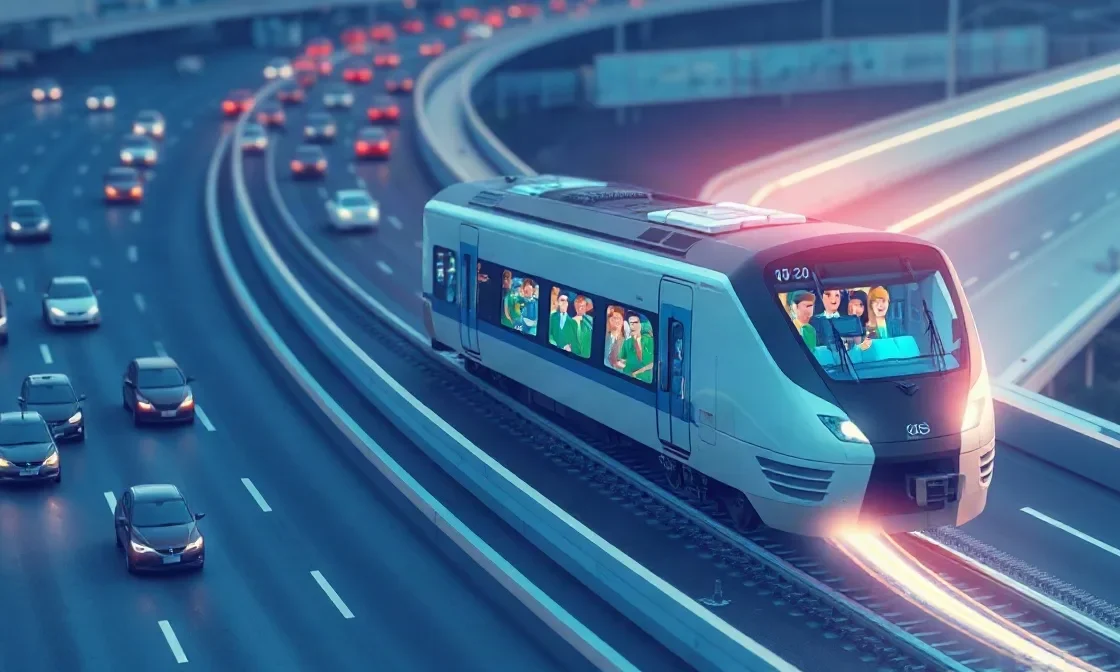
Think of Ethereum as a busy highway. Every car (transaction) pays a toll (gas fee) to use it. A layer 2 is like a commuter train that carries many passengers at once and then reports the trip back to the highway authority. The highway stays secure, but you pay less because you share the ride.
Why layer 2s are cheaper
On a layer 1, every transaction is processed and stored by thousands of nodes. That redundancy is what makes it secure, but it also limits how many transactions can fit in a block. When demand is high, users bid up fees to get included.
A layer 2 takes many transactions, bundles them together, and posts a single compressed batch back to the L1. The cost of that one batch is split among everyone in it. The result: your individual fee drops, often by a large margin.
As of September 29, 2026, layer 2 networks on Ethereum include Arbitrum, Optimism, Base, zkSync, and Starknet, among others. Each has its own fee structure, but all aim to reduce the cost per transaction compared to Ethereum mainnet.
How rollups work
Rollups are the dominant layer 2 design. They execute transactions outside the L1, then post data or proofs back to it. There are two main types: optimistic rollups and zero-knowledge (ZK) rollups.
Optimistic rollups
Optimistic rollups assume transactions are valid by default. They post the transaction data to the L1, and anyone can challenge a batch if they believe it contains fraud. This is why they are called “optimistic”: they trust until proven wrong.
If a challenge is raised, the rollup runs a fraud proof on the L1 to determine whether the batch was correct. If fraud is found, the fraudulent batch is reverted and the challenger is rewarded. This system requires a challenge period, usually about seven days, before withdrawals to the L1 are final. That delay is a trade-off for lower costs.
Examples of optimistic rollups include Arbitrum and Optimism.
Zero-knowledge (ZK) rollups
ZK rollups, also called validity rollups, generate a cryptographic proof that the transactions in a batch are valid. They post that proof, along with compressed data, to the L1. The L1 verifies the proof, and if it passes, the batch is accepted immediately. There is no challenge period for withdrawals, so funds can move back to the L1 faster.
ZK rollups are more complex to build, and generating proofs can be computationally heavy. But they offer faster finality and stronger security guarantees in some designs. Examples include zkSync and Starknet.
Key differences at a glance
| Feature | Optimistic rollup | ZK rollup |
|---|---|---|
| Validity check | Fraud proofs (challenge-based) | Validity proofs (cryptographic) |
| Withdrawal time to L1 | ~7 days (challenge period) | Minutes to hours |
| Cost | Lower computation, higher data | Higher computation, lower data |
| Complexity | Simpler to implement | More complex |
Practical steps: using a layer 2
If you want to try a layer 2, here is a simple process:
- Choose a wallet. Use a self-custody wallet that supports the L2 you want, such as MetaMask, Rabby, or a wallet built into the L2’s ecosystem.
- Bridge funds. You need to move assets from the L1 to the L2. Official bridges are the safest, but they can take time. Third-party bridges are faster but carry additional risk.
- Swap or transact. Once on the L2, you can swap tokens, provide liquidity, or use apps. Fees are paid in the L2’s native token, usually ETH.
- Withdraw. To move back to the L1, use the official bridge. For optimistic rollups, expect a delay of about seven days. For ZK rollups, it is much faster.
Always test with a small amount first. Keep track of which network you are on, because sending assets to the wrong network can result in loss.
Risks and common mistakes
- Bridge risk. Bridges hold large amounts of assets and have been hacked before. Use official bridges when possible, and avoid unknown ones.
- Withdrawal delays. Optimistic rollups have a challenge period. If you need funds quickly, plan ahead or use a third-party liquidity provider, which may charge a fee.
- Centralization. Many rollups currently rely on a central operator or a small set of validators. This can mean a single point of failure or censorship. Check the project’s documentation for its current stage of decentralization.
- Network confusion. Sending tokens to the wrong chain or using the wrong bridge can lead to permanent loss. Double-check addresses and network names.
- Smart contract bugs. L2s are complex software. Bugs can lead to loss of funds. Use established networks and keep your software updated.
- Fee volatility. Even on L2s, fees can spike during periods of high demand. What is cheap today may not be tomorrow.
Summary
Layer 2s are scaling solutions that inherit security from a layer 1 while processing transactions more cheaply. Rollups are the main type, and they come in two flavors: optimistic (fraud proofs, slower withdrawals) and ZK (validity proofs, faster withdrawals). They reduce costs by batching many transactions into one. If you use one, start small, use official bridges, and understand the risks.
Disclaimer: This article is for information only and is not investment, financial or trading advice. Cryptocurrency prices are highly volatile. Always do your own research.