What is Cronos (CRO)?
Cronos is a blockchain network with the CRO token at its center. Learn how it works, what CRO is used for, its history, risks, and alternatives.
Key points
- Cronos is a blockchain network built with the Cosmos SDK and Ethereum compatibility, with CRO as its native token.
- CRO is used for transaction fees, staking, and rewards inside the Cronos and Crypto.com ecosystems.
- Cronos faces competition from other Ethereum-compatible chains and carries risks tied to its close link with Crypto.com.
What is Cronos?
Cronos is a public blockchain network. It was designed to be compatible with Ethereum, meaning developers can use familiar tools and smart contracts, while also connecting to the wider Cosmos network of blockchains. The network’s native token is CRO, which is used to pay fees, secure the chain through staking, and access services in the broader Crypto.com ecosystem.
Cronos is not the same as Crypto.com, the centralized exchange and app company. Crypto.com is a separate business that helped launch Cronos and remains closely associated with it. The Cronos chain is run by validators and governed through its own community processes.
As of September 29, 2026, CRO had a circulating supply of about 49.75 billion tokens and ranked 30th by market capitalization among cryptocurrencies, according to the data provided.
How Cronos works in plain language
Think of Cronos as a shared computer that many people can use at once. Developers write applications (often called smart contracts) that run on this computer. Users interact with those applications by sending transactions. Validators are the computers that process transactions and keep the shared record, called the blockchain, in sync.
Cronos uses a proof-of-stake model. Instead of solving energy-intensive puzzles, validators lock up CRO tokens as collateral. If they act honestly, they earn rewards. If they try to cheat, they can lose some of their stake. This design is meant to make attacking the network expensive.
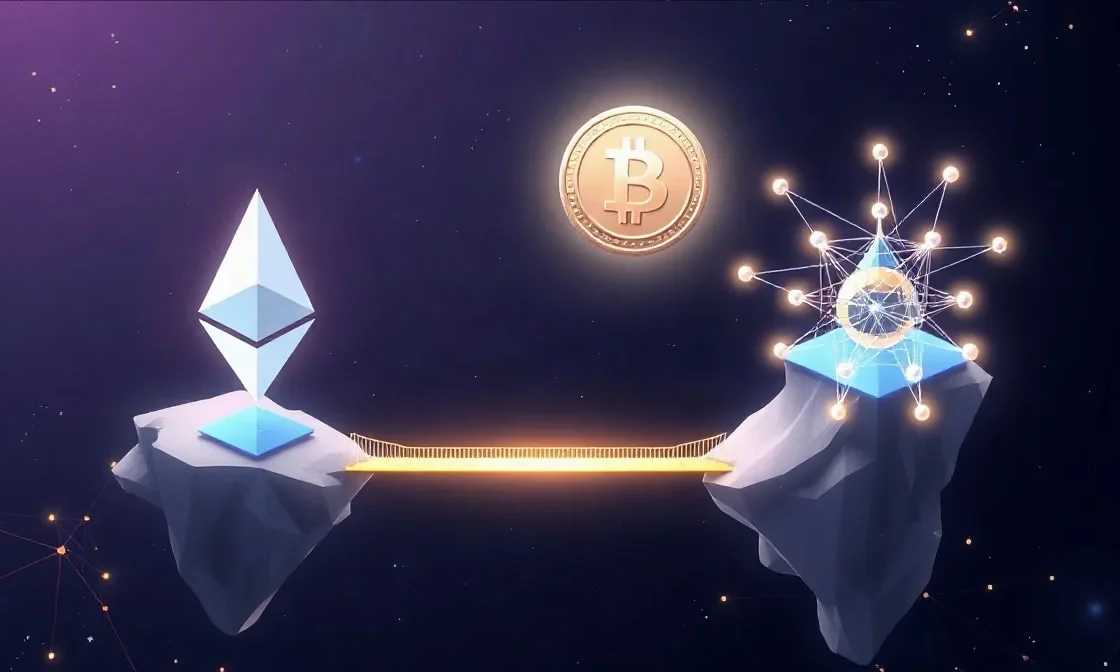
The network is built with the Cosmos SDK, a toolkit for creating blockchains. That gives Cronos the ability to communicate with other Cosmos-based chains through the Inter-Blockchain Communication (IBC) protocol. At the same time, Cronos offers an Ethereum-compatible environment, so developers can port Ethereum applications with relatively few changes. This combination is often described as bridging two major blockchain ecosystems.
Key technical points
- Ethereum compatibility: Cronos supports the Ethereum Virtual Machine (EVM), so tools like MetaMask and Solidity smart contracts work on it.
- Cosmos SDK: The chain is built using Cosmos software, which enables IBC connections to other Cosmos chains.
- Proof-of-stake: Validators stake CRO to participate in consensus and earn rewards.
- Interoperability: IBC allows assets and data to move between Cronos and other connected chains.
What CRO is used for
CRO is the native token of the Cronos chain. It has several roles:
- Transaction fees: Users pay network fees in CRO, similar to how Ethereum users pay in ETH.
- Staking and security: Validators and delegators stake CRO to help secure the network and earn rewards.
- Governance: CRO holders can participate in decisions about the network’s future, often by voting on proposals.
- Ecosystem incentives: CRO is used in various programs, such as rewards for using certain applications or providing liquidity.
- Crypto.com services: Within the Crypto.com app and exchange, CRO can be used for perks, fee discounts, and other benefits, though those are separate from the Cronos chain itself.
It is important to distinguish between the token’s role on the Cronos chain and its role inside Crypto.com’s products. The two are related but not identical.
Notable history
Cronos was launched in 2021 as an Ethereum-compatible chain. It grew out of the earlier Crypto.org Chain, which was also built with Cosmos technology. The goal was to create a network that could support decentralized applications while connecting to both Ethereum and Cosmos.
Over time, the project has evolved. In 2021, the community approved a proposal to burn a large portion of the CRO supply, reducing the total number of tokens. This was a significant event for holders because it changed the token’s economics. The exact details and final amounts are documented in public governance records.
The network has also seen upgrades to improve speed, reduce costs, and add features. Cronos has attracted developers building DeFi, NFTs, and gaming applications, though it faces strong competition from other chains.
Main risks and criticisms
Like any blockchain project, Cronos carries risks. Some are technical, some are economic, and some relate to its close ties with a centralized company.
- Centralization concerns: Because Crypto.com played a major role in launching and promoting Cronos, critics worry that the network may be more centralized than fully community-run chains. The validator set and governance participation are key areas to watch.
- Competition: Cronos competes with many other smart-contract platforms, including Ethereum, BNB Chain, Solana, and Polygon. Attracting and keeping developers and users is an ongoing challenge.
- Token supply and inflation: The total supply of CRO and its distribution can affect the token’s value. Changes to supply, such as burns or new issuance, are important events.
- Regulatory uncertainty: Cryptocurrencies face evolving regulations around the world. How regulators treat CRO and similar tokens could impact its use and availability.
- Smart contract risk: Applications built on Cronos may have bugs or vulnerabilities. Users can lose funds if they interact with flawed contracts.
- Market volatility: Crypto markets are highly volatile. The value of CRO can rise or fall sharply, and past performance does not guarantee future results.
These risks are not unique to Cronos, but they are important to understand before using the network or holding CRO.
How Cronos compares with alternatives
Cronos is one of several blockchains that aim to combine Ethereum compatibility with other features. Here is a brief comparison with a few well-known alternatives:
| Network | Key feature | Native token | Main difference from Cronos |
|---|---|---|---|
| Ethereum | Largest smart-contract platform | ETH | More decentralized and widely used, but often higher fees. |
| BNB Chain | Ethereum-compatible, linked to Binance | BNB | Similar exchange-linked model, larger user base. |
| Polygon | Ethereum scaling solutions | POL (formerly MATIC) | Focuses on scaling Ethereum rather than being a standalone Cosmos chain. |
| Cosmos Hub | Interoperability hub | ATOM | No built-in EVM; Cronos adds Ethereum compatibility. |
| Solana | High-speed, low-cost chain | SOL | Different architecture, not EVM-compatible by default. |
Cronos’s main selling point is its dual compatibility: it speaks both Ethereum and Cosmos. That makes it attractive for projects that want to reach users on both sides. However, it faces tough competition from larger ecosystems with more developers and liquidity.
Conclusion
Cronos is a blockchain network that aims to connect the Ethereum and Cosmos worlds, with CRO as its native token. It is used for fees, staking, governance, and incentives, and it is closely tied to Crypto.com. While it has notable history and a clear technical vision, it also faces risks related to centralization, competition, and regulation. As with any crypto asset, it is important to do your own research and understand the risks before getting involved.
Disclaimer: This article is for information only and is not investment, financial or trading advice. Cryptocurrency prices are highly volatile. Always do your own research.