What is Shiba Inu (SHIB)? A Plain-Language Explainer
Shiba Inu (SHIB) is a meme-inspired cryptocurrency on Ethereum. Learn how it works, its uses, history, risks, and how it compares to Dogecoin.
Key points
- SHIB is an Ethereum-based token created in 2020 as a meme coin.
- It runs on the Ethereum network and is used for tipping, payments, and ecosystem tokens.
- Risks include high supply, volatility, and reliance on community sentiment.
What is Shiba Inu (SHIB)?
Shiba Inu (SHIB) is a cryptocurrency that started as a meme-inspired token in August 2020. It was created anonymously by someone using the pseudonym “Ryoshi.” The token is built on the Ethereum blockchain, which means it is not a separate network but a token that lives on Ethereum. As of September 29, 2026, SHIB had a market capitalization rank of 31 and a circulating supply of about 589 trillion tokens, according to the data provided.
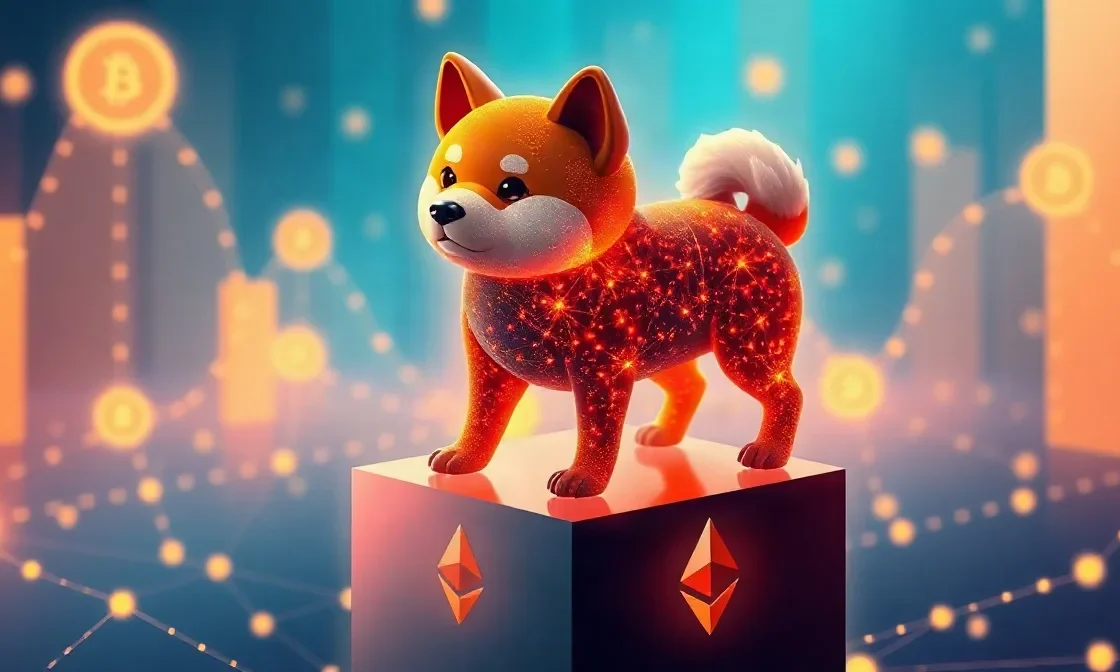
SHIB is often called a “meme coin” because its branding is based on the Shiba Inu dog breed, the same breed used in the Dogecoin logo. But over time, the project has grown to include other tokens and tools, aiming to be more than just a joke.
How does SHIB work technically?
SHIB is an ERC-20 token on Ethereum. ERC-20 is a standard that makes it easy for wallets, exchanges, and apps to support the token. When you send SHIB, you are sending a small piece of data on Ethereum that says you moved tokens from one address to another. The actual record is kept on Ethereum’s blockchain, secured by thousands of computers around the world.
Because SHIB is on Ethereum, it benefits from Ethereum’s security but also faces its limitations. For example, when the Ethereum network is busy, transaction fees (called gas fees) can be high. SHIB itself does not have its own mining or staking in the traditional sense. Instead, it relies on Ethereum’s proof-of-stake system for security.
The project also includes other tokens: BONE and LEASH. BONE is used for governance and to pay for gas on Shiba Inu’s own layer-2 network, Shibarium. LEASH is a more scarce token that was originally a rebase token before its rebase mechanics were removed. There is also a decentralized exchange called ShibaSwap. These pieces form what the community calls the “Shiba Inu ecosystem.”
What is SHIB used for?
SHIB’s main uses are:
- Community tipping and payments: Some online communities and merchants accept SHIB as a way to tip or pay for small items.
- Speculation: Many people buy and hold SHIB hoping its price will rise. This is the most common use.
- Ecosystem participation: SHIB can be used in ShibaSwap for liquidity provision or staking, and to interact with other projects in the ecosystem.
- Governance (via BONE): While SHIB itself is not a governance token, holding BONE allows voting on some decisions.
It is important to note that SHIB is not widely accepted as a form of payment for everyday goods and services. Its value comes mostly from what people are willing to pay for it in the market.
Notable history
SHIB was launched in August 2020. In its early days, the anonymous creator sent half of the total supply to Ethereum co-founder Vitalik Buterin. In May 2021, Buterin burned (destroyed) a large portion of those tokens and donated the remaining to a COVID-19 relief fund in India. This event was widely reported and reduced the circulating supply.
SHIB gained massive attention in 2021, with its price rising sharply and then falling. It became one of the most talked-about cryptocurrencies on social media. In 2023, the project launched Shibarium, a layer-2 network built on Ethereum to reduce fees and speed up transactions. The Shiba Inu ecosystem also introduced a metaverse project and a card game, though adoption has been limited.
As of September 29, 2026, SHIB remains among the top 50 cryptocurrencies by market cap, with a rank of 31.
Main risks and criticisms
- Extremely large supply: With hundreds of trillions of tokens, SHIB’s price per token is very small. For the market cap to grow significantly, huge amounts of new money would need to enter.
- Volatility: Meme coins are known for wild price swings. SHIB is no exception.
- Lack of clear utility: Critics argue that SHIB has few real-world uses beyond speculation and community activities.
- Concentration: A small number of wallets may hold a large portion of the supply, which can lead to price manipulation.
- Competition: There are thousands of other cryptocurrencies, including many meme coins, competing for attention.
- Regulatory uncertainty: Governments around the world are still deciding how to regulate cryptocurrencies, which could affect SHIB.
It is also worth noting that the anonymous creator, Ryoshi, disappeared from public view in 2022. The project is now led by a group of volunteers and developers, which some see as a risk.
How SHIB compares with close alternatives
SHIB is often compared to Dogecoin (DOGE), the original meme coin. Dogecoin has its own blockchain (a fork of Litecoin) and a much smaller supply than SHIB. Dogecoin also has a longer history and more merchant adoption, though both are primarily speculative.
Another comparison is with other Ethereum-based meme tokens like Pepe (PEPE) or Floki (FLOKI). These tokens also rely on community hype but may have different tokenomics or ecosystems. SHIB stands out for its larger ecosystem, including Shibarium and ShibaSwap, but it also has a much larger supply than most.
| Feature | SHIB | Dogecoin (DOGE) |
|---|---|---|
| Blockchain | Ethereum (ERC-20) | Own blockchain |
| Supply | ~589 trillion (as of Sept 29, 2026) | ~140 billion |
| Consensus | Ethereum’s proof-of-stake | Proof-of-work |
| Main use | Speculation, ecosystem | Speculation, tipping |
Compared to Bitcoin or Ethereum, SHIB is very different. Bitcoin and Ethereum are designed as stores of value or platforms for applications, while SHIB is primarily a community-driven token with limited fundamental utility.
Final thoughts
Shiba Inu is a meme coin that grew into a large ecosystem. It is built on Ethereum, has a massive supply, and is mostly used for speculation. Its history includes notable events like the Vitalik Buterin burn. Risks include volatility, large supply, and regulatory uncertainty. If you are considering SHIB, understand that it is a high-risk asset and do your own research.
Disclaimer: This article is for information only and is not investment, financial or trading advice. Cryptocurrency prices are highly volatile. Always do your own research.