Bitcoin Buys 20.12 Ounces of Gold as BTC/Gold Ratio Halves
In this article5 sections
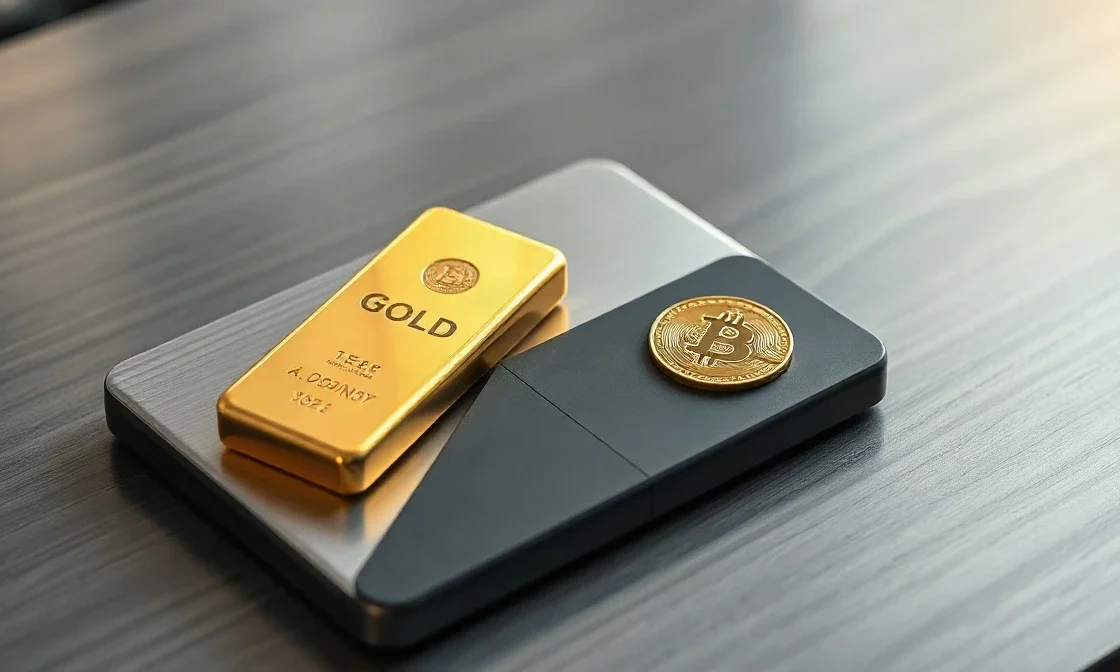
One bitcoin bought about 20.12 ounces of gold on October 7, 2026, roughly half the 40.1-ounce peak reached in December 2024, according to Coincentral. The same dataset put Bitcoin at $83,373.46 and gold at $4,142.80 an ounce, leaving gold’s market value more than 19 times larger.
Coincentral drew the comparison from Bitbo, Ledger, FXStreet and other sources, and noted that dates and methods differ slightly between them. A separate Blockonomi report on tokenized real-world assets adds a related detail: the two largest gold tokens, Tether Gold at about $2.7 billion and Paxos Gold at about $2.4 billion, made up roughly 74% of the commodity category as of April 2026.
Key facts
- Bitcoin traded at $83,373.46 and gold at $4,142.80 an ounce on October 7, 2026, with market caps of about $1.6 trillion and $30.6 trillion.
- The BTC/gold ratio stood at 20.12 ounces, down 50.5% from the December 2024 high of 40.1 ounces.
- Ledger data cited by Coincentral put ten-year returns at about 16,350% for Bitcoin and about 272% for gold.
- Bitcoin’s supply grows about 0.8% a year after the April 2024 halving, against 1.6% to 3% for gold.
- Blockonomi reported that tokenized real-world assets sat between roughly $30 billion and $40 billion on most trackers by mid-2026, a fraction of gold’s market size.
Size gap and what it does to price swings
Market cap is price multiplied by supply. Coincentral said gold’s figure uses the World Gold Council estimate of above-ground stock, which Ledger puts at about 220,000 tonnes, while Bitcoin’s counts circulating coins. Ledger listed gold at about $32 trillion and Bitcoin at about $1.55 trillion; an earlier Bitbo reading showed $29.1 trillion and $1.67 trillion, or 5.7%.
The smaller market explains part of the volatility difference. Coincentral reported that Bitcoin’s price can move more than 10% in a single day and has halved from peak to trough several times, while gold moves in smaller steps. Ledger’s Sharpe ratio figures ranged from 0.70 to 0.78 for Bitcoin and 0.60 to 0.61 for gold.
Correlation readings were mixed. Bitbo’s one-year rolling correlation of daily returns was +0.35 in one reading and -0.26 over the trailing 12 months to October 7, 2026 in another. Coincentral attributed the gap to different dates and methods and said both sit close to zero.
Energy and supply compared
Coincentral cited Ledger’s estimate that Bitcoin mining uses about 204.44 TWh a year against about 132 TWh for gold mining, and that minting one bitcoin produces about 691 tonnes of CO2 versus about 31 tonnes for the same dollar value of gold. Bitcoin’s carbon output per unit is higher, Ledger said, because many mining operations rely on fossil fuels. Gold mining carries its own costs: deforestation, soil erosion, cyanide and mercury leakage, and heavy water use.
On supply, Bitcoin is capped at 21 million coins, with about 20 million mined by 2026 and issuance scheduled to stop around 2140, per Ledger. Gold has no fixed cap, with mines adding 3,600 to 3,700 tonnes a year.
Why it matters
Ray Dalio, founder of Bridgewater Associates, argued on the All-In Podcast in March that non-yielding assets such as gold and Bitcoin could do well as government debt pressures build, and said Bitcoin was a small part of a preferred mix. Coincentral reported his suggested allocation as 10% to 15% in gold and 1% in Bitcoin, and quoted him saying there is only one gold.
The tokenization figures from Blockonomi show where part of the demand is heading. Blockchain-based claims on gold and Treasuries give holders the exposure without vault or shipping logistics, though the report noted that tokenized commodity products pay no yield and depend on the underlying price. Both reports warn that figures vary by source and date.
What to watch
Coincentral flagged Bitcoin’s next halving, estimated for April 15, 2028, as the point when supply growth steps down again. Nearer term, it pointed to the $79,564 to $79,664 band on FXStreet’s technical read as the level that would signal the bullish phase losing momentum. Blockonomi identified the SEC’s response to Ondo’s filing and wider institutional use of tokenized funds as the events most likely to shift how easily assets move between traditional and on-chain markets.
This article reports market data and analyst readings, not financial advice. Prices for both assets are volatile and the levels cited are one week’s snapshot.
Disclaimer: This article is for information only and is not investment, financial or trading advice. Cryptocurrency prices are highly volatile. Always do your own research.
Sources: CoinCentral, Blockonomi